Tell us about the job
Takes about a minute. No obligation.
A boiler quoted for an El Paso County home has to carry the full load the county actually places on it. Homes in El Paso County, CO run heat about nine months a year, from September through May. The burner and heat exchanger cycle through that season with almost no months off, and a unit that is undersized or set up with sloppy combustion air will show degradation on those components well before a homeowner in a shorter season would notice the same fault. A licensed contractor sizes the system against the house's actual heat loss, not a rule-of-thumb figure, because the install quality is tested hard and tested often here.
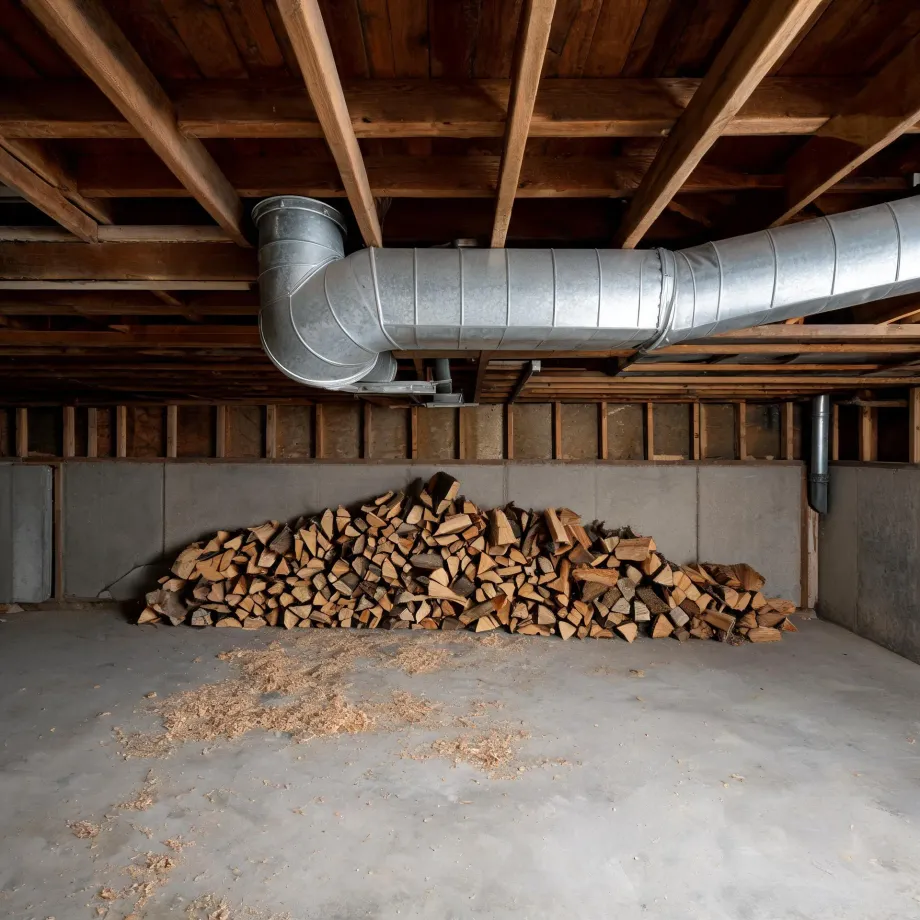
Ductwork and electrical service in houses that old were sized for equipment that no longer exists. Half the homes in El Paso County, Colorado were built in 1989 or earlier (2020-2024 ACS 5-year). A contractor pricing a boiler installation here has to open panels and measure what is actually in the house before the equipment choice means anything, because what the circuits carry and what the distribution system can handle were decided by builders who had no reason to anticipate what runs there now. That gap between original construction and current load is where the install lives.
What Gets Installed With a New Boiler
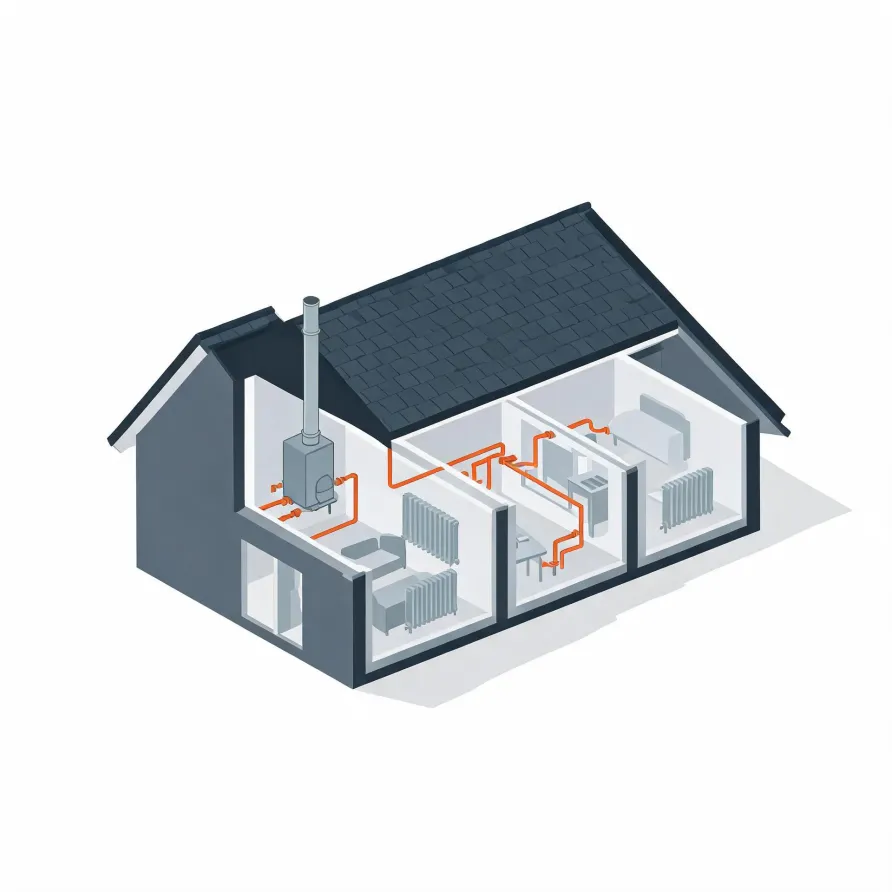
The boiler itself sits in a mechanical room, basement, or utility closet and is the heart of the system. A contractor mounts the unit, connects it to the gas or oil supply, and ties it into the home's existing plumbing. The expansion tank, typically wall- or ceiling-mounted nearby, absorbs pressure changes as water heats and cools.
Copper or PEX supply lines run from the boiler to the distribution points throughout the house, whether those are baseboard radiators, cast-iron radiators, or in-floor radiant loops set into the subfloor. A circulator pump, mounted on the supply or return line close to the boiler, moves water through the whole circuit.
The drawing shows a typical layout, and a licensed contractor determines what applies to your specific home.
Get matched in El Paso CountyEl Paso County, by the numbers
1,277 severe weather events were recorded in El Paso County, Colorado between 2015 and 2024.
NOAA National Centers for Environmental Information, Storm Events Database, bulk CSV export, events 2015-01-01 through 2024-12-31.Half the homes in El Paso County, Colorado were built in 1989 or earlier (2020-2024 ACS 5-year).
U.S. Census Bureau, 2020-2024 American Community Survey 5-Year EstimatesEl Paso County, Colorado holds 303,482 housing units (2020-2024 ACS 5-year).
U.S. Census Bureau, 2020-2024 American Community Survey 5-Year EstimatesOwners occupy 66.2% of the occupied homes in El Paso County, Colorado (2020-2024 ACS 5-year).
U.S. Census Bureau, 2020-2024 American Community Survey 5-Year EstimatesSevere Weather History in El Paso County
Boilers in El Paso County work against whatever the local climate delivers, and that load shapes what a proper installation requires. Weather history here is part of sizing and equipment decisions, which is why it belongs on a page about boiler work.
1,277 severe weather events, 2015–2023. Source: NOAA National Centers for Environmental Information, Storm Events Database.