Tell us about the job
Takes about a minute. No obligation.
Sizing a boiler correctly for a Fremont County home is not a formality a contractor can skip and fix later. Homes in Fremont County, CO run heat about nine months a year, from September through May. A burner and heat exchanger cycling through that kind of season accumulate wear on every ignition, every pressure swing, every flue cycle. A unit that is undersized runs longer per call to meet the load, which pushes those components harder and earlier than the manufacturer's wear curve assumes. The installer's choices on output, pipe sizing, and controls lock in from day one, and the heating season is long enough that a poor fit shows up in failures rather than in higher gas bills alone.
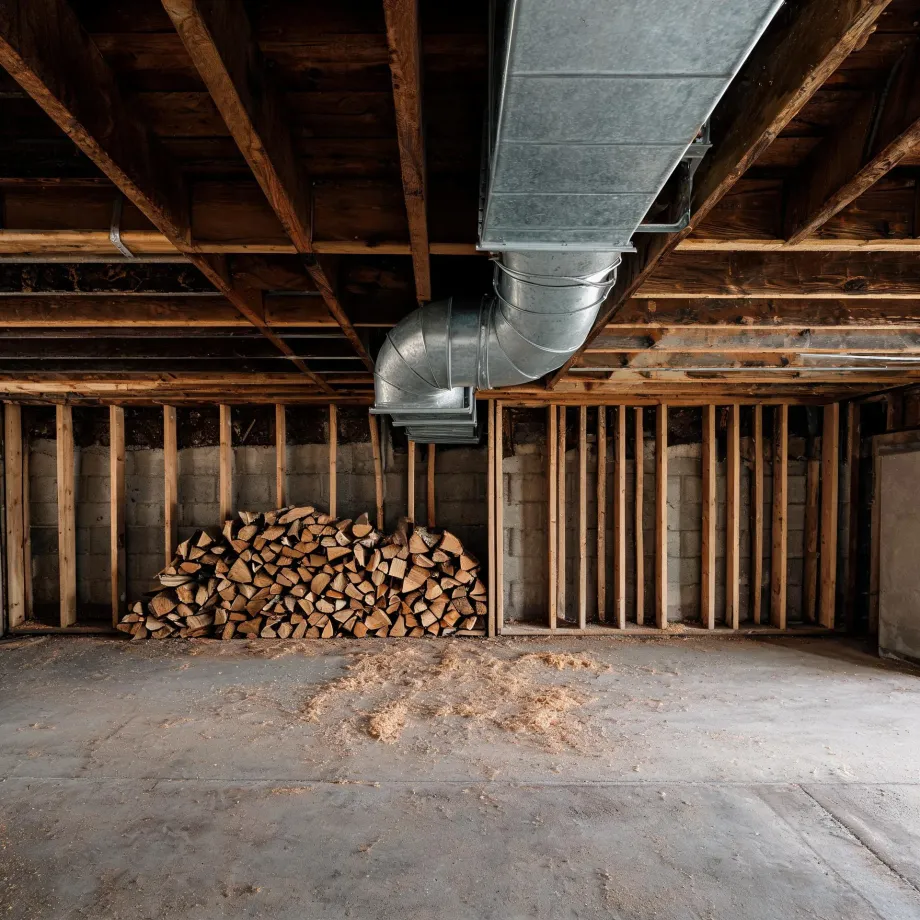
Older ductwork is the part of a boiler installation that decides how the job goes, and Fremont County has a lot of it. Half the homes in Fremont County, Colorado were built in 1981 or earlier (2020-2024 ACS 5-year). That means a contractor sizing and placing a new boiler is working with duct runs and electrical service that were put in for whatever came before, not for what is going in now. The routing matters. Where the existing layout fits the new system, the job is straightforward. Where it does not, the ductwork gets reworked first.
What Gets Installed With a New Boiler
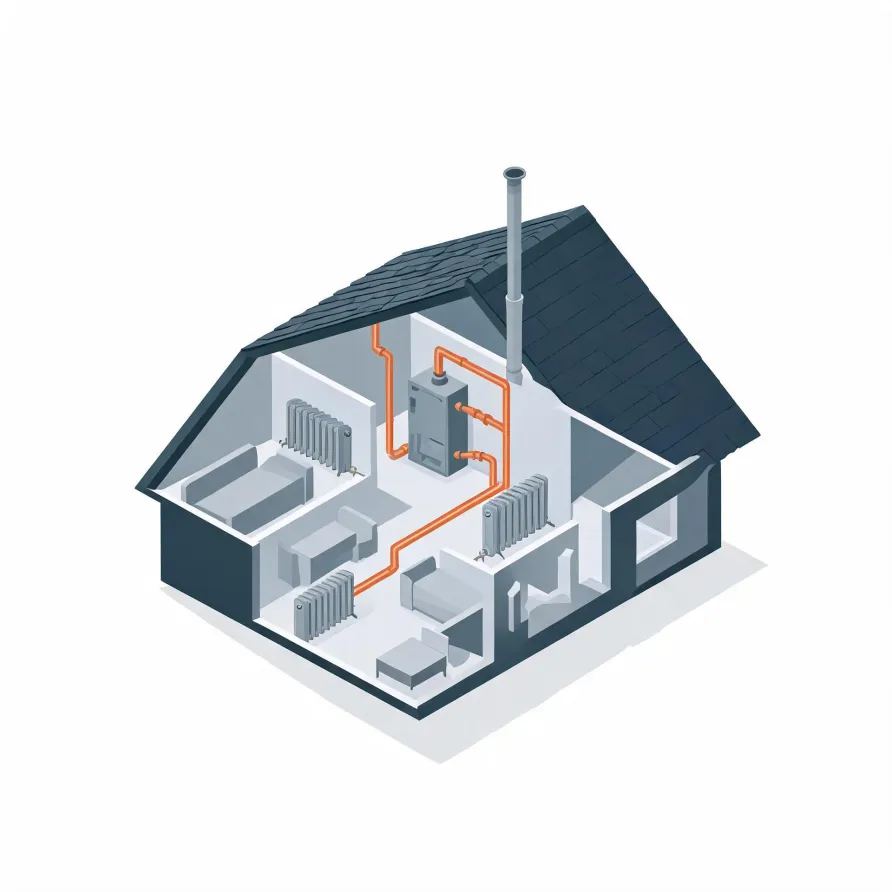
The boiler itself sits in a mechanical room, basement, or utility closet and is the heart of the system. A contractor mounts the unit there and connects it to a fuel supply, whether gas or oil. The heat exchanger inside the boiler is where the water picks up heat before moving through the house.
From the boiler, supply pipes run through walls and floors to radiators, baseboard units, or in-floor tubing in each room, and return pipes carry cooled water back. An expansion tank, typically hung near the boiler, absorbs pressure changes as water heats and cools. A circulator pump, also mounted near the unit, keeps water moving through the loop.
The drawing shows a representative layout, and a licensed contractor determines exactly what applies to your home and its existing conditions.
Get matched in Fremont CountyFremont County, by the numbers
487 severe weather events were recorded in Fremont County, Colorado between 2015 and 2024.
NOAA National Centers for Environmental Information, Storm Events Database, bulk CSV export, events 2015-01-01 through 2024-12-31.Half the homes in Fremont County, Colorado were built in 1981 or earlier (2020-2024 ACS 5-year).
U.S. Census Bureau, 2020-2024 American Community Survey 5-Year EstimatesFremont County, Colorado holds 20,605 housing units (2020-2024 ACS 5-year).
U.S. Census Bureau, 2020-2024 American Community Survey 5-Year EstimatesOwners occupy 75.6% of the occupied homes in Fremont County, Colorado (2020-2024 ACS 5-year).
U.S. Census Bureau, 2020-2024 American Community Survey 5-Year EstimatesSevere Weather Events in Fremont County
Fremont County's climate puts real demands on heating equipment, and those demands are not uniform year to year. A boiler sized and installed for local conditions handles the swings that a generic spec misses.
487 severe weather events, 2015–2024. Source: NOAA National Centers for Environmental Information, Storm Events Database.