Tell us about the job
Takes about a minute. No obligation.
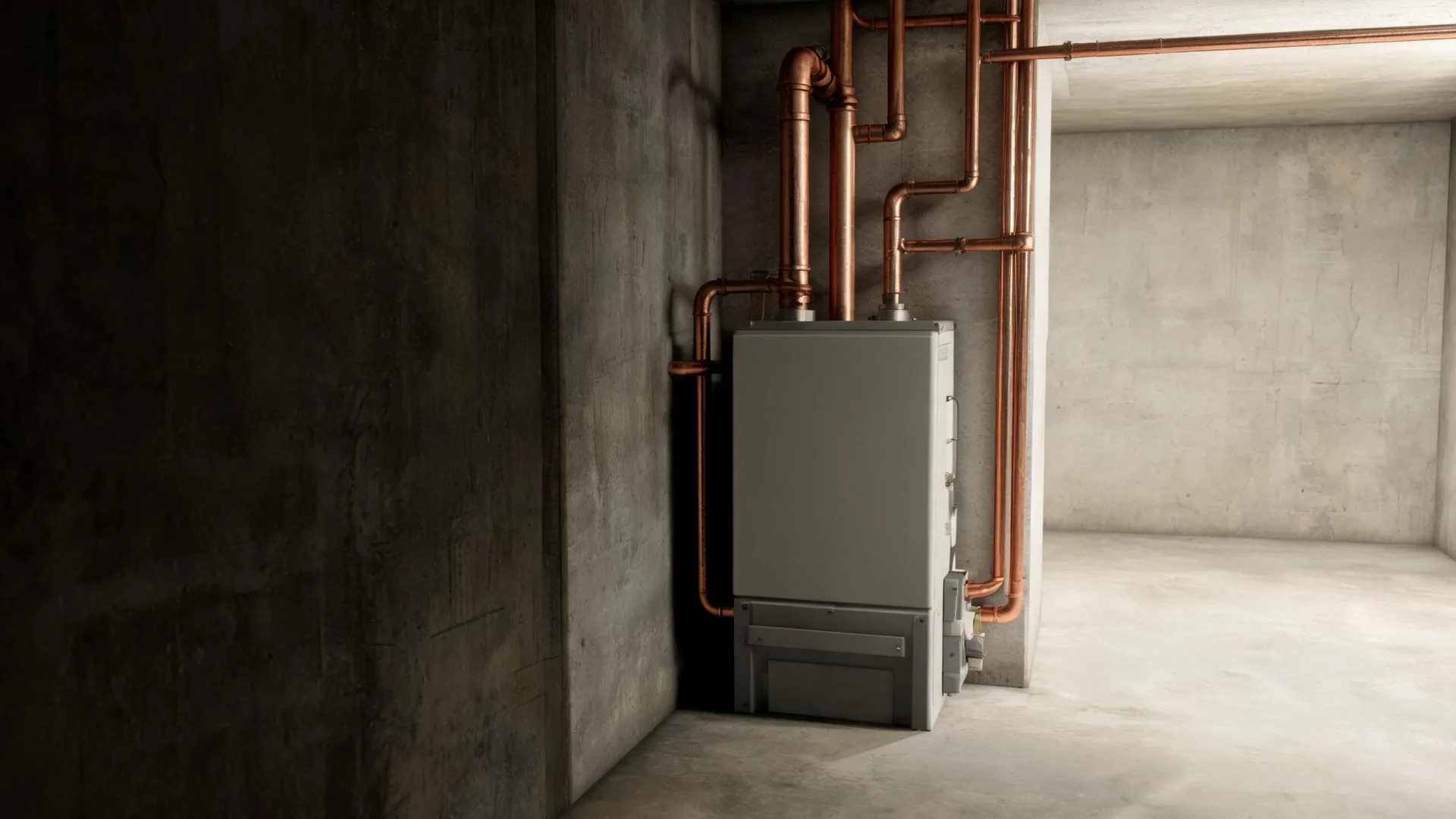
A contractor quoting a boiler installation in Douglas County has to size the unit for what it will actually be asked to carry, not for a house that sits in a mild climate. Homes in Douglas County, CO run heat about nine months a year, from September through May. The burner cycles, the ignition system fires, and the heat exchanger flexes with every call for heat across that run. An undersized boiler compensates by running longer per cycle, which concentrates wear on exactly the components that are hardest to replace. Proper load calculation before the install is what determines whether the equipment holds up or degrades ahead of schedule.
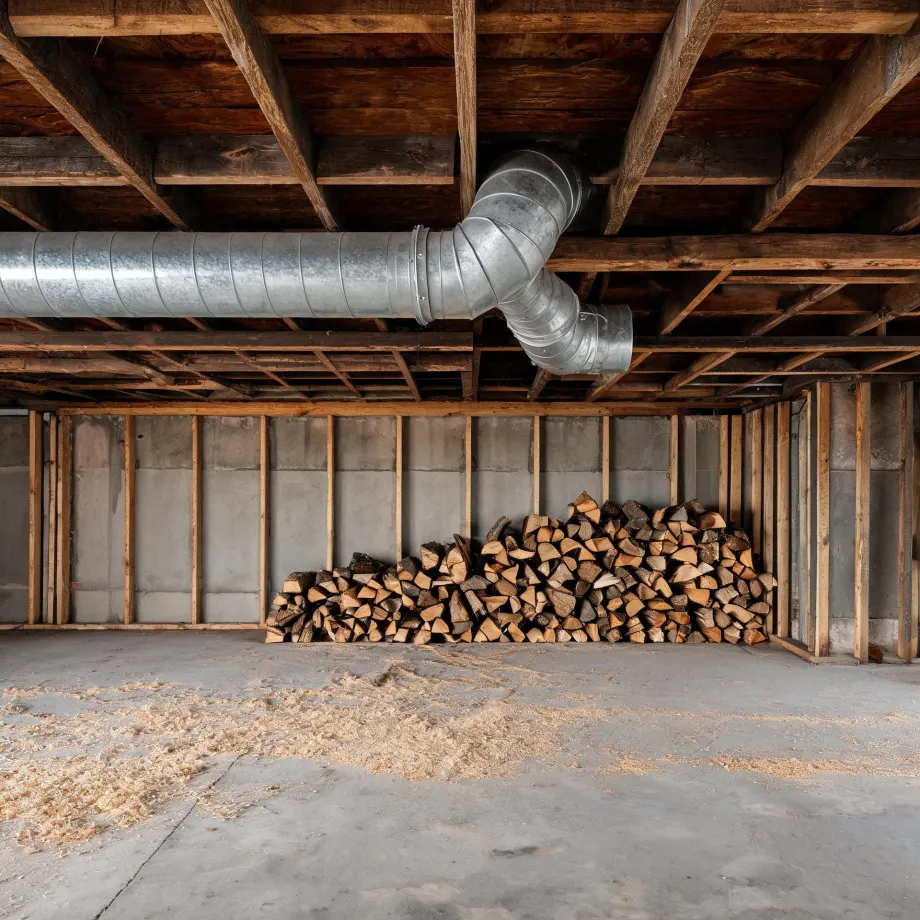
Douglas County's housing stock skews recent enough that the ductwork and mechanical infrastructure in most houses was built for loads that are not far from what a new boiler will ask of them. Half the homes in Douglas County, Colorado were built in 2002 or earlier (2020-2024 ACS 5-year). A contractor quoting a boiler installation here spends less time worrying about whether the existing system layout can carry the new equipment, and more time on the specifics of the house itself: room configuration, existing piping runs, and where heat needs to go. The building is unlikely to be the obstacle.
What Gets Installed With a New Boiler
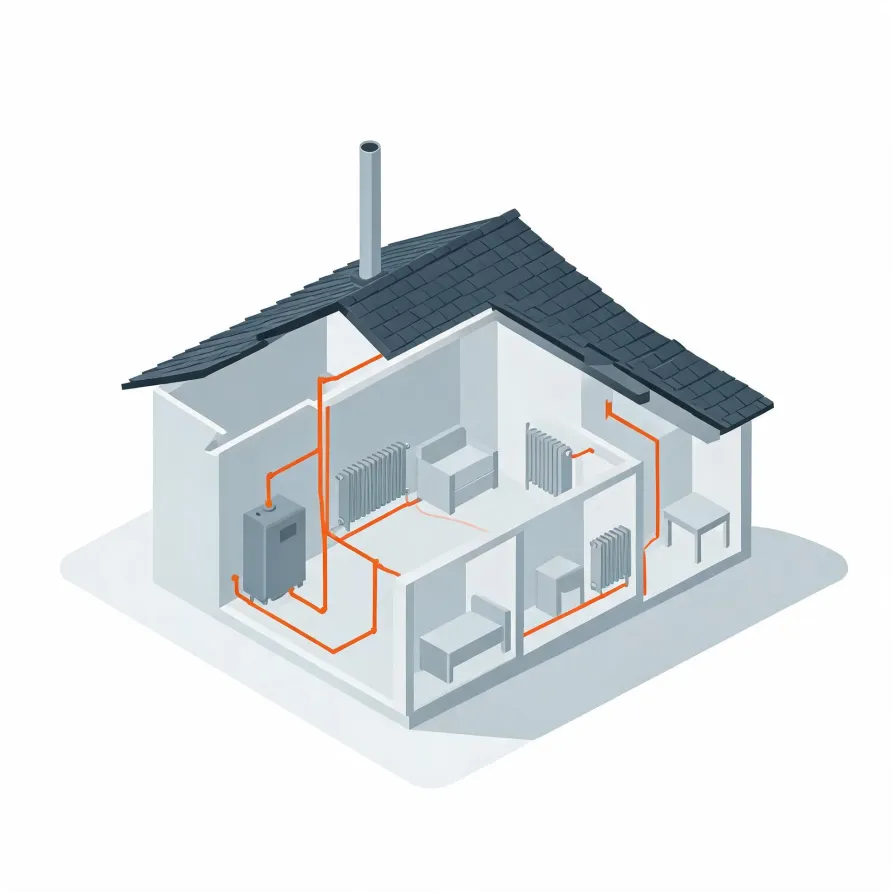
The boiler itself sits in a utility room, basement, or mechanical closet and is the unit that heats the water the system runs on. Paired with it are the expansion tank, which absorbs pressure as water heats and expands, and the circulator pump, which moves the heated water through the pipes.
From the boiler, supply and return piping runs through the house to the heat emitters, whether those are baseboard radiators, panel radiators, or in-floor tubing set into the subfloor. A pressure relief valve and a backflow preventer are fitted at the boiler itself, and the thermostat or zone controls are mounted on interior walls where they can read the living space.
The drawing shows a representative layout, and a licensed contractor determines exactly which components and configurations apply to this house.
Get matched in Douglas CountyDouglas County, by the numbers
353 severe weather events were recorded in Douglas County, Colorado between 2015 and 2024.
NOAA National Centers for Environmental Information, Storm Events Database, bulk CSV export, events 2015-01-01 through 2024-12-31.Half the homes in Douglas County, Colorado were built in 2002 or earlier (2020-2024 ACS 5-year).
U.S. Census Bureau, 2020-2024 American Community Survey 5-Year EstimatesDouglas County, Colorado holds 144,432 housing units (2020-2024 ACS 5-year).
U.S. Census Bureau, 2020-2024 American Community Survey 5-Year EstimatesOwners occupy 77.4% of the occupied homes in Douglas County, Colorado (2020-2024 ACS 5-year).
U.S. Census Bureau, 2020-2024 American Community Survey 5-Year EstimatesSevere Weather Events in Douglas County
Boilers in Douglas County work against whatever the climate puts on them, and that load is a local variable. How often severe weather hits here shapes how hard the equipment runs and what it needs to hold up to.
353 severe weather events, 2015–2024. Source: NOAA National Centers for Environmental Information, Storm Events Database.