Radiators not heating up in Colorado Springs, CO

Skip the calls

A radiator that stays cold while the boiler runs is a common complaint in Colorado Springs homes once winter sets in hard. Trapped air, a stuck valve, or a circulator losing its grip can all be the cause, and telling them apart from your kitchen table is tough. Most people start by searching around, calling a few companies, explaining the same problem each time, then sitting with quotes trying to guess who actually knows boilers. That's the part you can skip. Tell us what's going on and you get matched with one licensed El Paso County contractor who works on boilers and radiators all winter and has seen this exact problem plenty of times. No list of names to sort through, no repeating yourself on call after call. Just a straightforward path to someone who can look at your system and tell you what's actually wrong.

Why is my radiator not heating up?

You've got the boiler running, maybe you can hear it, but one radiator (or a few) stays cold or only warms up partway. Before you call anyone, you want to know what's actually wrong with it and whether it's something simple or a sign of a bigger problem with the system heading into a Colorado Springs winter.

Most often, air is trapped inside

Hot water needs to fill the whole radiator to heat it evenly, and trapped air gets in the way, usually settling at the top so the bottom stays warm while the top stays cold. This happens more at the start of winter, when a system that sat idle through summer gets fired up again and the air that worked its way in has had months to collect. A radiator that's cold at the bottom instead points somewhere else, usually a valve that's stuck or shut, or sludge sitting in the bottom of the radiator itself. Either way, the boiler is doing its job. The problem is between the boiler and that radiator, not the boiler itself.

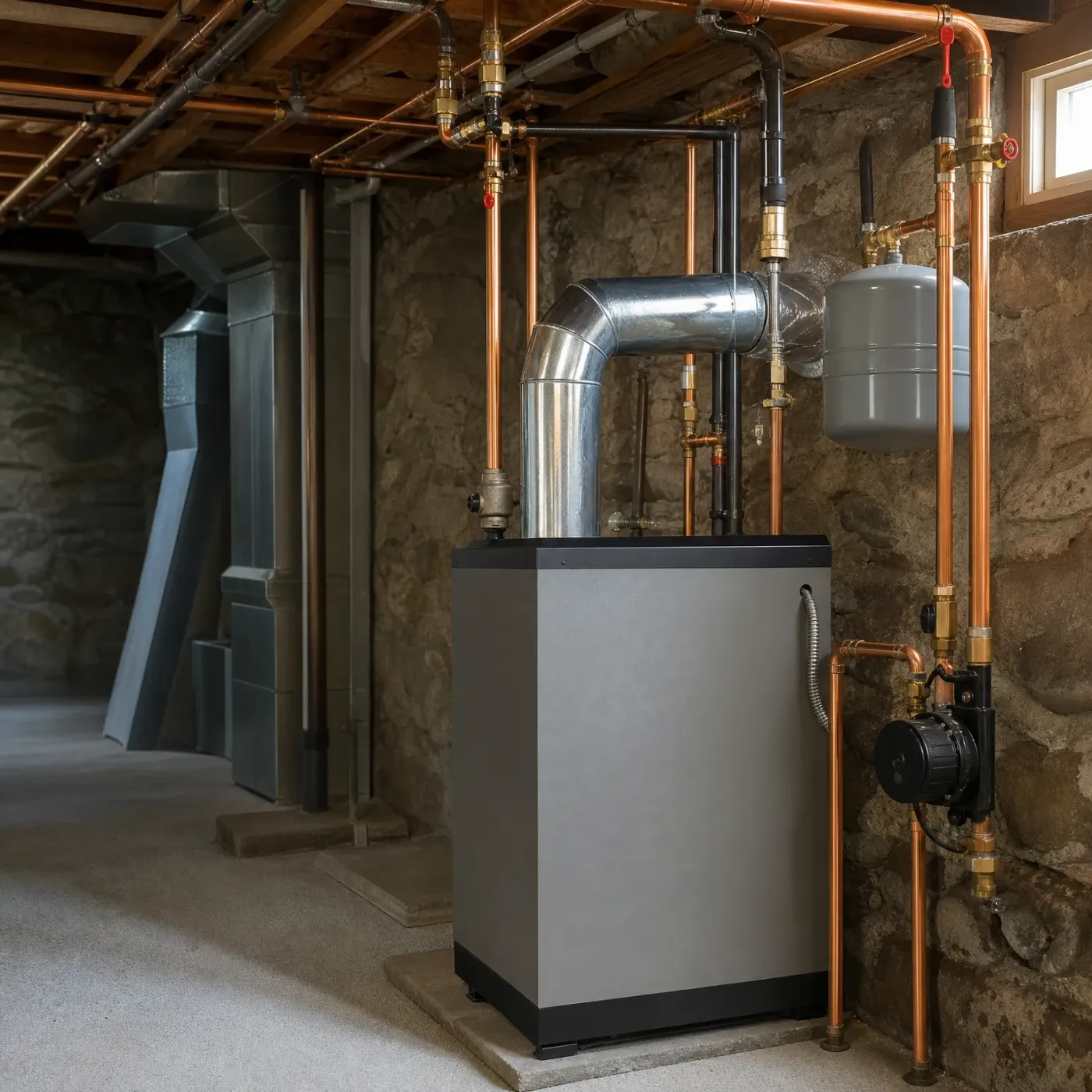
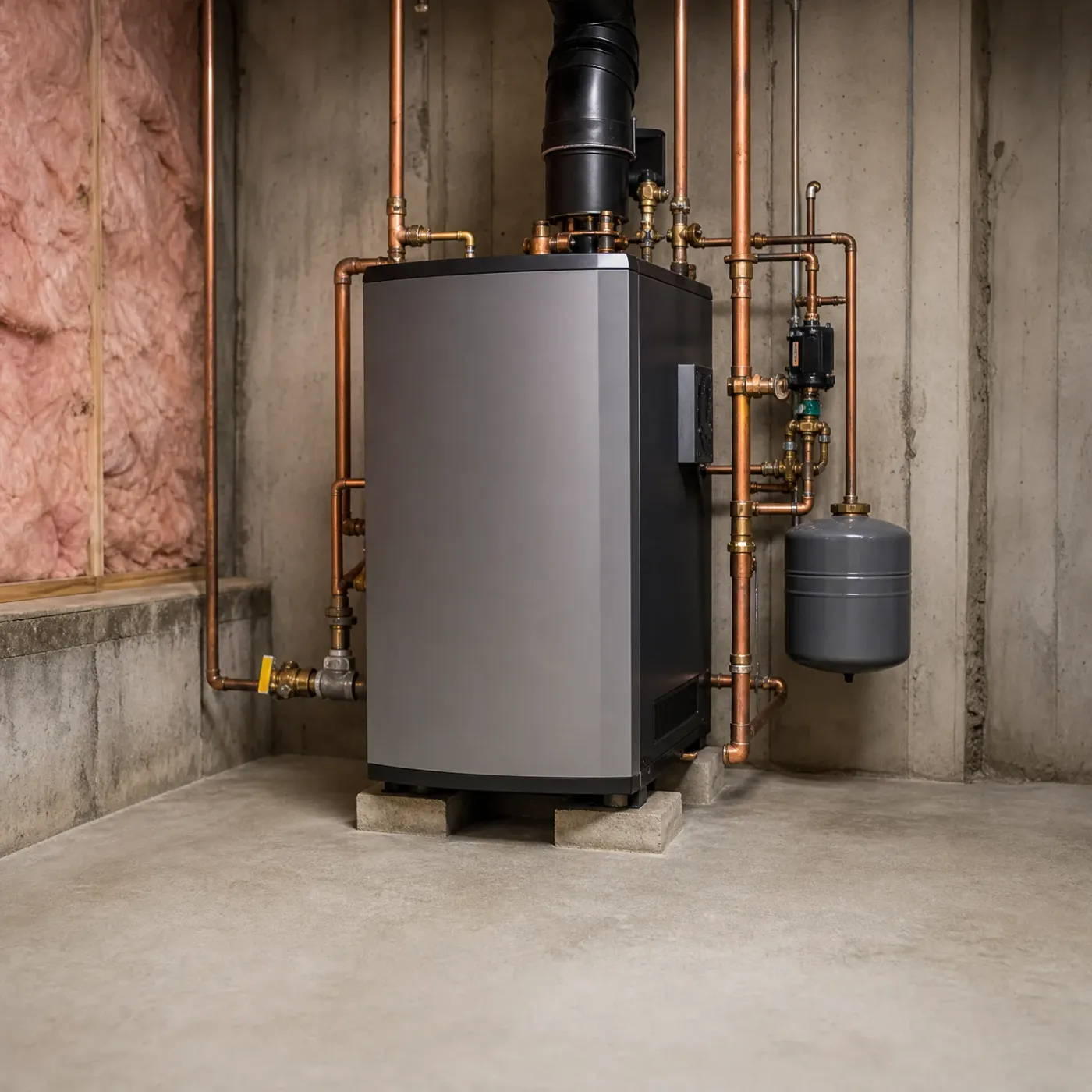
A gray and black boiler unit sits on concrete blocks in a basement corner, connected to copper piping, valves, a black flue duct, and a gray expansion tank, with bare concrete walls and exposed pink insulation at left.

Heat moving through the system

Water circulates through every pipe and valve, out to each radiator and back. When the circulator pump is strong and the valves are open, every radiator in the house gets hot, start to finish, even on a night in the single digits.

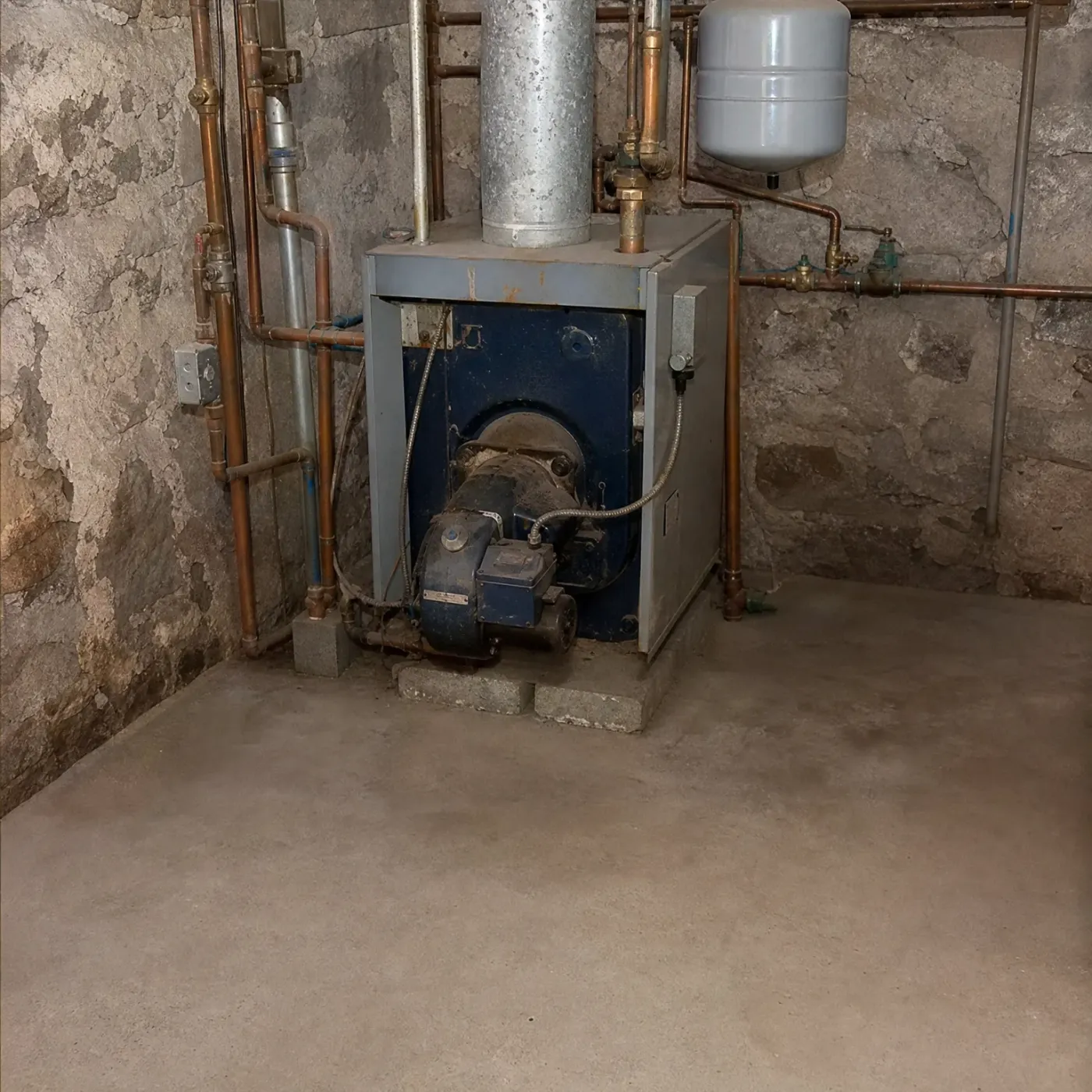
An oil-fired boiler with a blue and gray cabinet and burner sits on concrete blocks in a basement corner with stone walls, connected to copper pipes, a metal flue, and a wall-mounted expansion tank.

One radiator left out

A radiator can sit cold while the rest of the house heats fine. Air trapped in the line, a valve that won't open all the way, or sediment built up near the inlet will all block that one radiator from getting its share of hot water.

Why does a cold radiator matter more once winter hits here?

  • Winter nights average 17°F

    Overnight lows average 17°F here in December, January and February, so a radiator that won't heat is losing you ground on the coldest nights, not the mildest ones.

  • Heat runs September through May

    Heat runs about nine months a year here, September through May, so a stuck valve or trapped air isn't a one-week problem. It sits there most of the year until it's fixed.

  • 69.3% of homes heat with gas

    Most homes in El Paso County heat with gas, 69.3% of them, which means the boiler itself is usually fine. The problem is almost always what's between it and the radiator.

NOAA nClimDiv 1991-2020 · ACS 2020-2024

Bleeding a radiator yourself

Trapped air usually sits at the top of the radiator, near the bleed valve. Shutting the boiler off first, then opening that valve with a radiator key lets the air hiss out until water starts to dribble. That's the sign it's clear. It's a reasonable thing to try before calling anyone, and it takes a few minutes once you know where the valve is. If the radiator fills in and heats evenly afterward, air was the problem. If it bleeds fine and stays cold anyway, the cause is somewhere else in the system.

What bleeding won't fix

A valve that's stuck shut won't open because you let air out, and a circulator pump that's lost its grip won't push water any harder either. Both need a hand to diagnose, since a stuck valve can look identical to an airlock from where you're standing, and a weak pump might still move enough water to warm some radiators but not the ones furthest from the boiler. Someone who services boilers in Colorado Springs every winter has seen both often enough to know which one they're looking at within a few minutes.

A middle-aged woman with shoulder-length dark hair, wearing a gray cardigan over a cream top, sits in an upholstered armchair and looks toward a sunlit window, with a shelf holding framed pictures and a plant behind her.
A woman and a child wrapped together in a thick knitted blanket on a sofa, both with eyes closed, with a lit table lamp and houseplant in the dim background.
A gray boiler unit on a concrete pad in a stone-walled basement, connected to copper piping, brass valves, a circulator pump, an expansion tank, and a metal flue vent.

No calling every shop in El Paso County

A licensed pro who repairs boilers in El Paso County gets your request.

Skip calling shops to ask who repairs boilers in El Paso County.

Find a licensed boiler pro

You only hire the pro if you want to.

Bleed It Yourself or Call a Contractor

Bleed it yourself

  • Trapped air is the most common reason one radiator stays cold while the rest of the house warms up fine.
  • A radiator key opens the bleed valve so air hisses out until water starts to dribble, which means the air is gone.
  • This only clears air, so if the radiator is still cold after bleeding, the cause is somewhere else in the system.
  • You can do this on your own schedule, without waiting for anyone to come out to the house.
  • It won't help if the problem is a stuck valve, a failing circulator, or sludge sitting in the radiator itself.
  • Doing it wrong, like opening the valve while the boiler is still running hot, risks a burn or a mess.

Call a contractor

  • A stuck valve, a weak circulator, or sludge built up inside a radiator all look the same from the kitchen table: a cold radiator.
  • A local contractor who works on boilers all winter in Colorado Springs has likely seen the exact model and symptom before.
  • One licensed contractor means one visit and one diagnosis, not several companies calling to compete for the job.
  • Flushing sludge out of a radiator or rebuilding a stuck valve takes tools and parts a homeowner doesn't keep on hand.
  • If the circulator pump itself is failing, every radiator on that loop can eventually run cold, not just one.
  • Getting it right the first time matters more once overnight lows are sitting in the teens and the boiler can't afford downtime.
  1. The boiler heats water and the circulator pump pushes it out.

  2. Water travels through supply pipes toward each radiator in turn.

  3. The inlet valve lets water enter the radiator's core.

  4. Water fills the radiator from the bottom as trapped air rises.

A cold radiator almost always comes down to trapped air, a stuck valve, or a circulator pump that's lost its strength, and bleeding it yourself will tell you which one you're dealing with. If bleeding clears it, you're done. If the radiator stays cold or goes cold again in a few days, the problem is further back in the system, in the valve or the pump, and that's a job for someone who works on boilers all winter in this part of Colorado and knows which of those two usually gives out first. A local contractor who takes on your repair handles the whole thing, one visit, rather than passing you between whoever's available that week. You're not stuck explaining the same symptoms to three different companies or sorting through quotes to figure out who actually knows this equipment. Someone qualified looks at your system, tells you straight what's wrong, and fixes it, so the radiator that's been cold on the coldest nights this winter finally heats the way the rest of the house does.
A single-story stucco house at dusk with a lit paver walkway lined by low path lights, desert plants and boulders in front, and distant mountains under an orange and blue sky.

Boiler Repair

No phone calls to make

Step 1 of 3: Equipment
  • A beige upholstered armchair with an olive cushion sits in a sunlit corner beside a wooden side table holding a ceramic vase with leafy branches, under a framed abstract artwork, on a woven rug over a wood floor.
    • Get matched with a pro who works on boilers in El Paso County.
    • An El Paso County pro who repairs boilers gets your request.
  • A gray outdoor condenser unit on a concrete pad surrounded by dark gravel, beside a dark wood-sided wall with an electrical disconnect box and a stone veneer wall with a small evergreen shrub.
    • After this form, you can stop searching for a boiler pro.
    • One request and the search for a pro is handled.
  • A beige upholstered oversized armchair with a matching cushion and a knit throw draped over one arm, beside a round wooden side table holding a vase of greenery near a curtained window, with a framed landscape print on the wall and a woven rug on a wood floor.
    • Skip searching for a boiler pro and answer a few questions instead.
    • One form replaces the calls you'd make to find a boiler pro.
  • Sunlit living room corner with a beige upholstered sofa, cushion and knitted throw, a round wooden side table holding a white ceramic vase of leafy branches and a small wooden bowl, a framed landscape painting on the wall, and a window at right.
    • A licensed pro who works in El Paso County gets your request.
    • Your request stays with one local pro.