Your request goes to a Denver County pro who takes boiler jobs.
A banging sound when your boiler fires up usually means water hitting steam somewhere it shouldn't, often from sediment built up in the bottom of the tank. Banging on shutdown can mean something different, like a part cooling and contracting. Either way, the noise itself is telling you something is wearing on the system, and that's worth sorting out before winter in Denver puts real demand on it.
You don't need to diagnose this yourself. What helps more is getting someone local who works on boilers all winter, the kind of person who's heard this exact sound in a hundred Denver County basements and knows what it usually turns out to be.
That's what happens when you request service here. You get matched with one licensed contractor who covers your area, not a list of five companies competing for your attention. They'll reach out to you directly to talk through what you're hearing and get a look at the unit.
One contractor means one phone call back, not a string of them. It means someone who already knows the kind of boilers common in this area and the kind of repairs that come up when the cold really sets in. That matters more in Denver than in milder places, since a boiler here runs hard for months and a noise that gets ignored in October can turn into a bigger problem by January.
The point of this page isn't to talk you out of calling someone. It's to get you to the right someone without the runaround. Fill out the request and let a contractor who knows this equipment take it from there.
Why is my boiler making a banging noise?
Your boiler has started banging or knocking when it fires up, and it's loud enough that you want to know if it's a real problem before it turns into a bigger one. The sound usually means something specific is going on inside the system, not that the whole unit is failing.
Usually sediment buildup in the boiler, called kettling
The banging you hear is most often called kettling. Sediment settles at the bottom of the tank, and when the burner fires, water trapped under that layer heats faster than the water around it and turns to steam. The steam pockets collapse as they rise through cooler water, and that collapse is the bang you hear. It gets louder and more frequent as more sediment builds up over time. With Denver's hard winters, your boiler is firing often from fall through spring, so a system with sediment gets more chances to bang during those months than it would somewhere with a shorter heating stretch. Left alone, kettling stresses the tank and the heat exchanger, so it's worth having checked before it gets worse.
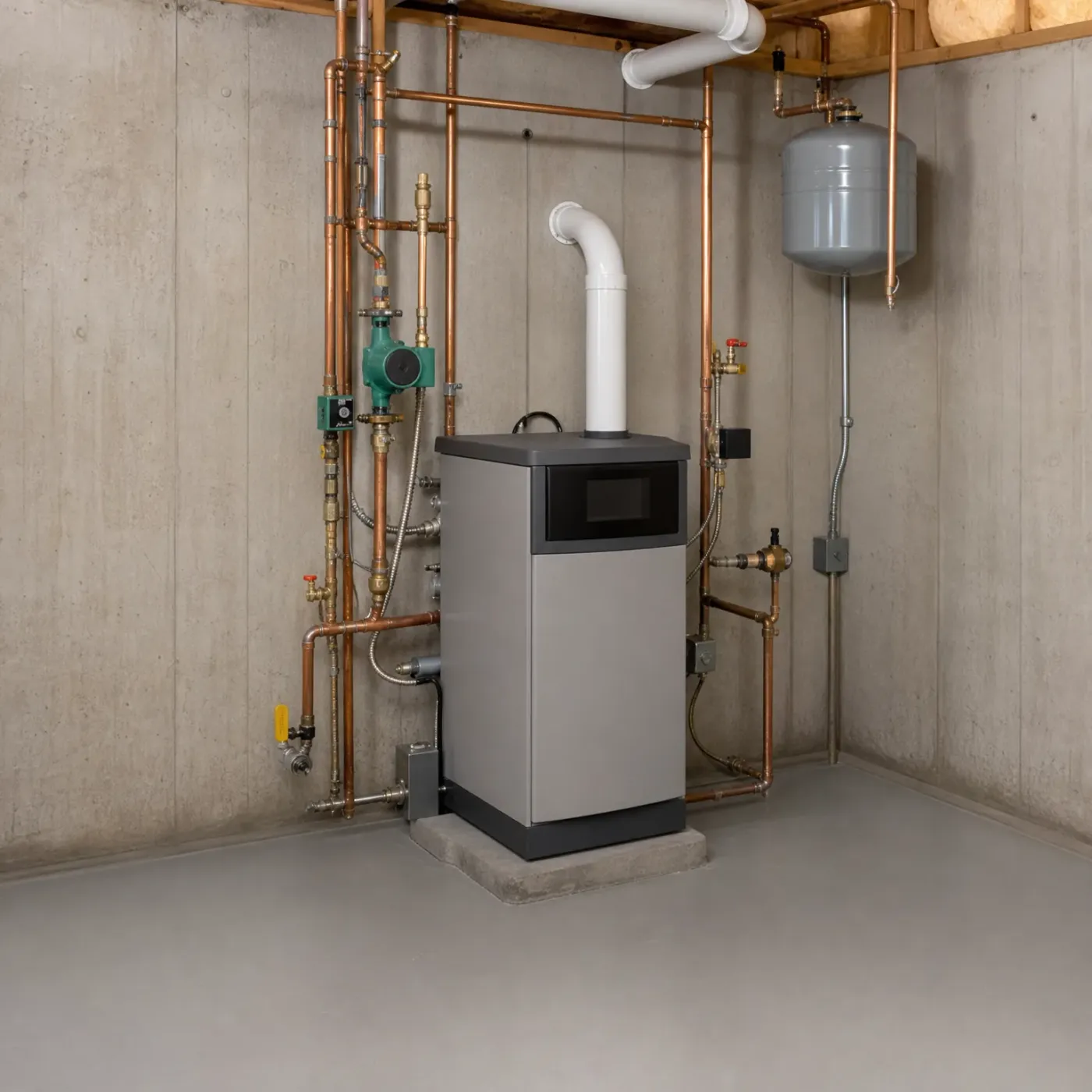
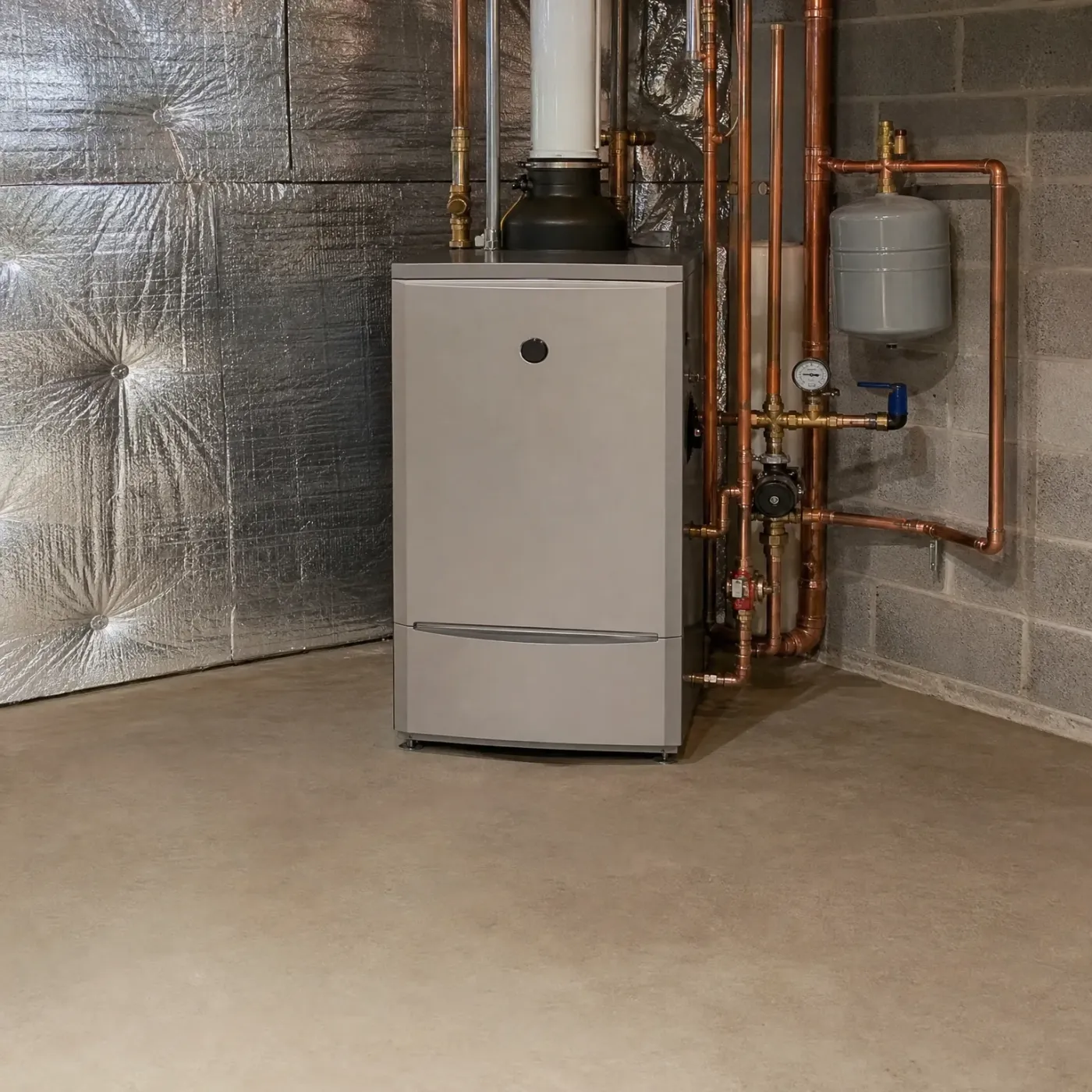
Running quiet
This is a boiler firing without noise. Water moves through the copper lines and the circulation pump without banging, the expansion tank holds steady pressure, and the hoses carry hot water with no knocking at startup or shutdown. This is what yours sounded like before.
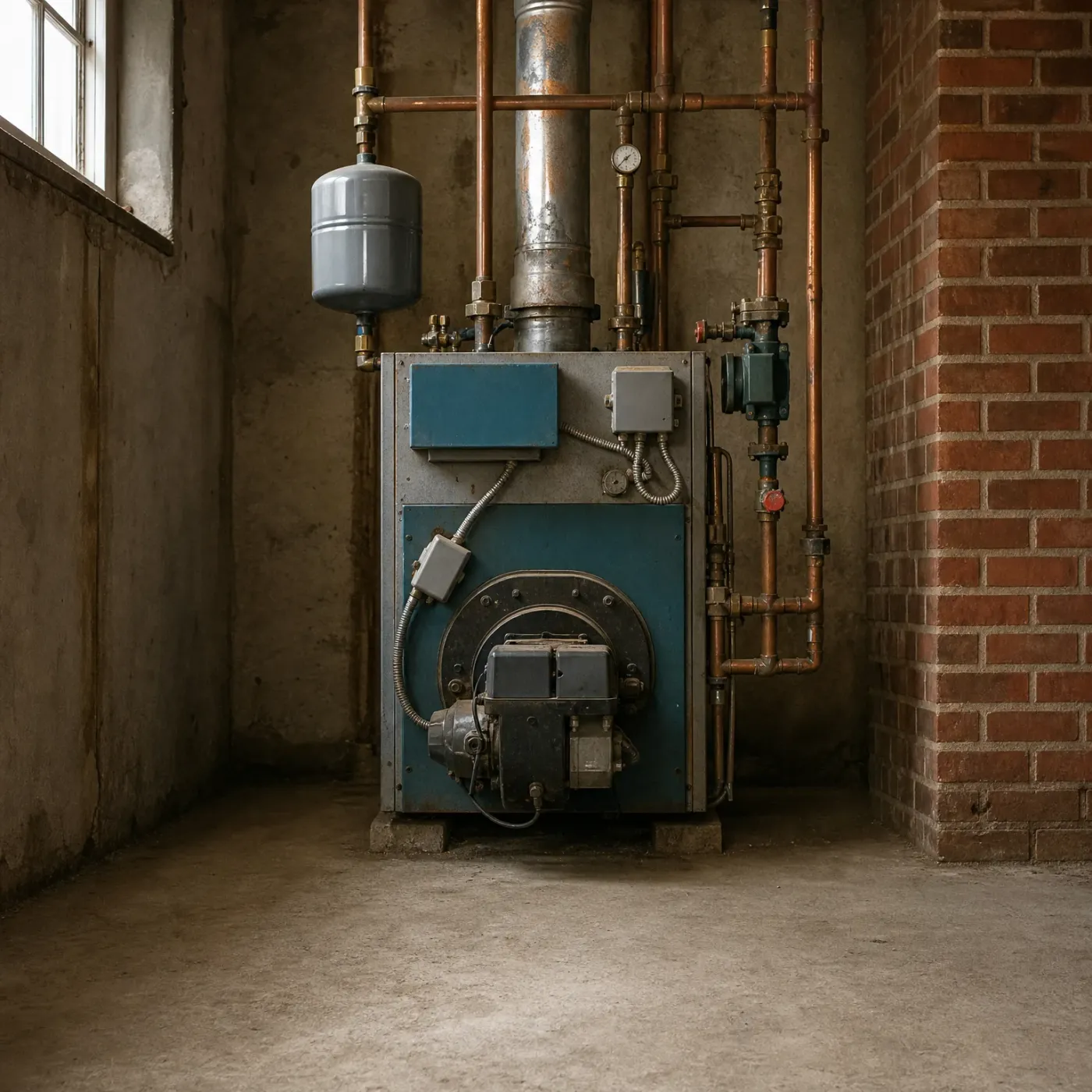
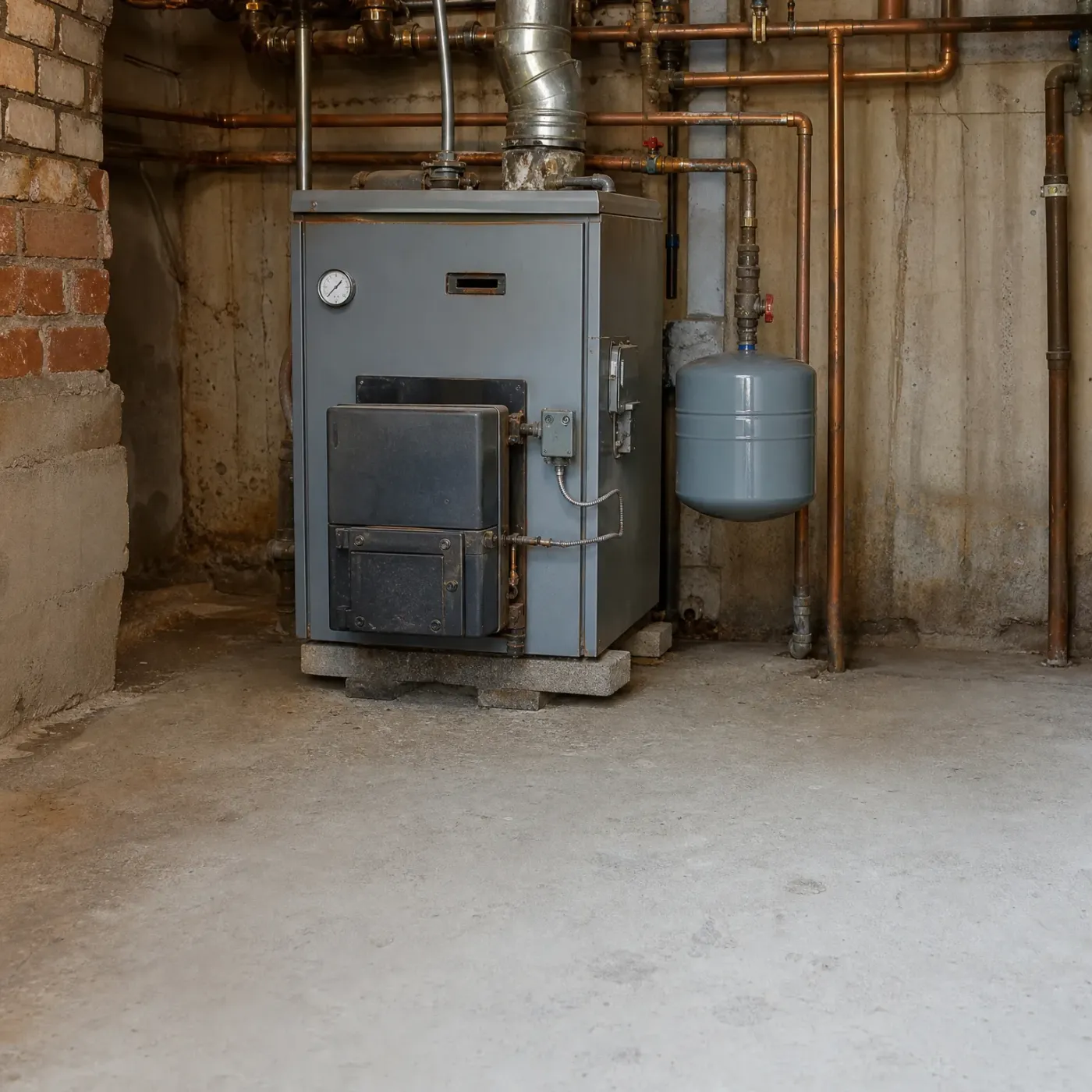
Sediment and old iron
This is where banging comes from. Years of mineral buildup settle at the bottom of a cast-iron boiler like this one, and water trapped under it turns to steam and pops. The gauges and valves around it can point to pressure or water level problems too.
Why does a Denver boiler get noisier as winter goes on?
Winter nights average 19°F
Overnight lows here average 19°F in December, January and February, and the cold is what makes a boiler with sediment or trapped air start banging in the first place.
Heat runs October through May
Heat runs here from October through May, about eight months a year, so a boiler with a developing problem gets a lot of chances to make it worse.
60.8% of homes heat with gas
Gas heats 60.8% of homes in Denver County, and a gas boiler that bangs needs a look before the banging turns into a cracked heat exchanger or a failed seal.
A licensed pro who repairs boilers in Denver County gets your request.
You're not committing to anything by asking.
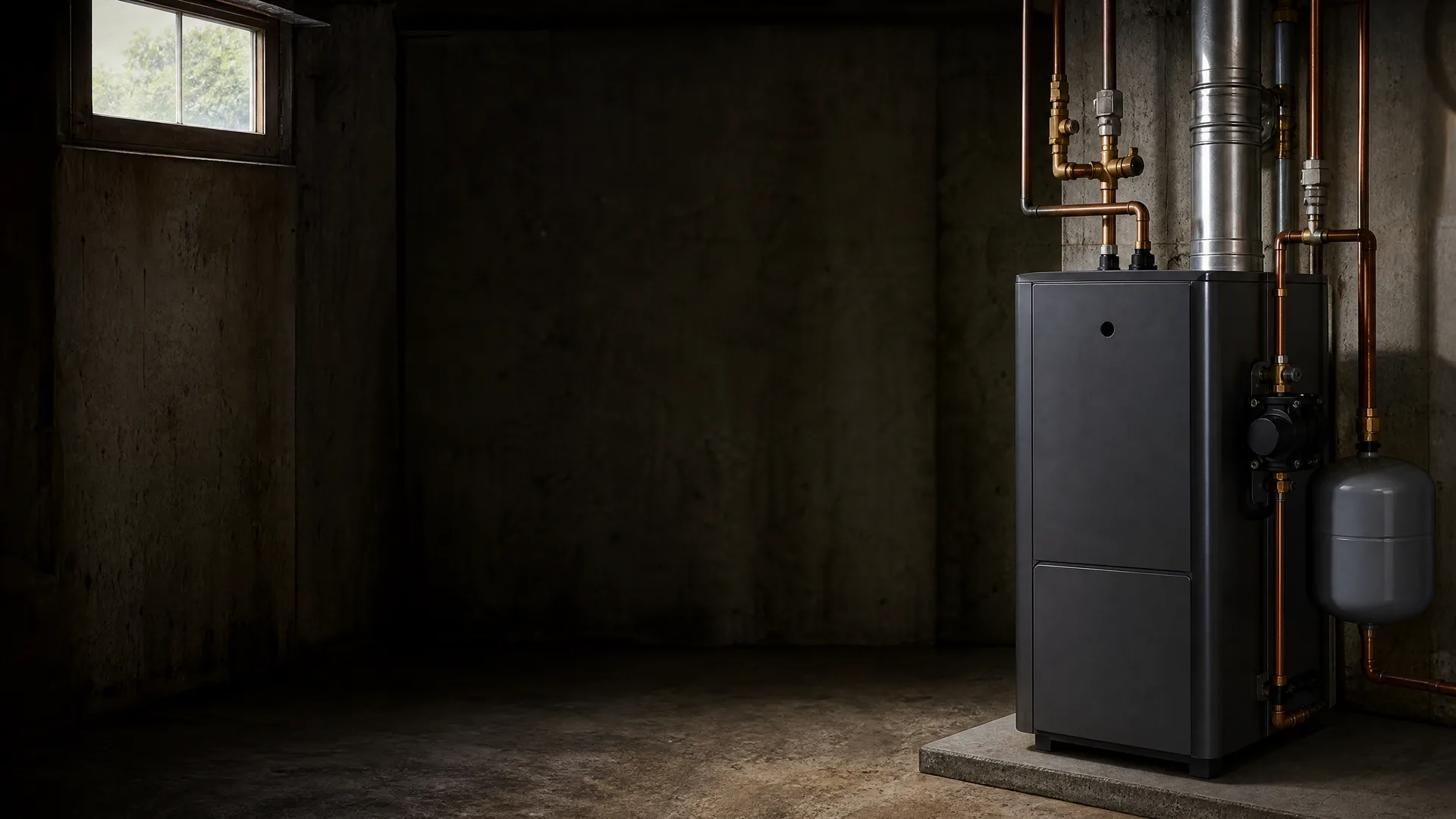
Quiet at startup
The pump moves water through the copper lines and the expansion tank holds its pressure. The flue draws the exhaust straight up and out. Nothing knocks when the burner lights, and nothing knocks when it shuts off.
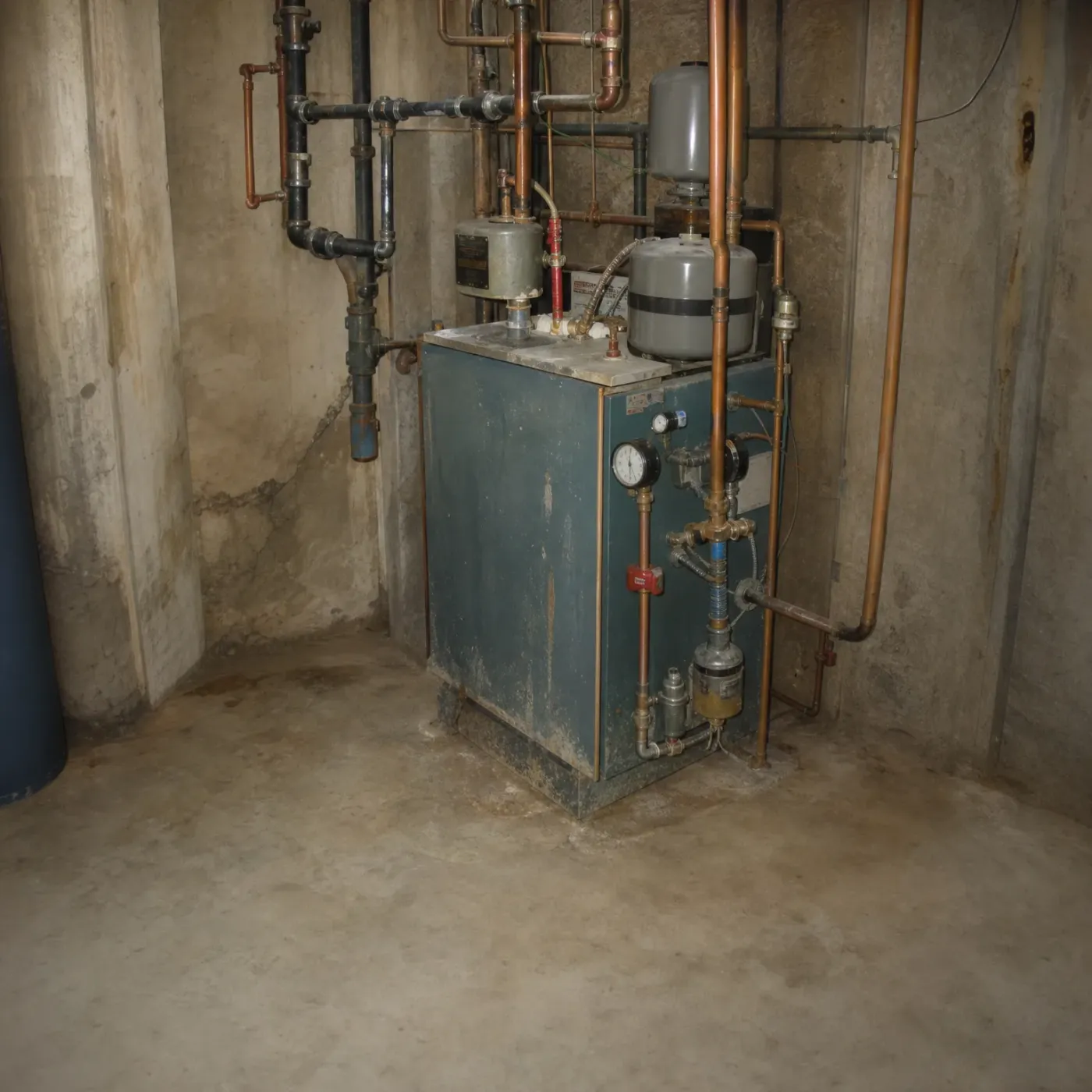
Banging in the basement
This boiler bangs because something inside it is working against the water instead of with it. Sediment on the bottom of the tank, trapped air in the lines, or a valve that's closing too fast will all do it. The pressure gauge and the pipes around it won't tell you which.
Is the banging getting worse with every cold snap?
You probably notice it most on the coldest mornings, when the boiler runs longest to keep up. There's a bang or a series of knocks right as it fires, sometimes loud enough to hear from upstairs. You might also see water marks near the base of the tank, or notice the pressure gauge reading lower than it used to. Left alone, sediment keeps baking onto the bottom of the tank every time the burner runs, and that layer only gets thicker as the winter goes on. A tank that's been banging for months is working harder to heat the same amount of water, and the section of metal under that sediment is the part most likely to wear through first.
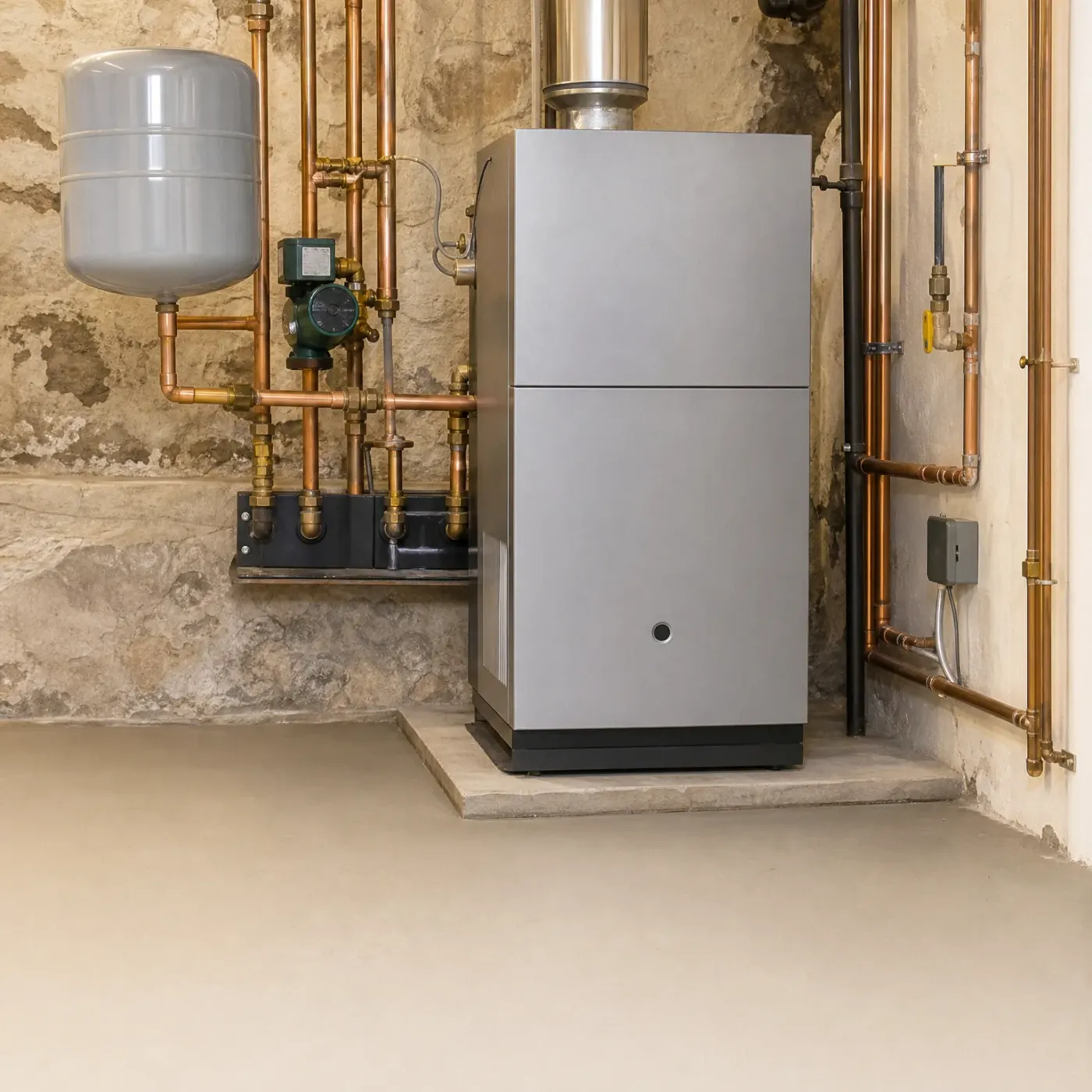
Copper lines run clean to the pump and the expansion tank, with a blue shutoff valve and a pressure gauge you can check at a glance.
A gray steel boiler feeds copper piping below a wide flue duct, with red and blue valves marking where sediment or trapped air usually builds up.
Call Now or Wait It Out
Call someone now
A tech can flush the sediment or bleed the trapped air before a cold snap makes the banging worse.
You get one licensed, local contractor who works on boilers all winter and knows what usually causes this in Denver homes.
Catching it now means fewer calls, since one contractor is matched to you instead of several chasing the same job.
If the noise is from a part cooling and contracting, a tech can confirm that and rule out anything more serious.
Getting it looked at before January means less chance of a no-heat call on the coldest morning of the year.
Wait it out
The banging usually doesn't go away on its own, since sediment in the tank doesn't clear itself.
Heat runs here from October through April, so a noise that starts mild tends to get louder as the system works harder.
Ignoring it risks the sediment layer thickening, which makes the boiler run longer to heat the same amount of water.
A part that's banging under strain now can wear out faster than one that's running quiet.
Waiting through a few more cold mornings means living with the noise, and possibly a bigger repair, once it's worse.
A banging boiler almost always comes down to sediment in the tank or air trapped in the lines, and both get worse the longer a Denver winter runs. The noise is not something to live with until spring. A contractor who works on boilers all winter in this area has flushed that sediment and bled those lines more times than they can count, and knows which one matches what you're hearing before they even open the panel. When you request service, you're matched with one licensed local contractor, not a handful of companies competing for the job, so the person who calls you back is the one who'll actually show up and work on your system. Catching this now, before the next cold snap pushes the boiler harder, is what keeps a knock from turning into a repair that costs you heat on the coldest night of the year.
Find a boiler repair pro in Denver County
Your request goes to one pro, not a list of companies.