



Boiler leaking water in Colorado Springs, CO

Step 1 of 3: Equipment

A boiler leaking water usually comes down to pressure or a worn seal. The pressure relief valve lets water out when the system builds up too much pressure, often from a faulty expansion tank or a fill valve stuck open. A leak can also come from a corroded pipe fitting, a worn pump seal, or a crack in the heat exchanger itself. With winters as hard as they are here in Colorado Springs, a boiler that's leaking and losing pressure can struggle to keep up, and the leak itself can get worse as internal parts corrode further. Shut off the water supply to the unit if you can reach the valve, and keep an eye on where the water is pooling, since that location points to which part is failing. It's not something to leave for later. A small leak now is how a cracked heat exchanger or a seized pump gets found next.

Why does a Colorado Springs boiler get pushed so hard?

  • Winter nights average 17°F

    Winter nights average 17°F here, and that cold keeps calling on the pressure relief valve and every fitting in the system to hold.

  • Heat runs September through May

    Heat runs September through May in El Paso County. That's most of the year for seals and valves to wear and start weeping.

  • 69.3% of homes heat with gas

    69.3% of homes here heat with gas, same as a boiler. A fill valve or expansion tank working overtime is a common cause of a leak.

NOAA nClimDiv 1991-2020 · ACS 2020-2024

A small drip you catch early

A little water at the base of the boiler or around a fitting is usually cheap to fix. A tightened fitting, a new seal, or a replaced pressure relief valve stops it before it spreads. Caught early, the leak hasn't had time to touch the circuit board or the gas valve underneath. You keep the boiler running through the rest of the winter without a bigger repair bill later. This is the outcome for most people who call as soon as they see water, rather than waiting to see if it dries up on its own. A boiler that's leaked once and been fixed properly can run the rest of its life without it happening again.

A leak left to run

Water that sits under a boiler for weeks works on more than the floor. It reaches the electrical connections and the gas valve, and it rusts the heat exchanger from the outside in. What started as a loose fitting can turn into a cracked heat exchanger, and that's not a part that gets repaired. It gets replaced, along with the boiler around it. A leak left alone through a Colorado Springs winter also means pressure keeps dropping, so the boiler short cycles or won't hold heat at all on the coldest nights. The difference between the two outcomes is usually just how many days passed before someone looked at it.

A smiling man in a gray long-sleeved shirt stands in a kitchen looking to the side, with open shelves of dishes, a white mug on the counter, a potted plant, and a view through a doorway into a living room.
A smiling bearded man in a green sweater sits at a white marble kitchen island with a mug, potted plant and bowl of fruit, in a bright white interior with open shelving and an arched doorway.
A smiling man with dark curly hair and a beard, wearing a dark green knit sweater, stands at a white marble kitchen counter with a dark blue mug, with open shelving, pendant lights and a houseplant behind him.
A smiling man in a green ribbed sweater stands behind a wooden table holding a ceramic mug of coffee in a kitchen with white subway tile, shelves of potted plants, and a bowl of fruit.

What the pressure relief valve does

The pressure relief valve sits near the top of the boiler and opens on its own once pressure inside climbs past what the system is built to hold. That's by design. It's the valve doing its job, not failing at it. Water dripping from it is the system telling you something upstream is off, usually the expansion tank or the fill valve. Shutting the valve or taping over it doesn't fix that and leaves the boiler with nowhere to send pressure it can't hold. The fix is finding why pressure is building, not stopping the valve from venting it.
Why the expansion tank matters here

Water expands as it heats, and the expansion tank gives it somewhere to go so pressure in the system stays steady. Inside the tank is an air bladder that cushions that expansion. Once the bladder loses its charge or waterlogs, the tank can't absorb anything and the extra pressure has to go somewhere else, usually out through the relief valve. With heat running from September through May in El Paso County, that tank is working most of the year, and a bladder that's given out shows up fastest during the cold stretch, not in summer.

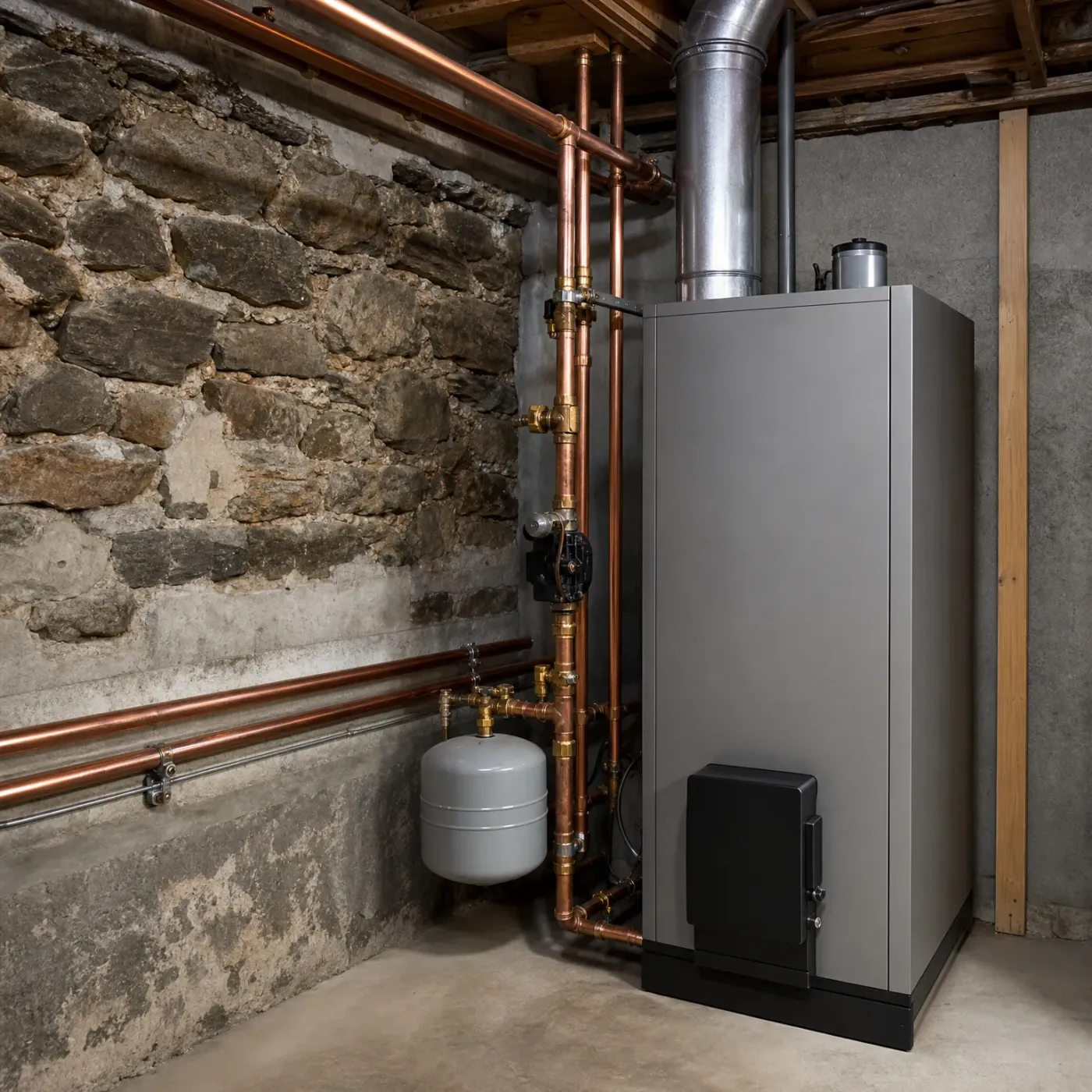
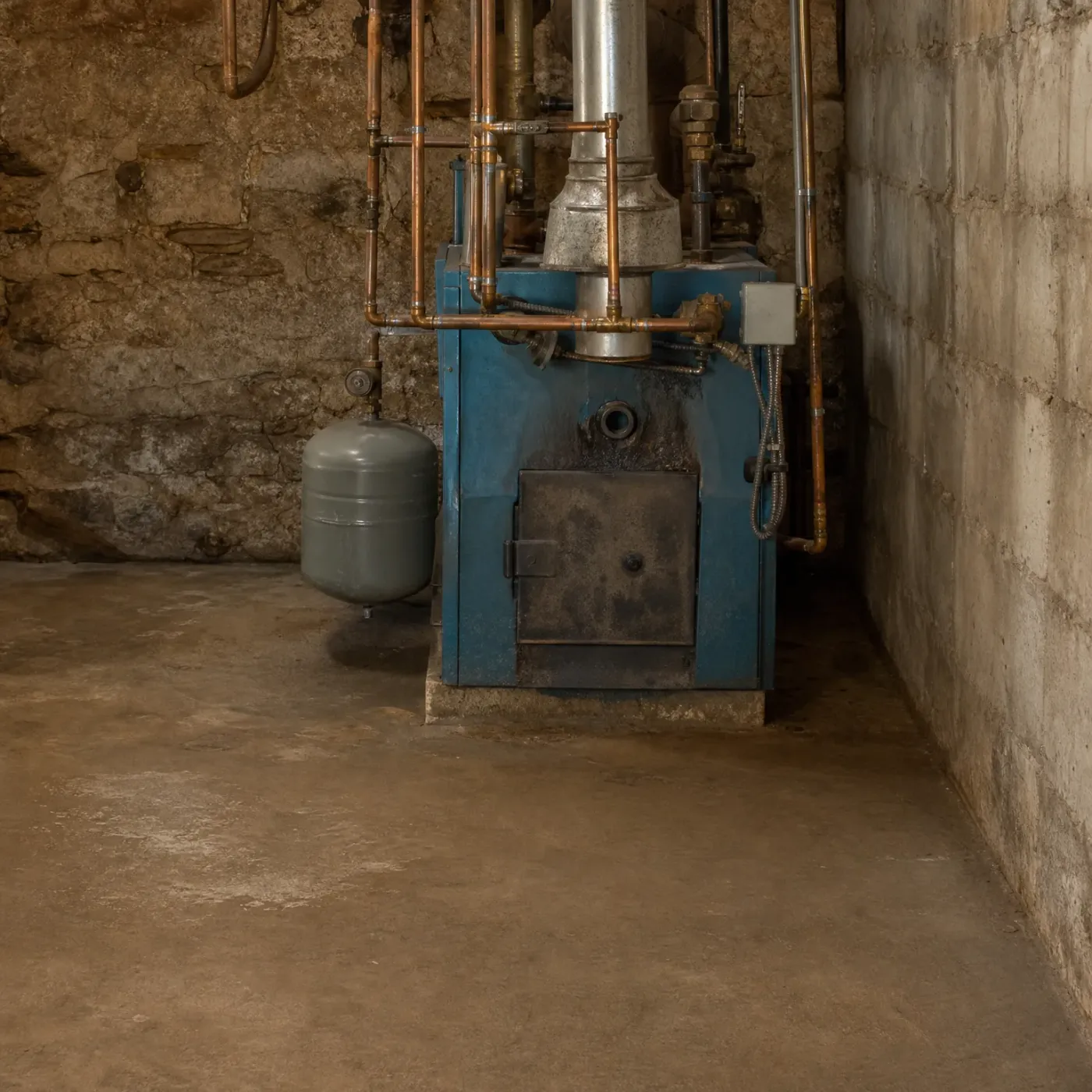
A blue cast-iron boiler with a metal flue pipe and copper piping stands against a stone and concrete block basement wall beside a gray expansion tank on a bare concrete floor.
Before you get your boiler repair
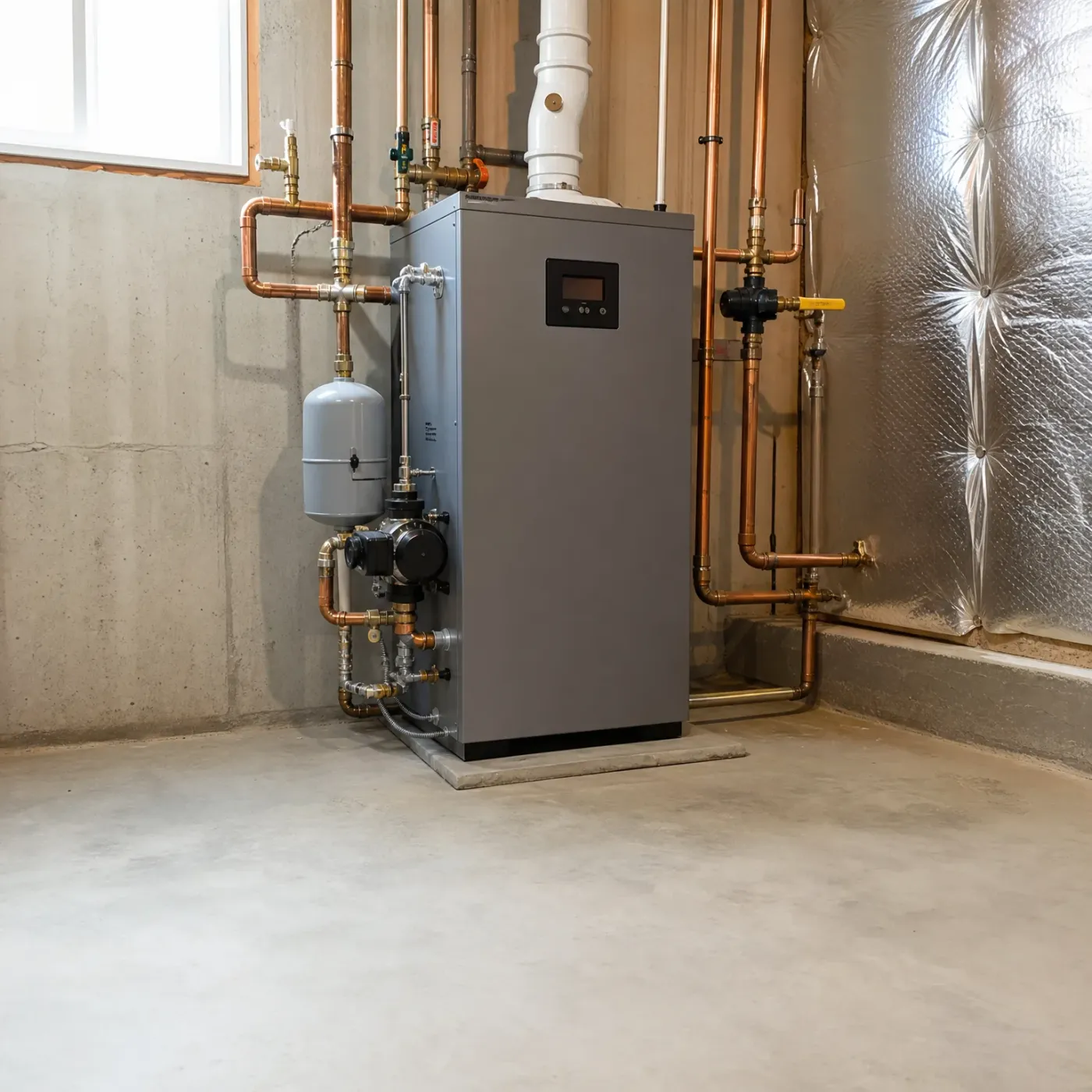
A gray boiler unit with a digital display stands on a concrete basement floor, connected to copper piping, a gas valve, a circulator pump and an expansion tank, beside a concrete wall and foil-faced insulation.
After you get your boiler repair
A gray boiler unit with a metal flue stands in a basement beside copper piping, valves and a small expansion tank, against a stone and concrete wall with wooden joists overhead.

One request and it's handed off

The pro who gets in touch is licensed in Colorado and works in El Paso County.

Send the request today and stop worrying about who to call.

Send it today

No charge to send it. You decide if you hire them.

What's that water doing on your boiler room floor?

You might see a puddle under the boiler, a damp patch on the floor, or a slow drip from a fitting or valve. Sometimes it shows up as a rust-colored stain working its way down the side of the tank. You might hear a hiss near the pressure relief valve, or notice the boiler running longer than it used to without the house feeling any warmer. A musty smell in the room often means the water has been there a while. Left alone, a small leak tends to get worse, and depending on where the boiler sits, the water can soak into the subfloor or nearby framing before anyone notices.

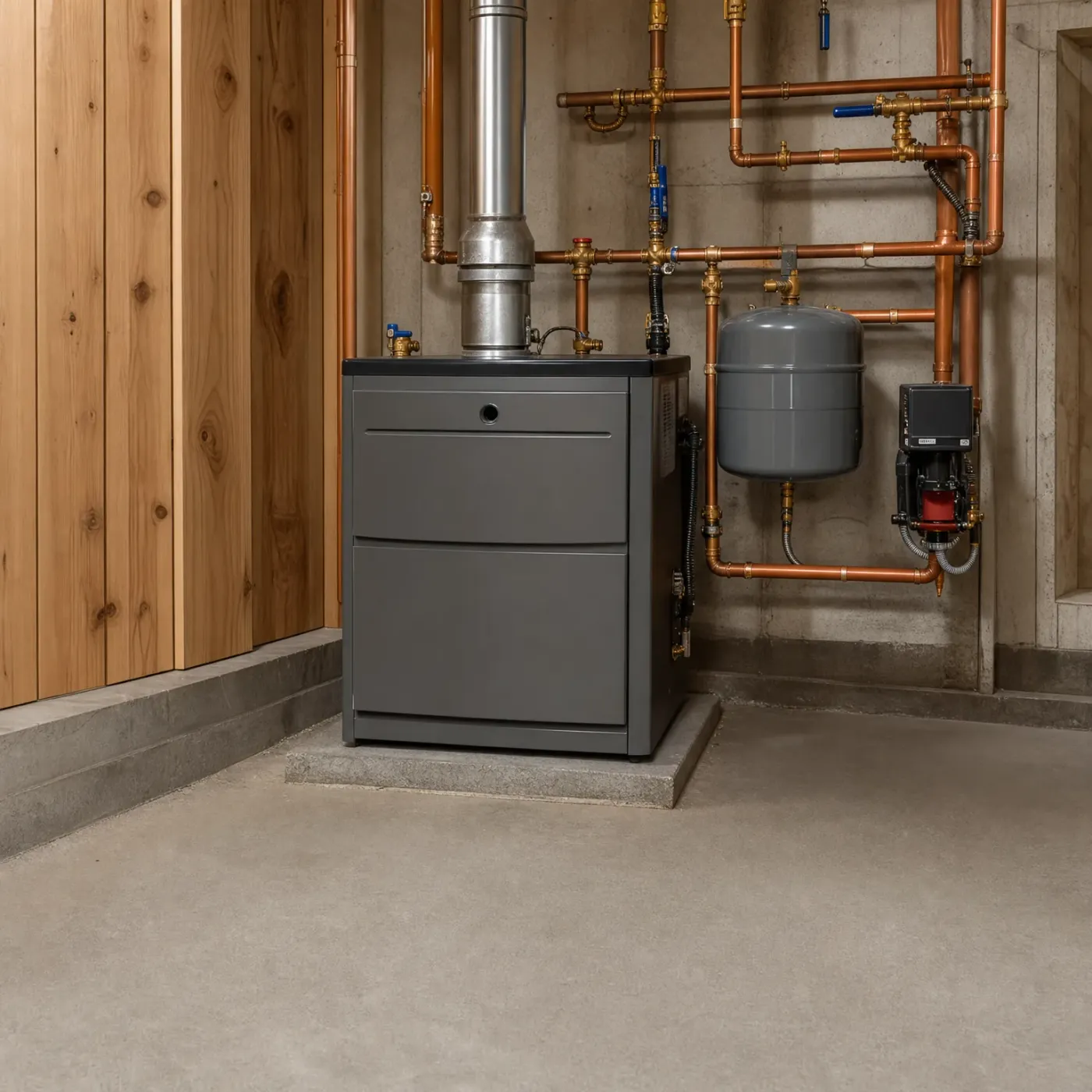
A gray boiler on a concrete pad in a basement, with a metal flue pipe and copper piping, brass valves, a gray expansion tank and a circulator pump mounted on the concrete wall beside wood paneling.

Dry fittings, steady pressure

This is what a boiler looks like when nothing is wrong. The copper lines stay dry, the expansion tank holds its charge, and the circulation pump keeps water moving without a drop escaping anywhere along the pipe run.

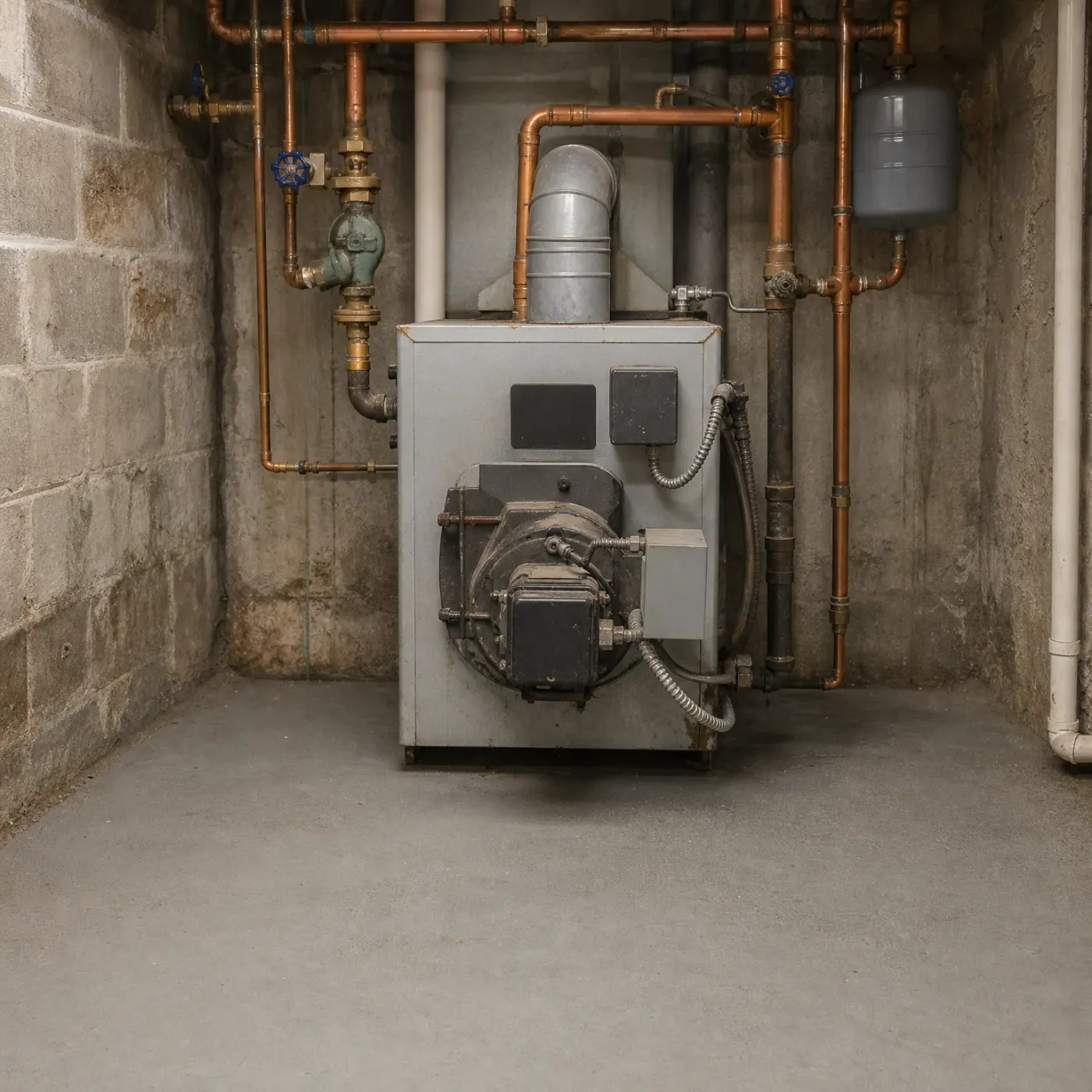
A gray boiler with a flue pipe and burner unit stands against a concrete block basement wall, surrounded by copper and steel piping, valves, and a gray expansion tank, on a bare concrete floor.

A valve or fitting giving way

Here the boiler sits in an unfinished basement with brass fittings and shut-off valves overhead. Any one of those joints can loosen or corrode enough to weep water, and once a fitting starts, it doesn't stop on its own.

Wait on it, or fix the leak

Keep running it

  • A leak rarely seals itself, so the puddle you see today is usually a little bigger next week.
  • Water dripping near the burner or controls raises the chance of a spark hitting a wet connection.
  • A boiler losing water has to keep refilling through the fill valve, which wastes water and strains that valve over time.
  • Low water pressure from a slow leak can trip the boiler's safety switch and shut your heat off on its own.
  • Minerals in the leaking water etch metal as they dry, so a fitting that's merely damp now can corrode and fail later.
  • Letting it go through a Colorado Springs winter means dealing with a bigger repair right when you need heat the most.

Get it looked at now

  • A technician who works on boilers all winter in El Paso County can usually spot a failed valve or worn seal fast.
  • Most leaks trace to one part, the pressure relief valve, a fitting, or a seal, so the fix is often contained to that part.
  • Catching a drip while it's still a drip means less water has reached the electrical controls or the floor beneath the tank.
  • A licensed local contractor will know which parts commonly wear out on systems running hard through a Colorado Springs winter.
  • Fixing the leak now means your boiler holds pressure the way it's built to for the rest of the heating months.
  • One contractor means one visit to get a straight answer, not several companies calling about the same job.
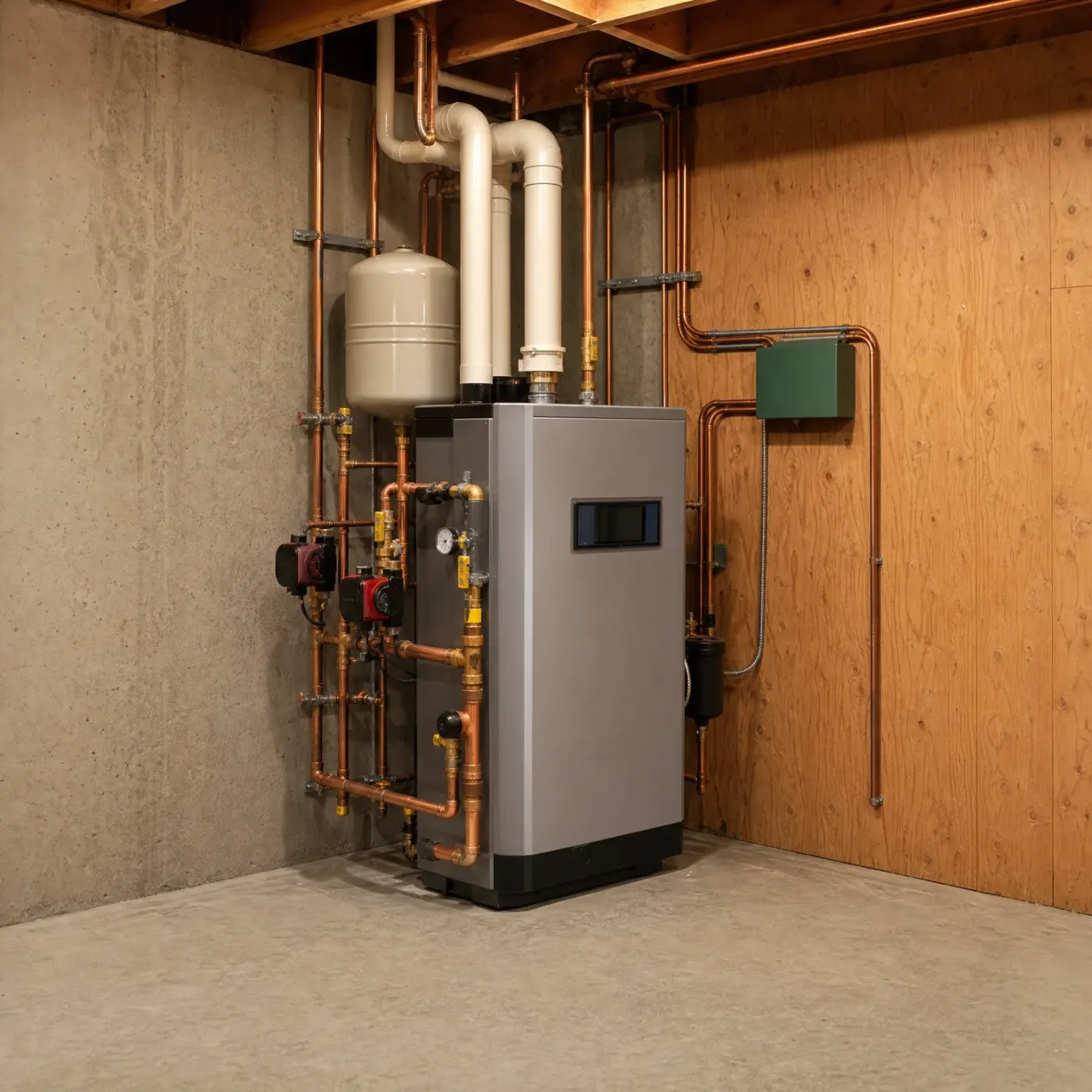
A gray floor-standing boiler in a basement corner with copper piping, two red circulator pumps, a beige expansion tank, white PVC vent pipes, concrete and plywood walls.
Every connection dry, the gauge holding steady, the pump moving water quietly through the system.
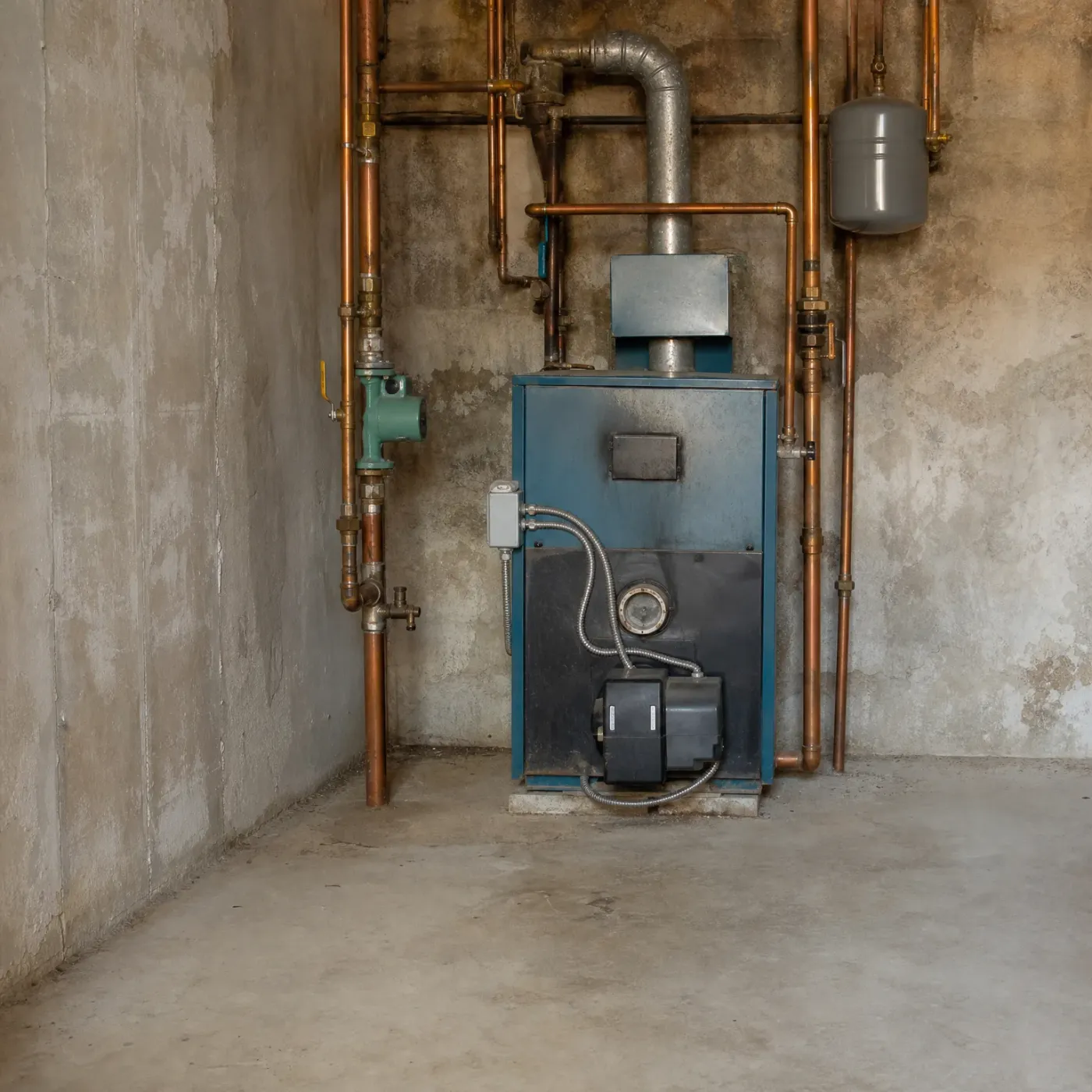
A blue residential boiler with a metal flue, pressure gauge and burner unit stands against a stained concrete basement wall, surrounded by copper pipes, a green circulator pump and a gray expansion tank.
Water pooling at the base of a bare concrete wall, the fittings wet, the housing stained where it has run before.
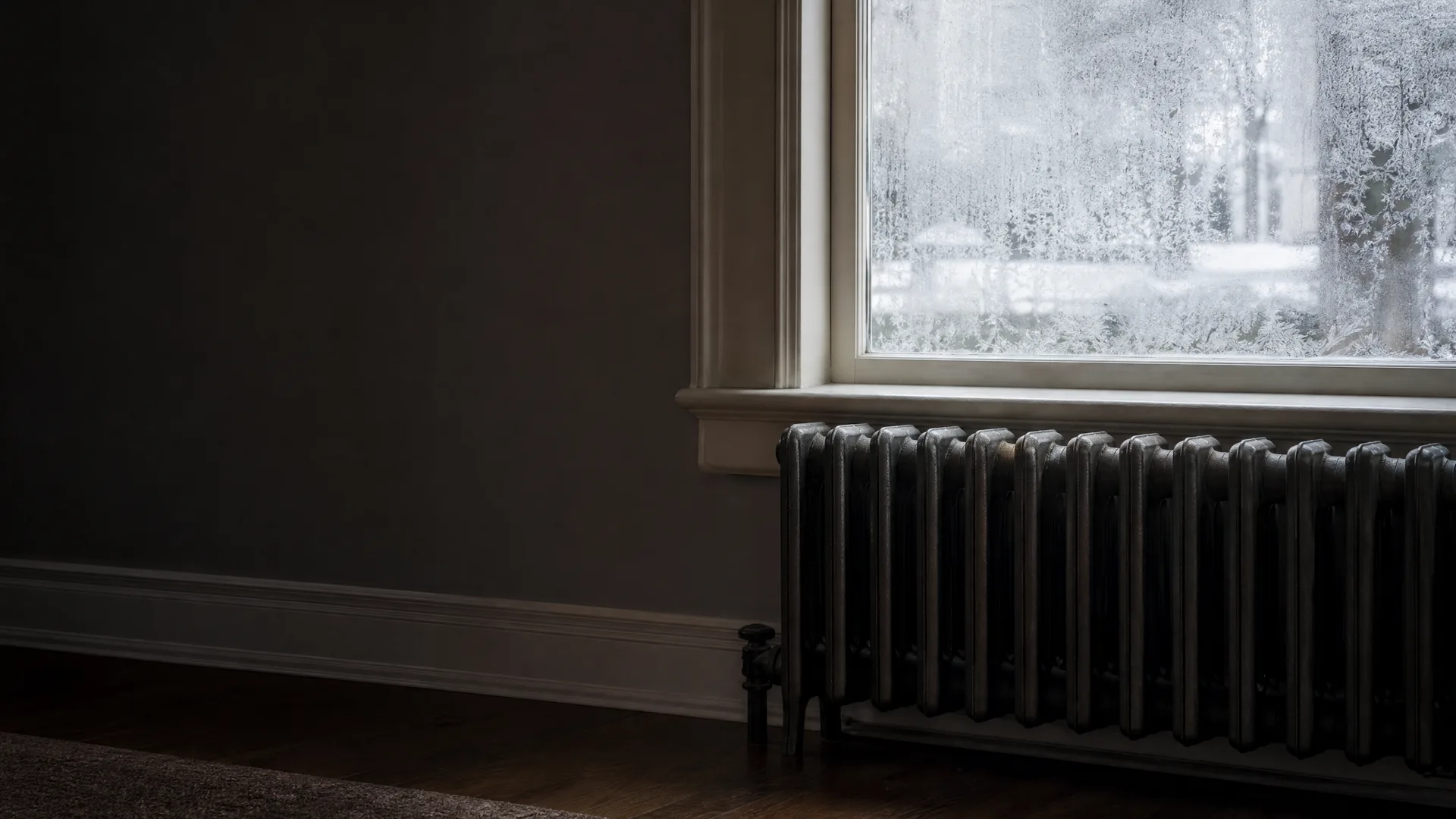
A cast iron column radiator with a valve stands beneath a window with a frosted pane showing snowy trees outside, in a dim room with dark walls and wood flooring.

The house is quiet at six in the morning, that early cold that gets into a place overnight. You go down to check the thermostat and the radiator under the living room window is ticking, working, and still the glass has ice feathered across the inside of it. Outside it's still dark, still well below freezing, the kind of morning El Paso County gets plenty of in January. You crouch down near the radiator and that's when you see it, a thin line of water tracking down from the valve at the bottom, pooling small and dark against the baseboard. The radiator's hot. The room isn't catching up. You stand there a second, one hand still on the cold window glass, working out what you're looking at.

Winter nights average 17°F

At 17°F, your boiler can't afford to lose water. It's built to run at a set pressure, and every gallon that leaks out forces it to pull in cold water and work harder to bring the house back up to temperature on a night like that.

NOAA nClimDiv 1991-2020

A leak at a fitting usually just needs a tightened connection or a new seal, and the boiler keeps running the same day while that happens.

A failed heat exchanger or a cracked section means the boiler can't be patched. At that point you're looking at replacing the unit, not repairing it.

A man in a blue T-shirt sits on a light gray sofa, laughing while looking at an open laptop in the foreground, with a framed picture, lamp and potted plant behind him.
A bearded man in a blue and brown plaid flannel shirt stands indoors looking out a window at snow-covered trees, with a ceramic mug on the windowsill.

Where this leaves you

  • A leaking boiler almost always traces back to pressure, a worn seal, or a valve doing exactly what it was built to do.
  • Winter nights near 17°F keep pressure on every fitting and valve in the system, so a small drip rarely stays small for long.
  • Catching the leak at a loose fitting or a tired seal usually means a quick fix instead of a bigger repair down the line.
  • A boiler losing water has to keep refilling and reheating, which shows up on the gas bill before anyone traces the puddle.
  • A contractor who works on boilers through a Colorado Springs winter has seen which valve or seal fails first in weather like this.
  • One local, licensed contractor takes the call, so you're dealing with a single answer instead of a string of estimates.

A boiler leaking water almost always comes down to one of three things: pressure built past what the system can hold, a seal that has worn out, or a valve doing its job the way it was designed to. None of those is a mystery once someone opens the panel and looks. The cold here is part of why it happens. Winter nights near 17°F keep the system working harder and keep pressure on every fitting, so a drip that starts small in December doesn't usually stay small through February. Catch it at a loose fitting or a tired seal and the fix tends to be quick. Let it run and you're paying twice, once in gas while the boiler keeps refilling and reheating, and again when a small repair turns into a bigger one. None of that changes by waiting another week to make the call. A contractor who services boilers through a Colorado Springs winter has already seen which valve tends to go first in this cold, and which seal wears out after enough nights like that. That's not guesswork on their part, it's the kind of thing you learn from doing this work here season after season. The request that goes out from this page reaches one local, licensed contractor, not a handful of companies bidding against each other. You get one answer from someone who knows this equipment, not a stack of quotes to sort through while the puddle on the floor keeps spreading.

A dark wood cabinet with a paneled door and a ceramic pot of green foliage on top stands in a beige-walled room with white baseboard, a window at left, hardwood floor, and a patterned area rug.
A dark wood glass-front cabinet holding folded towels, woven baskets and a ceramic vase stands in a bathroom corner beside a window, with a potted fern and stacked towels on top and a freestanding tub partly visible at left.
A woven basket holding a green cushion and a cream fringed knit throw sits on a wood floor in a room corner beside a window and a dark wooden cabinet.
Corner of a room with a dark wood cabinet topped by a round vase, a linen curtain at a window, white baseboard, oak plank flooring with sunlight patches, and a woven jute rug in the foreground.
A dark wood sideboard against a pale wall holds a shallow stone bowl and a round ceramic vase with leafy branches, with sunlight from a curtained window falling across the wall, wood floor and woven rug.

Done looking for a boiler pro

A licensed pro who works in El Paso County gets your request.

Reach a local pro

There's no charge for the request.