Tell us about the job
Takes about a minute. No obligation.
Sizing a boiler for Jackson County is not a rounding exercise. Homes in Jackson County, CO run heat in every month of the year. The burner, heat exchanger, and ignition system cycle continuously through a calendar that never gives the equipment a true rest, so a unit that is marginal on capacity runs harder than it should from the first week. A contractor has to establish the building's actual heat loss before quoting, because an undersized boiler here does not struggle occasionally. It struggles daily, and wear on the heat exchanger accumulates on a schedule that a correct install and a properly sized unit would not produce.
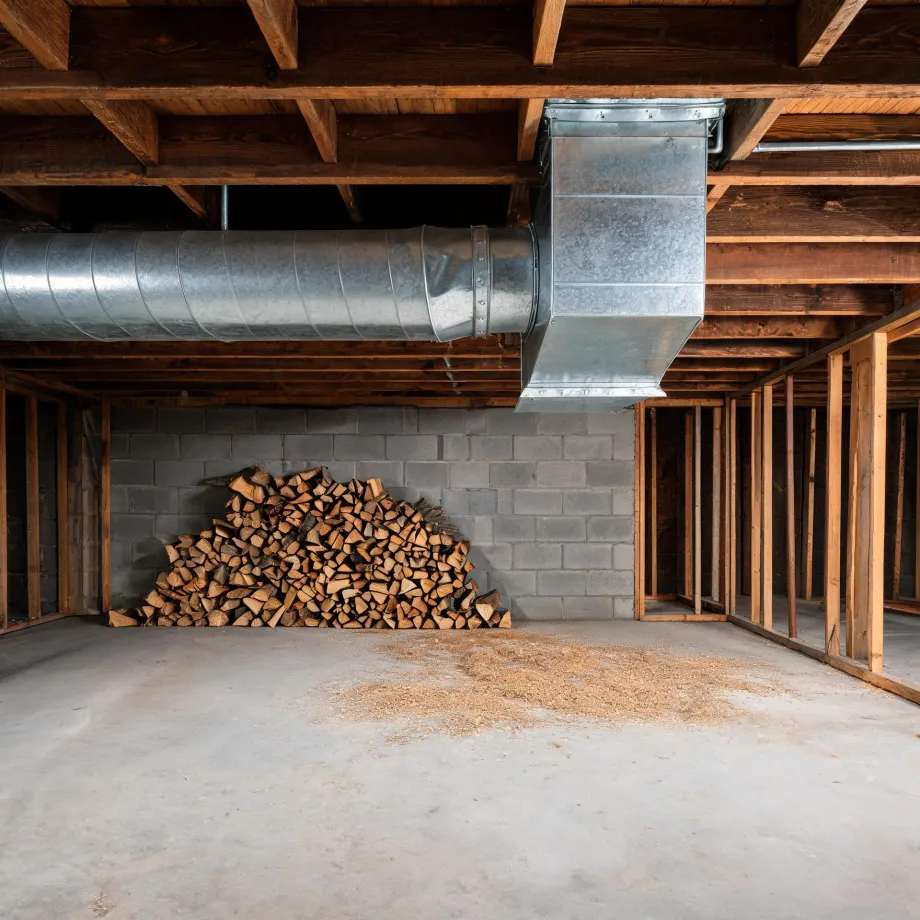
Ductwork laid down for equipment that no longer exists sets the terms for what a new boiler installation actually costs in this county. Half the homes in Jackson County, Colorado were built in 1979 or earlier (2020-2024 ACS 5-year). A contractor scoping a job here checks whether the existing distribution system can carry the output of a modern unit before anything else is quoted or ordered. If the duct sizing or the plumbing runs fall short, that gap gets priced into the job, and it is where estimates diverge most.
What Gets Installed With a New Boiler
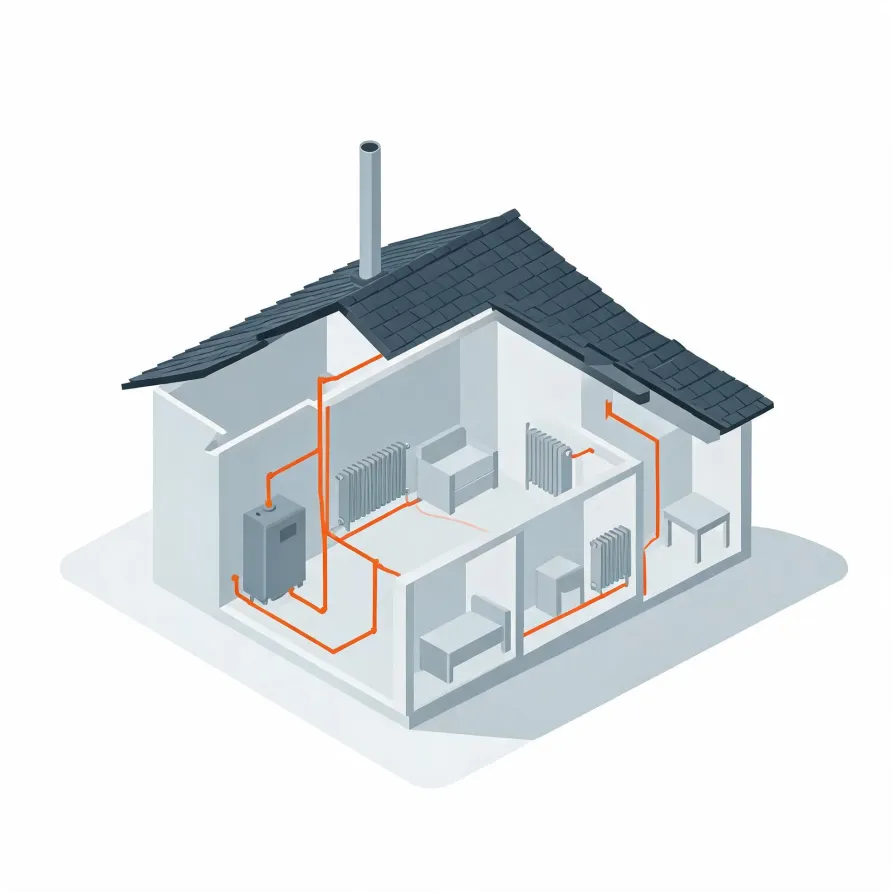
The boiler itself sits in a mechanical room, basement, or utility closet and is the central unit a homeowner buys. It heats water and sends it out through the distribution system. A new installation also includes the expansion tank, mounted close to the boiler, which absorbs pressure changes as the water heats and cools.
Radiators, baseboard convectors, or radiant floor loops sit throughout the living spaces and are what actually release heat into each room. The circulator pump, positioned at the boiler, moves water through those terminal units and back again. A new thermostat or zone controls tie everything together and tell the system when to run.
The drawing shows a typical layout, and a licensed contractor determines exactly which components apply to your home.
Get matched in Jackson CountyJackson County, Colorado, by the numbers
106 severe weather events were recorded in Jackson County, Colorado between 2015 and 2024.
NOAA National Centers for Environmental Information, Storm Events Database, bulk CSV export, events 2015-01-01 through 2024-12-31.Half the homes in Jackson County, Colorado were built in 1979 or earlier (2020-2024 ACS 5-year).
U.S. Census Bureau, 2020-2024 American Community Survey 5-Year EstimatesJackson County, Colorado holds 1,107 housing units (2020-2024 ACS 5-year).
U.S. Census Bureau, 2020-2024 American Community Survey 5-Year EstimatesOwners occupy 71.1% of the occupied homes in Jackson County, Colorado (2020-2024 ACS 5-year).
U.S. Census Bureau, 2020-2024 American Community Survey 5-Year EstimatesSevere Weather Events in Jackson County
Jackson County's climate puts real stress on heating equipment, and that stress compounds over years of hard use. Boiler installation is a local decision partly because local conditions set the terms for how hard any system has to work.
106 severe weather events, 2015–2024. Source: NOAA National Centers for Environmental Information, Storm Events Database.