Tell us about the job
Takes about a minute. No obligation.
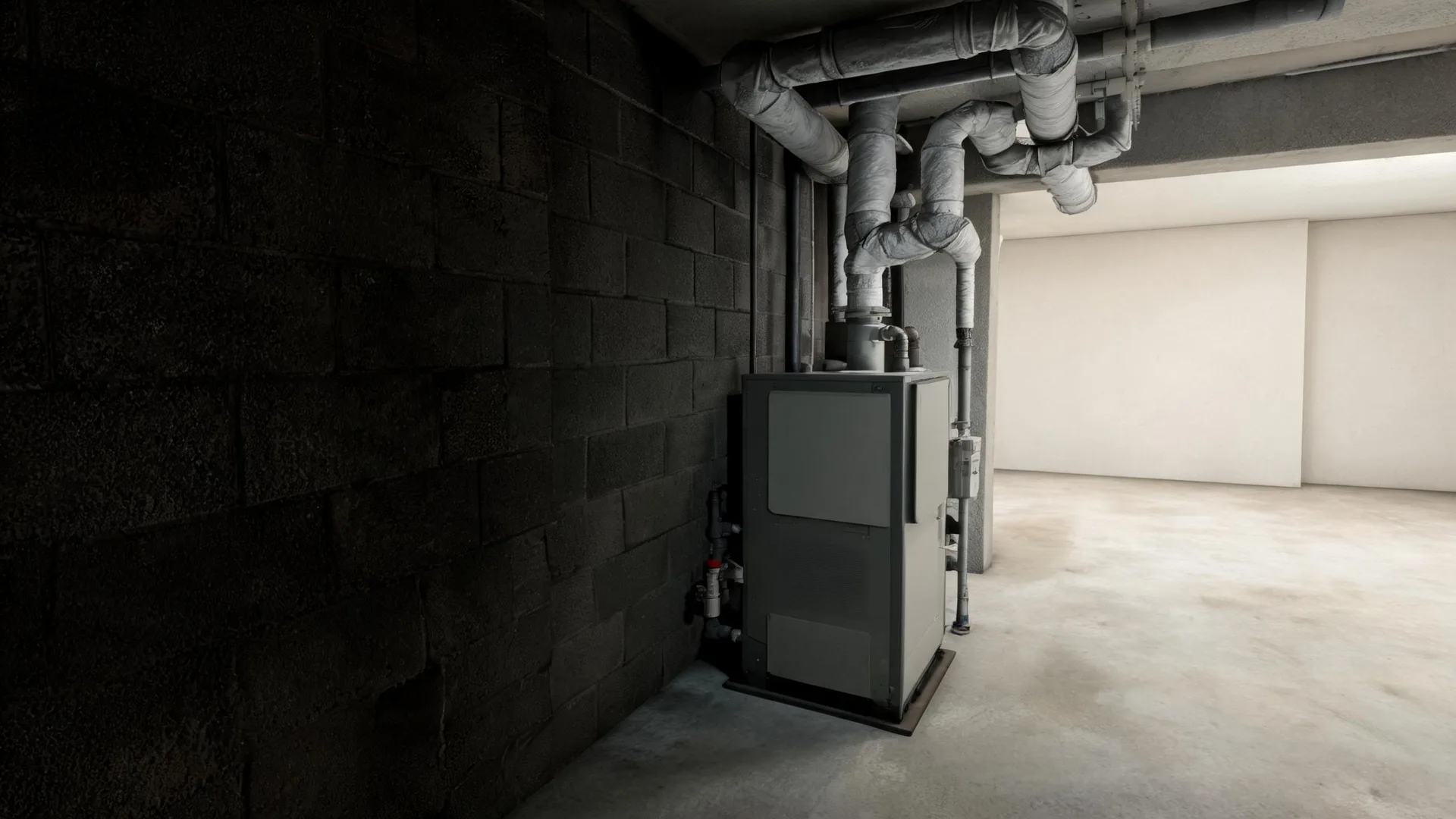
A boiler slated for Delta County has to be sized and installed for a long haul, because the burner, heat exchanger, and ignition system cycle from first frost through late spring with very little idle time to spare. Homes in Delta County, CO run heat about nine months a year, from September through May. That constant cycling is where a loose flue connection, an undersized heat exchanger, or a poorly set combustion mixture shows up as real wear rather than a latent flaw. A contractor quoting the job here sizes to the actual load of the house, not to the equipment that came out, because an undersized replacement starts accumulating stress from its first season.
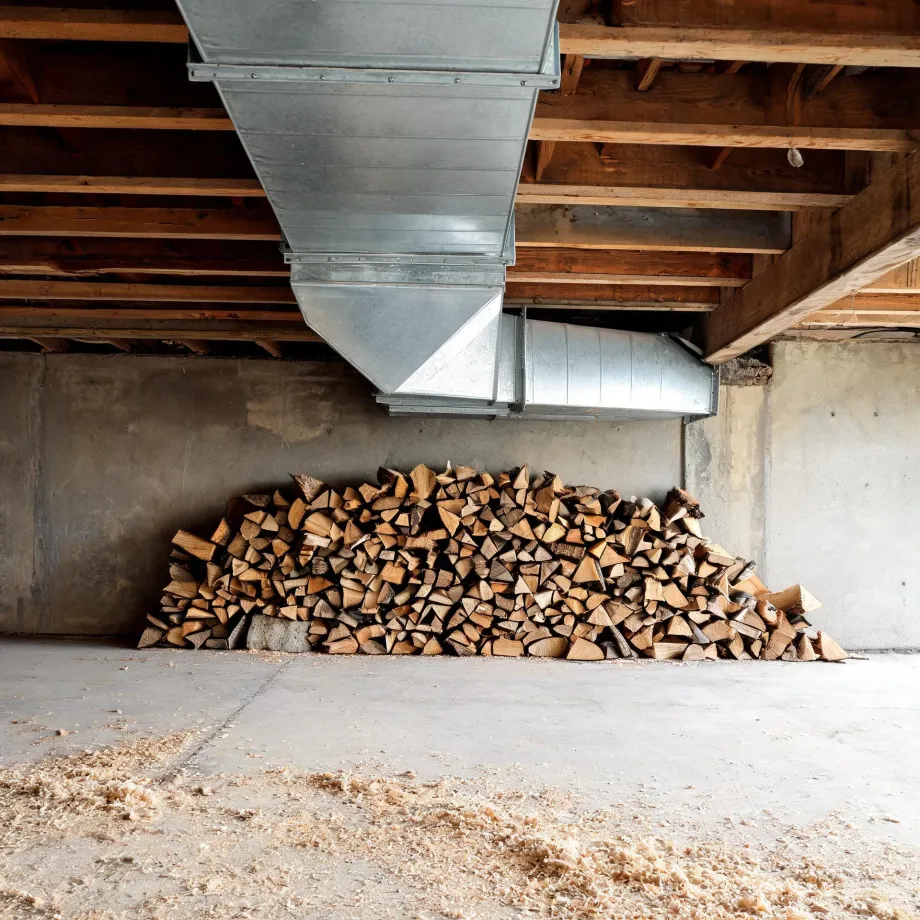
Ductwork laid out for equipment that has since been replaced at least once shapes what a boiler installation actually involves here. Half the homes in Delta County, Colorado were built in 1979 or earlier (2020-2024 ACS 5-year). A contractor sizing and placing a new boiler has to trace what the existing distribution system will and will not carry, because the path from the heat source to the rooms reflects decisions made for something that is long gone. Where that ductwork was routed, how it was sized, and what it connects to are the variables that set the real scope of the job.
What Gets Installed With a New Boiler
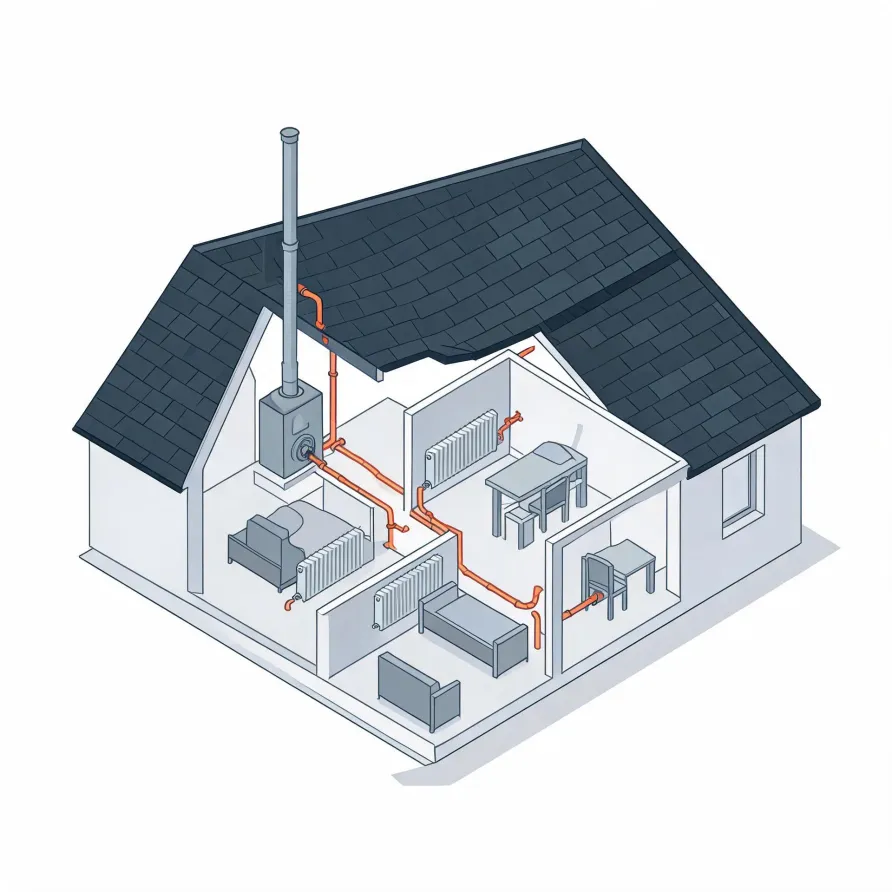
The boiler itself sits in a mechanical room, basement, or utility closet and is the unit that heats water and sends it through the system. Close to it, the expansion tank absorbs pressure changes in the water as it heats and cools, keeping the system stable.
From the boiler, supply and return pipes run through the house to radiators, baseboard units, or radiant floor loops in each room. A circulator pump mounts directly on the piping and moves the heated water through those circuits. The thermostat goes on a main living-area wall and tells the boiler when to fire.
The drawing shows a typical layout, and a licensed contractor determines exactly what applies to this house.
Get matched in Delta CountyDelta County, by the numbers
234 severe weather events were recorded in Delta County, Colorado between 2015 and 2024.
NOAA National Centers for Environmental Information, Storm Events Database, bulk CSV export, events 2015-01-01 through 2024-12-31.Half the homes in Delta County, Colorado were built in 1979 or earlier (2020-2024 ACS 5-year).
U.S. Census Bureau, 2020-2024 American Community Survey 5-Year EstimatesDelta County, Colorado holds 15,025 housing units (2020-2024 ACS 5-year).
U.S. Census Bureau, 2020-2024 American Community Survey 5-Year EstimatesOwners occupy 77.9% of the occupied homes in Delta County, Colorado (2020-2024 ACS 5-year).
U.S. Census Bureau, 2020-2024 American Community Survey 5-Year EstimatesSevere Weather in Delta County
Boiler sits at elevation in Delta County, and the climate puts real demand on any heating system installed here. Weather events drive the kind of repeated thermal stress that shortens equipment life and shapes what a contractor specifies for this area.
234 severe weather events, 2015–2024. Source: NOAA National Centers for Environmental Information, Storm Events Database.