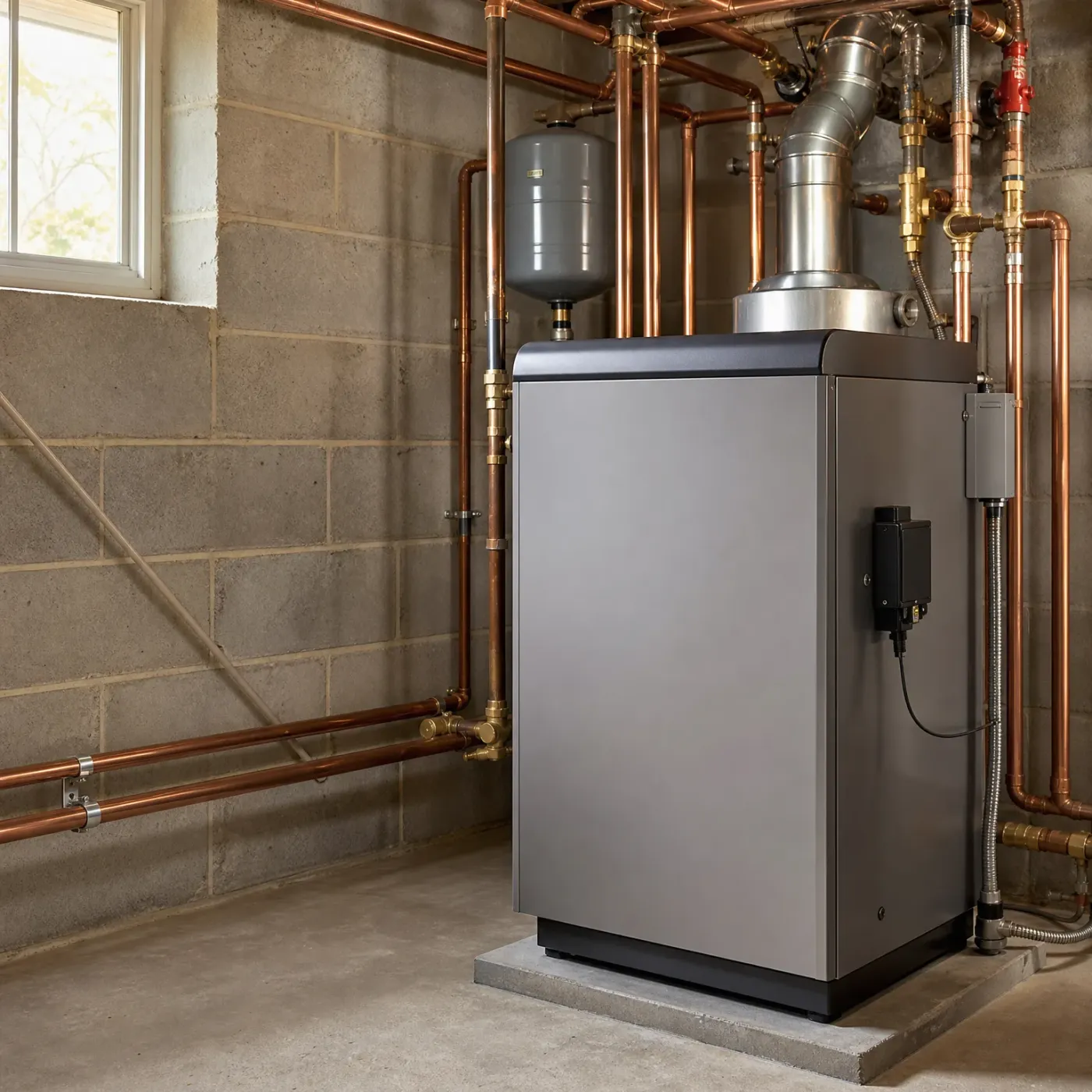
Running the way it should
The piping stays tight and dry, every fitting doing its job, and the expansion tank keeps pressure steady as the water heats. Water moves out through the system and comes back, radiator after radiator, without a fight.

You turn up the thermostat and nothing happens. The radiators stay cold, or only warm up at the bottom, while the boiler itself seems to be running fine. In a Colorado winter that's not something you can leave for later. Before anyone comes out to look at it, it helps to know what's actually going on inside the system.
Hot water boilers push water through pipes to each radiator, and that water needs the full radiator to itself. Air gets into the system over time, collects at the top of the radiator, and blocks the hot water from filling it. That's why a radiator can feel cold at the top and warm at the bottom, or stay cold all over if the air pocket is large enough. It can also mean a stuck valve, a circulator pump that's failing, or a blockage in the line feeding that radiator. With gas heat running hard through a Colorado winter, a boiler working to compensate for radiators that aren't heating ends up running longer than it should.
Trapped air collects in the radiator, pushing hot water back down
Water can't fill the radiator, so only the bottom gets warm
A faulty valve or sludge buildup blocks flow before it reaches the room
The boiler keeps firing but heat never leaves the pipes


A cold radiator in January means that room is running on whatever heat drifts in from the rest of the house. With the kind of cold snaps that settle over Colorado, a bedroom or living room without working heat gets uncomfortable fast, and the thermostat reading on the wall stops matching what you actually feel standing in that room. Meanwhile the boiler is still firing, still burning gas, trying to push water through a system that won't take it. You end up paying to heat water that never delivers warmth where you need it. Left alone, trapped air and blocked valves don't clear themselves. The radiator that's cold today is usually still cold next week, and the ones around it can follow as pressure drops further or sludge shifts position in the pipes. A boiler working harder than it should, for longer than it should, is the kind of thing that turns into a bigger repair once something inside it wears out from the strain.




Answer a few questions instead of calling shop after shop.
After you send the request, you're done searching.
Sending the form costs nothing.



You can bleed a radiator yourself and sometimes that's the whole problem, a hiss of trapped air and then warmth within the hour. If the radiator stays cold after that, something downstream is blocking flow, a stuck valve, sludge in the line, or a pressure problem at the boiler. That part isn't a weekend fix. It takes someone who can read the system and find where the water stops moving.
Left alone through a Colorado winter, a boiler that's working harder to heat fewer rooms runs longer to make up the difference, and the rooms that do get heat carry more of the load. Finding the right person usually means searching, calling a few numbers, explaining the same cold radiator three times, then sitting with quotes trying to guess who's worth the call. Send the form here instead and that search is done. You go back to a warm house without having spent the evening running down a contractor.


The piping stays tight and dry, every fitting doing its job, and the expansion tank keeps pressure steady as the water heats. Water moves out through the system and comes back, radiator after radiator, without a fight.

The burner fires and the pump runs, but somewhere between here and the radiators the heat stops getting through. A stuck valve, trapped air, or sludge in the line can hold a boiler back no matter how hard it's working.
At 16 below freezing most winter nights, a boiler that can't push heat into every radiator is working against a house that loses warmth fast. A cold radiator on a night like that isn't a minor annoyance, it's a room with no way to hold its temperature until morning.
NOAA nClimDiv 1991-2020 county normals weighted by homes
A cold radiator has one of a few causes: air trapped at the top, a stuck valve, sludge blocking the flow, or pressure too low to push water where it needs to go. The boiler can run the whole time without any of that heat reaching the room. Bleeding the radiator is worth trying first, and sometimes that's the end of it. If the cold stays after that, the fix is downstream, somewhere between the boiler and that radiator, and it takes someone who can check pressure, test the valves, and trace the flow to find it.
None of that happens by leaving the thermostat turned up and waiting. A Colorado winter doesn't give a cold room time to sort itself out, and the longer a blocked valve or a pressure drop sits, the more the rest of the system has to work around it. Finding someone who can look at it usually means calling a few contractors, describing the same cold radiator to each one, and weighing what they quote against each other before you pick one. That part is what this page takes off your hands. One form here puts the job in front of a licensed contractor who can work through air, valves, sludge, and pressure in order until the actual cause turns up. You're left with a clear next step instead of a list of names to sort through on your own.





Describe your boiler job once, to one pro.
You're not committing to anything by asking.