
Why your boiler makes a banging noise in Colorado
Why does my boiler make a banging noise?
Banging from a boiler usually shows up in the evening, right when you've got the heat on and the house is finally quiet enough to notice it. It's loud enough to make you wonder if something's about to break. Most of the year in Colorado you run this system hard, and a sound like that is hard to ignore once you've heard it a few times.
It's almost always kettling, caused by mineral buildup on the heat exchanger
The bang comes from the heat exchanger. Minerals in the water settle on it over time and form a hard layer of scale. That layer traps water underneath it against the hot metal, and the trapped water flashes to steam before it can mix with the rest of the water in the system. The steam bubble collapses fast, and that collapse is the bang you hear. It's called kettling, the same thing that happens in an old kettle with scale buildup. Colorado's water tends to run hard, and hard water is exactly what deposits that scale faster. Left alone, the buildup gets thicker and the exchanger has to work harder to heat the water around it, which is where the real wear starts.
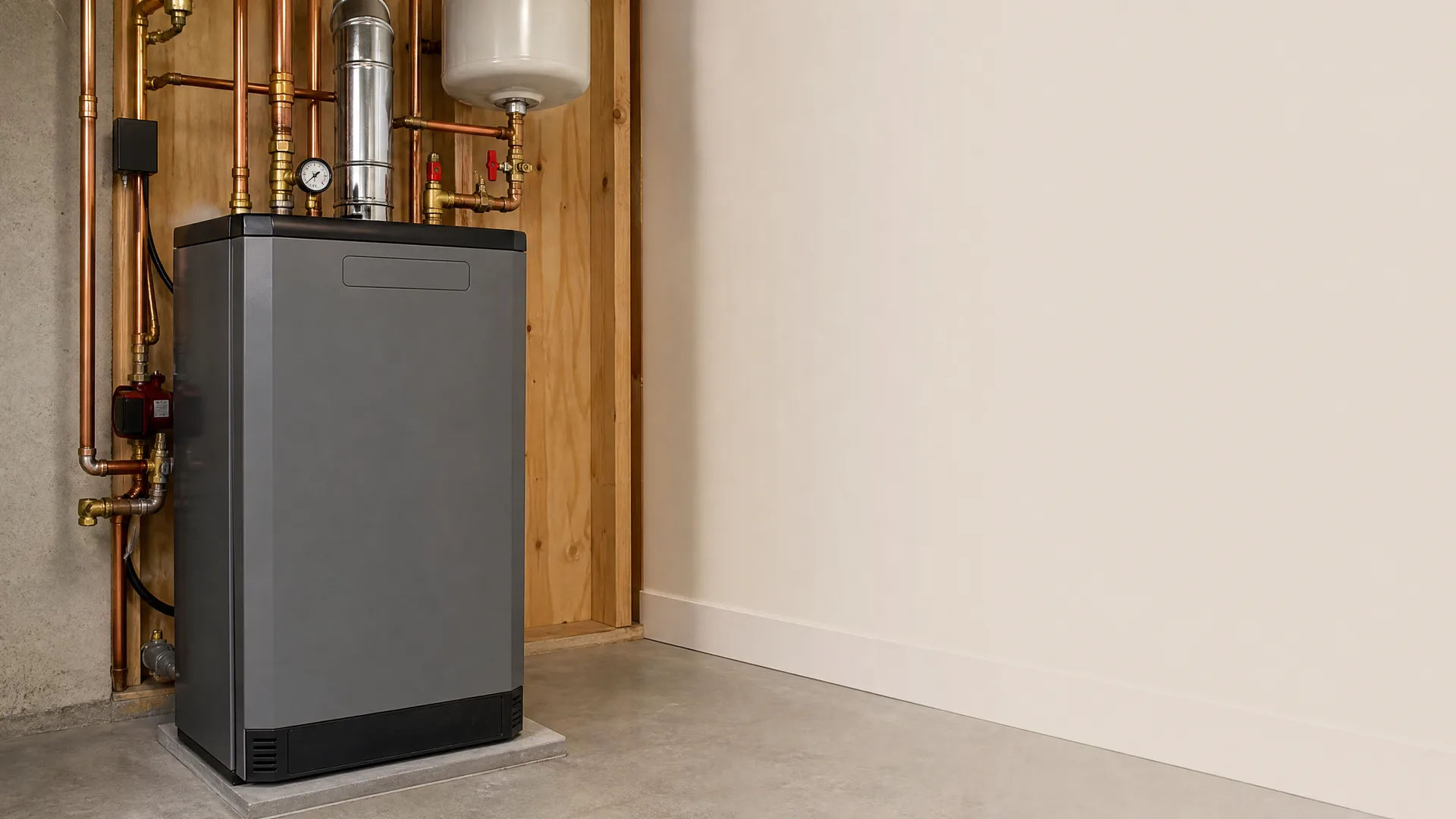
Kettling from mineral buildup
The banging often comes from scale sitting on the heat exchanger. As the boiler fires, water trapped under that layer flashes to steam and collapses with a bang, a process called kettling. Colorado water runs harder in a lot of towns, and that mineral content is what settles out on the exchanger over years of heating. A contractor can flush the system and clear it, but the scale returns if nothing changes about the water feeding it.
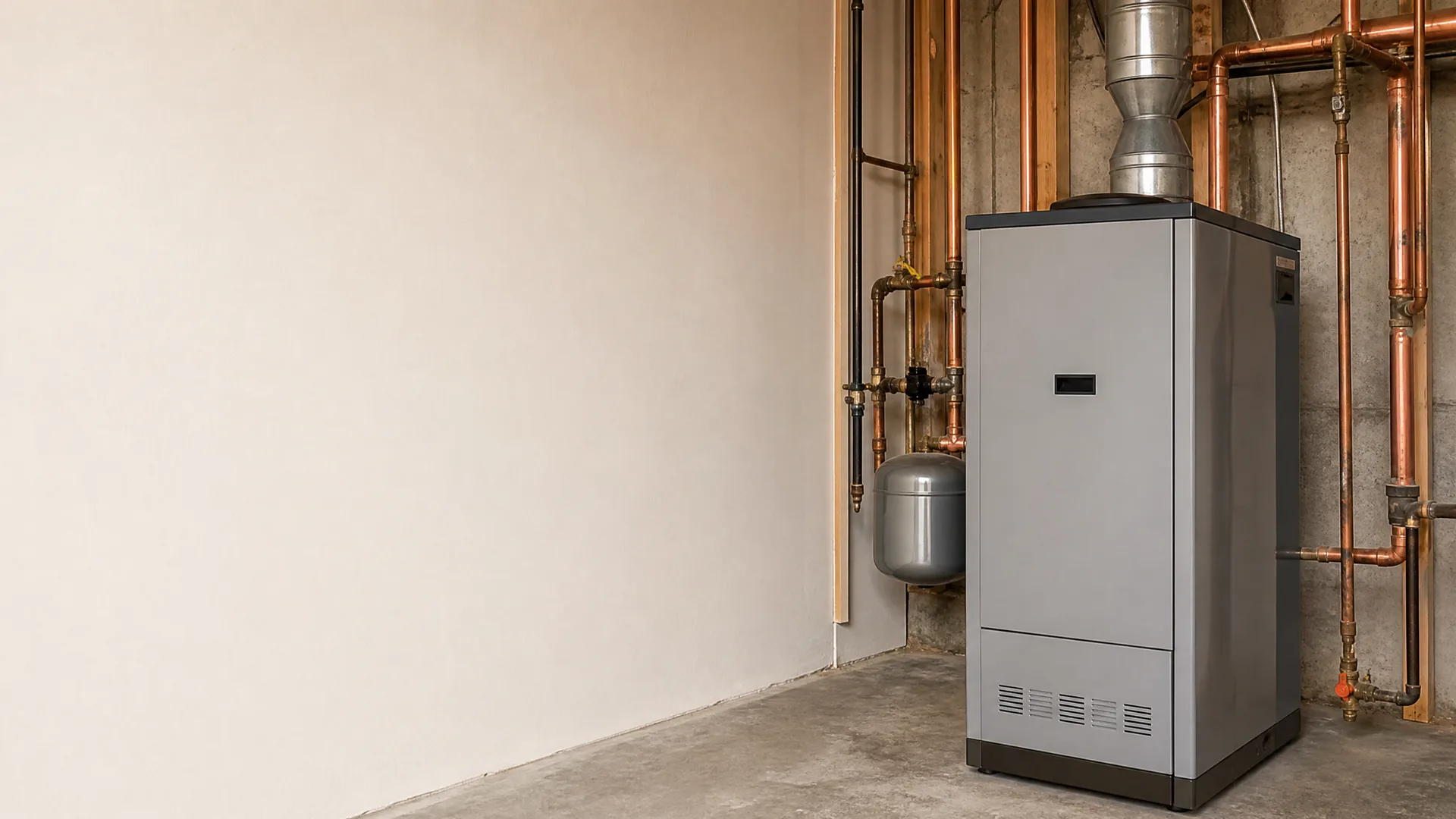
Trapped air in the lines
Air pockets in the pipes or near the radiators move when water pushes past them, and that movement makes a knocking sound as the boiler heats up. This shows up most in the fall, the first weeks you run the heat after months of the system sitting idle through Colorado's dry summer. Bleeding the radiators and checking the expansion tank usually quiets it. If the noise keeps coming back each season, something is letting air back into the loop.
Is the banging getting worse or happening more often
You've probably noticed it happens a few times each cycle, not just once, and it seems to get louder the longer the boiler runs before it settles down. Some nights the bangs come close together, then taper off once the water's fully heated. You might also notice the room takes longer to warm up than it used to, or the boiler short cycles, shutting off and firing again within a few minutes. Left alone, the scale behind the noise keeps building. That makes the heat exchanger work harder to move heat into the water, which can shorten its life and push your gas bill up over a Colorado winter.
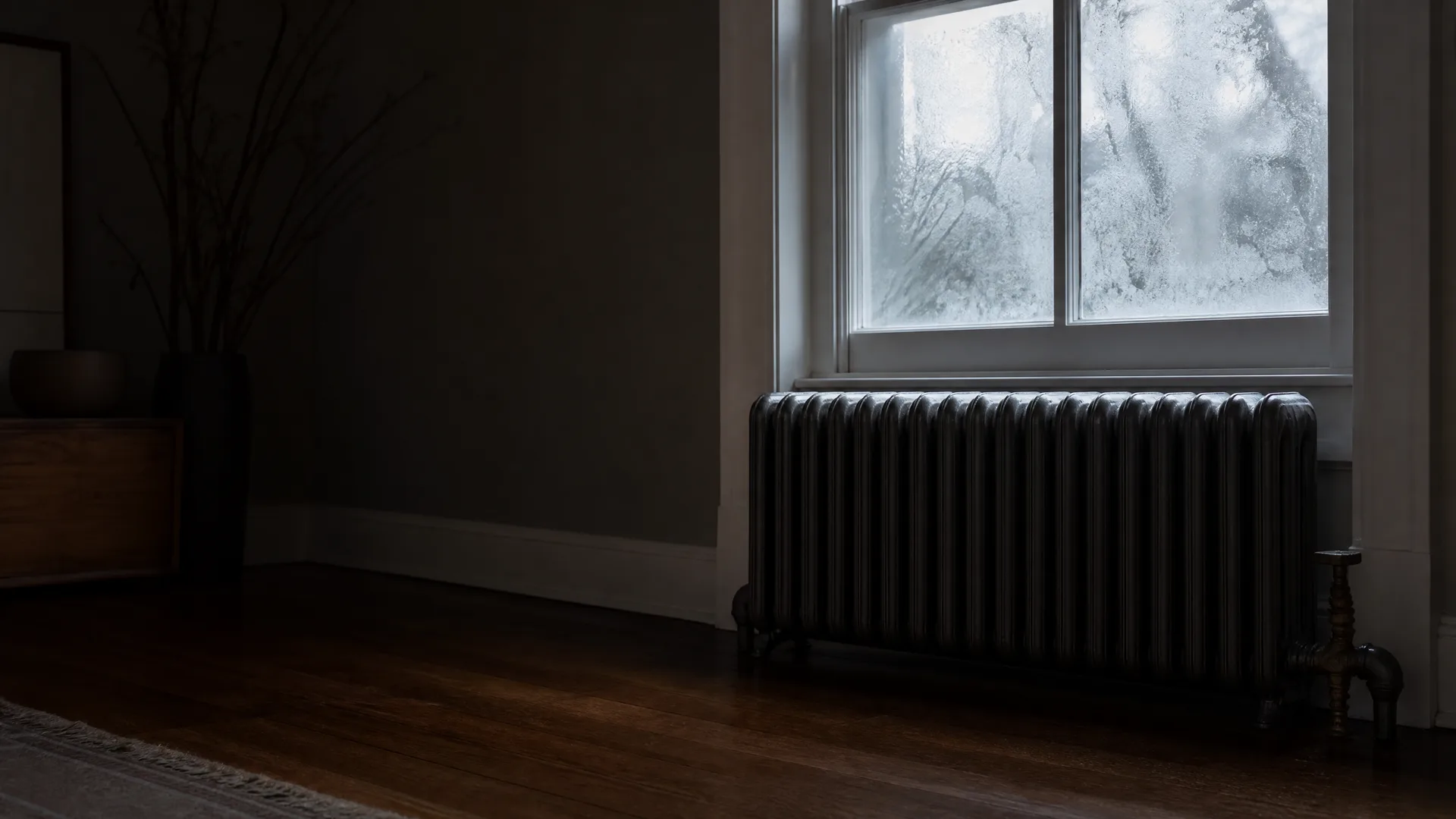
The bang wakes you before you're sure what it was. Six in the morning, still dark, and the radiator under the window is ticking and knocking under its cast iron skin. Outside, the cold has drawn ice flowers across the glass, and your breath shows a little even with the heat running. You sit up and listen for the next one, trying to count how many cycles this has been going on now. By the time you've pulled on socks and gone to check the thermostat, you've already decided you don't want another week of this, and you don't want to spend tonight calling around to find out who even works on boilers.
Skip calling around

The pro who reaches out is licensed in Colorado.
You're not committing to anything by asking.
What's Actually Causing the Knock
- Trapped air in the system lines up at high points and gets pushed through the radiators, knocking as it moves.
- Sludge settling at the bottom of a cast iron radiator muffles the water flow and produces a hollow banging as steam or hot water pushes past it.
- Copper pipe that was fitted too tight against a joist or stud will knock against the wood as it heats up and expands.
- A pump set too high for the system can push water hard enough through narrow pipe runs to cause a repeated banging at the elbows.
- Closed zone valves trap pressure for a moment before the water finds another path, which can produce a single hard bang rather than a string of them.
- A failing circulator bearing sometimes announces itself as banging at the pump itself rather than out in the pipes or radiators.
Air is the most common cause. Boiler water holds dissolved air, and once it comes out of solution it rises and collects at the high points in the piping, usually right under a radiator or at a bend near the ceiling. When the pump pushes water past that pocket, the air gets forced through in a rush and knocks against the pipe wall. Bleeding the radiators clears it, though it tends to come back over weeks as more air works loose from the water.
Sludge works differently. It settles at the bottom of an old cast iron radiator, and steam or hot water pushing past the buildup makes a duller, hollow bang instead of the sharp knock air makes.
Pipe noise is usually a fit problem, not a water problem. Copper expands as it heats, and if a run was stapled or clamped too tight against a joist, it has nowhere to go and knocks against the wood with every cycle.
Zone valves can trap pressure for a second as they close, and when the water finally finds another path, it lets go with one hard bang rather than a series of smaller ones.
A circulator pump matters too. If it's sized too high for the system, it pushes water hard enough through narrow runs to bang at the elbows, and a worn bearing inside the pump can bang on its own, right at the pump body, with nothing happening in the radiators at all.




Not every bang in a boiler system comes from scale. Copper pipe expands as it heats and contracts as it cools, and where it runs through a joist or a plate without room to move, it slips and lets go with a knock. A circulator pump with a worn bearing will tick, then bang, as the impeller spins off center, often worse once the pump's been running a while. A zone valve that snaps shut fast can stop a column of moving water all at once, and that shock travels back through the pipes as water hammer. Steam pockets can form at the heat exchanger from low water pressure alone, no scale required, and those collapse with the same bang as kettling. Sometimes it's simpler: a bracket holding a baseboard or pipe run has worked loose, and the metal knocks against the stud behind it as it warms. And an expansion tank that's lost its air cushion fills with water and can't absorb pressure swings anymore, so the system bangs instead of flexing the way it should.
Six Mechanical Reasons Behind the Noise
- Expanding pipes rub against joists or plates and let go with a knock, a sound called pipe slap that shows up most where copper runs through tight framing.
- A failing circulator pump bearing can tick or bang as the impeller wobbles off center, usually getting louder as the pump warms up.
- Water hammer happens when a zone valve snaps shut fast and stops a moving column of water all at once, sending a bang back through the pipes.
- Low water pressure lets pockets of steam form at the heat exchanger even without heavy scale, and those pockets collapse with the same kettling bang.
- A loose mounting bracket on a baseboard or pipe run lets the metal bang against a wall stud each time it heats up and expands.
- An expansion tank that's lost its air cushion fills with water and stops absorbing the pressure swings, so the system bangs instead of flexing quietly.


Winter nights average 16°F across Colorado, according to NOAA climate data. That's cold enough that your boiler is firing long and often through the night, cycling on every time the house loses a few degrees. More run time means more chances for scale and trapped air to make noise as the water heats and moves. If the banging seems worse at 2 a.m. than it does midday, this is why. The coldest hours are when the system works hardest, and whatever's already sitting in the lines, scale, sludge, or air, gets pushed the hardest too.
NOAA nClimDiv 1991-2020 county normals weighted by homes


Winter nights average 16°F statewide
At 16 below zero some nights, your boiler is running long stretches to hold the house steady, not just a quick burst now and then. That extra run time gives scale and trapped air more chances to make noise before morning.
NOAA nClimDiv 1991-2020 county normals weighted by homes
A banging boiler almost always comes down to scale on the heat exchanger, air trapped in the lines, sludge in a radiator, or a pump bearing wearing out, and the fix depends on which one it is. That's not something to pin down from across the room. A contractor who works on boilers all over Colorado through winters like this one has heard every version of that knock and knows which ones mean open it up now and which can wait a week. You'll get matched with one licensed local contractor for your repair, not a handful of companies competing for the job, so you're not stuck fielding five calls and explaining the noise five times. They'll come in, listen to it run, and tell you straight what's making the sound and what it takes to quiet it down for the rest of the winter.





Describe it once
Only one pro gets your request, so you hear from one company.
It costs nothing to send, and you don't have to hire anyone.