
A grassy slope with shrubs and a small pine in the foreground overlooking conifer-covered ridges and a high rocky mountain with patches of snow under a clear sky.Let a pro reach out

What size boiler a Colorado home needs

Send the form and the search for an installer is over.

Sizing a boiler for a Colorado home isn't a matter of matching the old one or going bigger to be safe. Too large and it short cycles, wearing out parts years before it should. Too small and it runs flat out on the coldest nights and still can't keep the house warm. The right size comes from a heat loss calculation that accounts for your square footage, your insulation, your windows, and the altitude and winter lows where you live, whether that's Denver or up in the mountains.

Most homes here heat with gas, and a boiler that's sized right will show it in how evenly the house holds heat from room to room, not just whether it keeps up.

Getting that calculation done right is the kind of thing worth handing off. Once you send the request, you're not the one tracking down a contractor or vetting who shows up. You get matched with one licensed contractor local to your part of Colorado, someone who installs and services boilers in homes like yours all winter and has a good read on what sizing mistakes show up most in this climate and at this elevation. Not a handful of companies competing for your callback, just the one who's right for the job.

That's the person who walks through your home, runs the real numbers, and tells you straight what boiler belongs in it. The answer below will give you a sense of where your home likely falls. What happens next is as simple as filling out the form.

A boiler for a Colorado home is sized by a heat loss calculation, not by square footage or the rating on the unit it replaces. A contractor works out how much heat your house actually loses on the coldest nights, based on your walls, windows and insulation, and sizes the new boiler to match that number. This matters more here because Colorado winters push outdoor temperatures well below freezing for stretches at a time, and a boiler sized off a rule of thumb either can't keep up on those nights or cycles on and off the rest of the season because it's too big for everything milder than the coldest day. The altitude where you live also changes how a boiler performs, so a sizing calculation done for a home at a different elevation won't carry over to yours. For you, this means the right size depends on your specific house, not the one down the street, even if it looks about the same from the outside.

A blue cabinet boiler with a metal flue pipe and copper piping stands against a bare concrete wall in a basement with a concrete floor.
Before you get your boiler installation
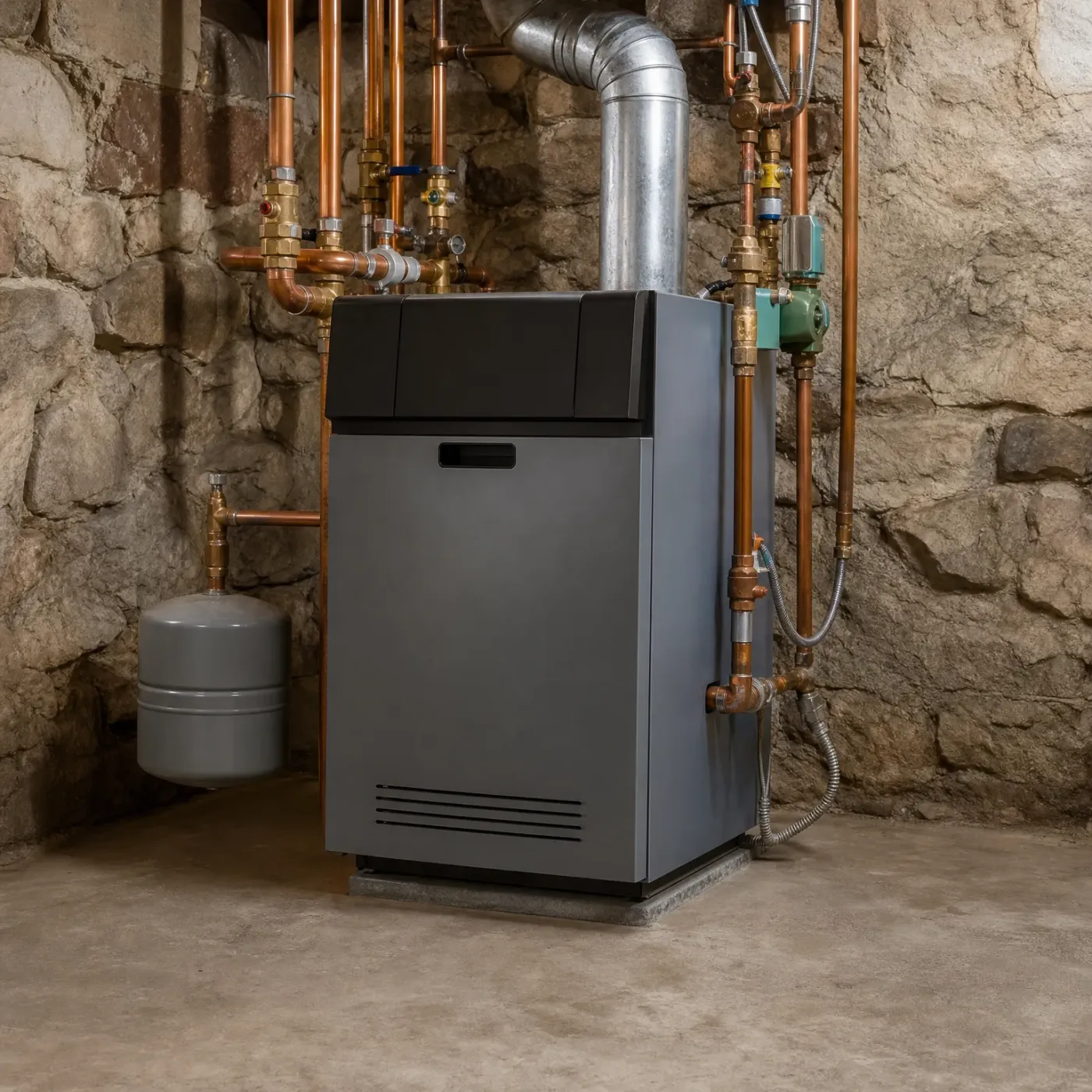
A gray residential boiler on a concrete pad in a basement with stone walls, connected to copper piping, brass valves, a circulator pump, an expansion tank, and a metal flue duct.
After you get your boiler installation

Why does one room never get warm enough?

If your boiler is undersized, you'll notice it first on the coldest nights. One room stays a few degrees cooler than the rest no matter how long the system runs, usually the one farthest from the boiler or with the most windows. The boiler itself may run almost nonstop and still not catch up. An oversized boiler shows different signs: it fires, heats the house fast, shuts off, then fires again a few minutes later, over and over. That short cycling puts more wear on the igniter and the pump than a properly sized unit sees in the same winter, and it tends to shorten how long the boiler lasts before it needs replacing again.

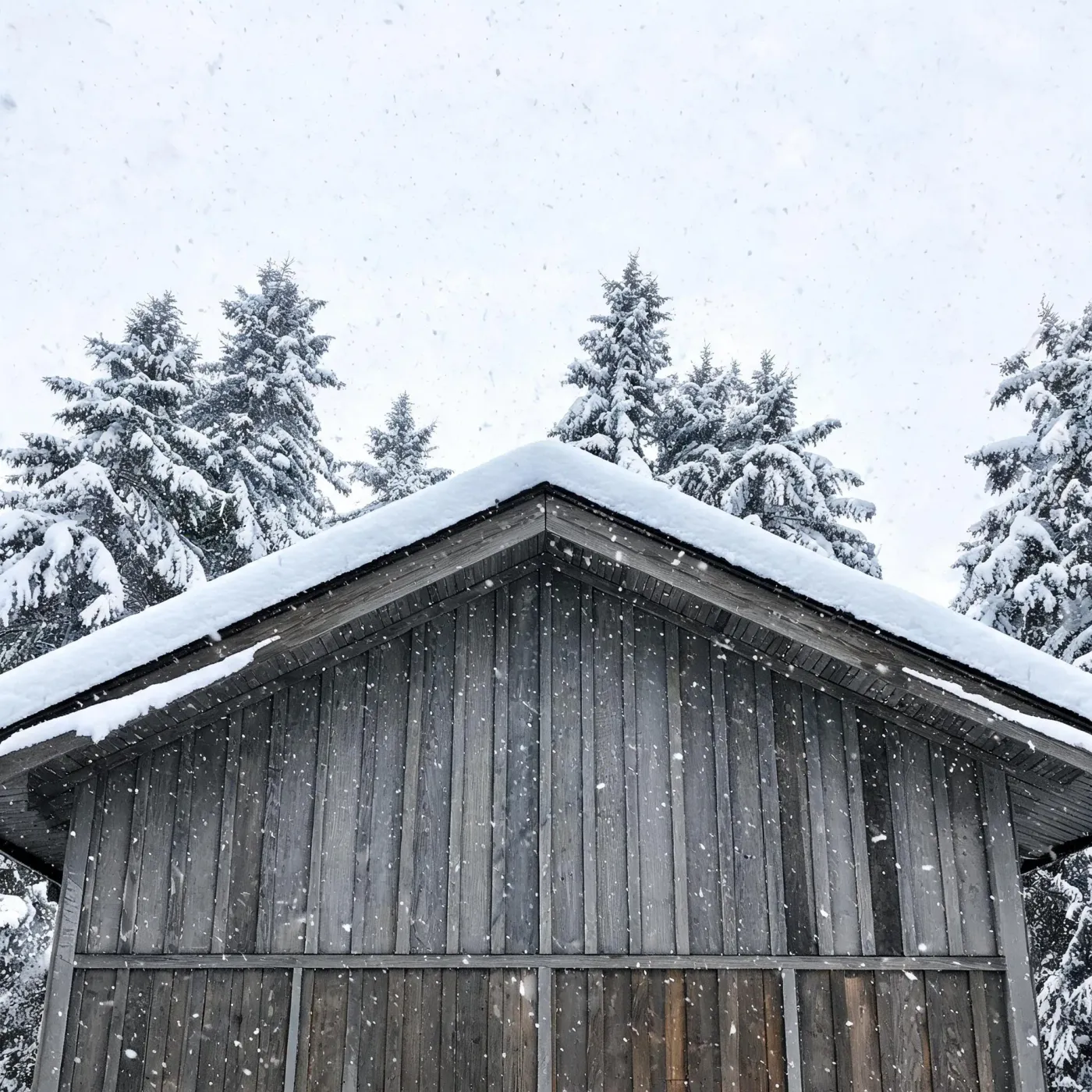
The gable end of a weathered vertical-board wooden building with a snow-covered roof, framed against snow-laden conifers and a pale sky with falling snowflakes.

Winter nights average 16°F statewide, according to NOAA climate data. That's the kind of cold your boiler has to answer for on its worst night, not the mild evenings in between. If it was sized right, it'll hold the house steady and cycle on and off like normal. If it's too small, you'll feel it that night specifically, rooms that won't come up to temperature and a boiler that won't let up. Get the sizing settled before winter, and you won't be the one tracking down a contractor when a cold snap hits. Send the form and the search is off your hands.

NOAA nClimDiv 1991-2020 county normals weighted by homes

Finding a pro stops being your job

Your request goes to one pro, not a list of companies.

It costs nothing to send, and you don't have to hire anyone.

Oversizing shortens its life

A boiler that's too big for the house heats the water fast, shuts off, then starts again a few minutes later. That's short cycling. Every start draws on the ignition system and the circulator pump, and those parts see more wear in a season of short cycling than they would in years of normal runs. It also never settles into a steady burn, so the house swings between too warm and cooling off again. The fix isn't a bigger unit next time, it's the right size the first time, based on what the house actually loses on a cold night.


Undersizing shows up at night

A boiler sized too small can usually keep up on a mild day, so it might pass a quick check in October. The problem shows up in January, when it runs continuously and still loses ground to a 16°F night. It can't get ahead, so the thermostat never quite reaches its setting and the far rooms feel it first. Running flat out all night doesn't damage it the way short cycling does, but it means the house is cold when it matters most, and that's the night you find out the sizing was wrong.

A woman in a knitted shawl sits in a living room with a fireplace, shelves, a sofa with cushions, and a lamp by a bright window, looking off to the side.
A woman with long brown wavy hair in a green shirt over a white top stands in a living room with built-in white shelves, a ceiling fan, a potted plant and a sliding glass door.
A woman with shoulder-length gray-streaked hair in a light gray knit sweater stands smiling and looking off to the side in a living room with a sofa, houseplant, framed picture, and sunlit sliding glass door.
A woman with shoulder-length curly gray hair wearing a gray knit sweater stands near a window with a sheer curtain, looking to the side, with a blurred interior room behind her.
A dark gray floor-standing boiler on a concrete pad in a basement, surrounded by copper piping, brass valves, a gray expansion tank, a circulator pump, and a metal flue pipe against concrete block walls.

Sized right

This is what a properly sized boiler looks like doing its job. The piping stays organized, the pressure gauge sits steady, and the unit cycles on a normal schedule. Nothing in the mechanical room is working harder than it has to, and the house stays even from room to room.

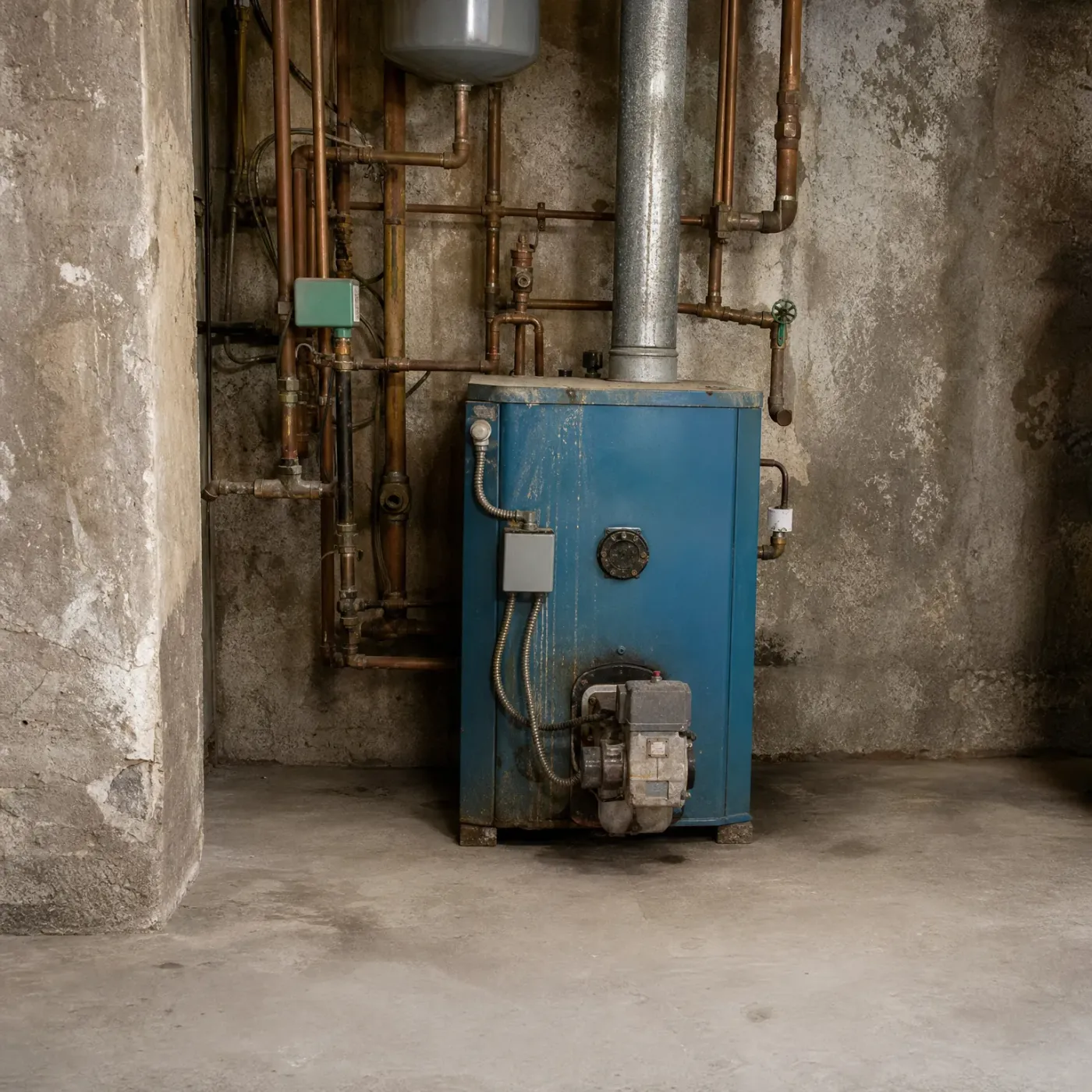
A blue boiler on a raised concrete pad in a basement corner, with copper and steel pipes, a gauge cluster, an expansion tank, and a metal flue running up the bare concrete walls.

Sized wrong

An old boiler can run for years even when it was never sized right for the house. It just costs more to do it, cycling longer or more often than it should, and leaving someone to notice the one room that never quite gets warm. A heat loss calculation catches what guesswork missed.

Oversized Boiler vs. Undersized Boiler

Oversized

  • It heats the loop fast, shuts off, then fires again within minutes, so the ignition system and circulator pump see far more starts over a season.
  • Rooms closest to the boiler can overshoot while rooms on the far end of the run never quite catch up.
  • Short cycling keeps the heat exchanger working through more temperature swings, and that's where early cracking usually starts.
  • You paid for capacity the house never needed on its coldest night, let alone the mild ones in between.
  • Gas use runs higher than it should because each cycle wastes energy getting the unit up to temperature before it shuts off again.

Undersized

  • On the coldest nights it runs flat out for hours and the house still doesn't reach the thermostat setting.
  • One room, usually the one farthest from the boiler or with the most exterior wall, stays noticeably cooler than the rest.
  • The circulator pump and burner run close to constant during a cold stretch instead of cycling normally, which adds wear over a season.
  • Rooms that depend on a long duct or pipe run are the first to fall behind when demand is high.
  • You feel it exactly when you need the heat most, not on a mild day when it wouldn't matter.
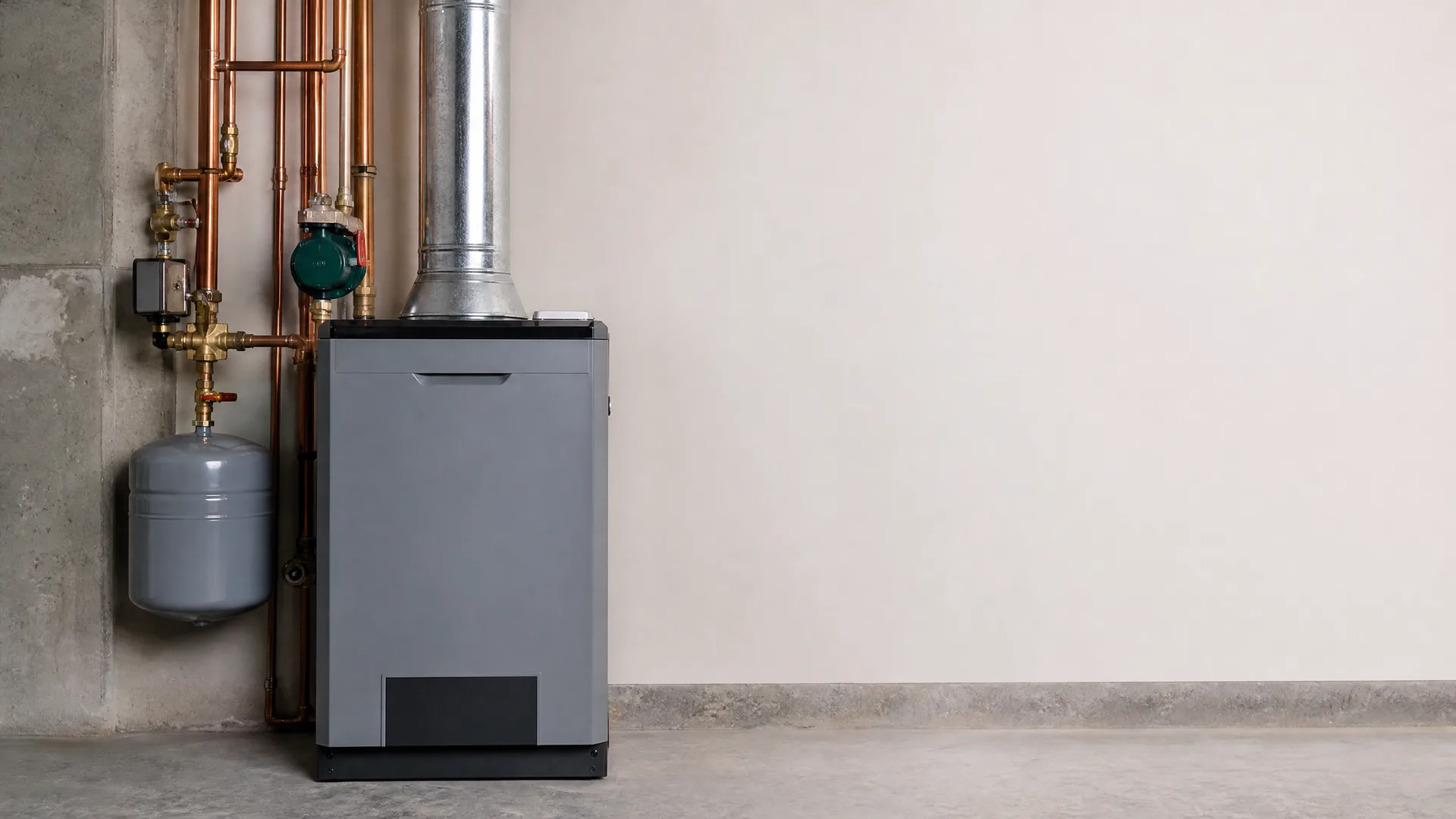
A gray floor-standing boiler with a metal flue pipe, copper piping, a circulator pump and a gray expansion tank, installed against a concrete wall.

Correctly sized for your home

A boiler matched to your house runs longer, gentler cycles instead of firing on and off. The water in the loop comes up to temperature at a pace the radiators or baseboards can actually use, so rooms heat evenly from one end of the house to the other. On a 16°F night it keeps working steadily instead of straining, and the mechanical room stays quiet, with steady pressure and no banging in the pipes.

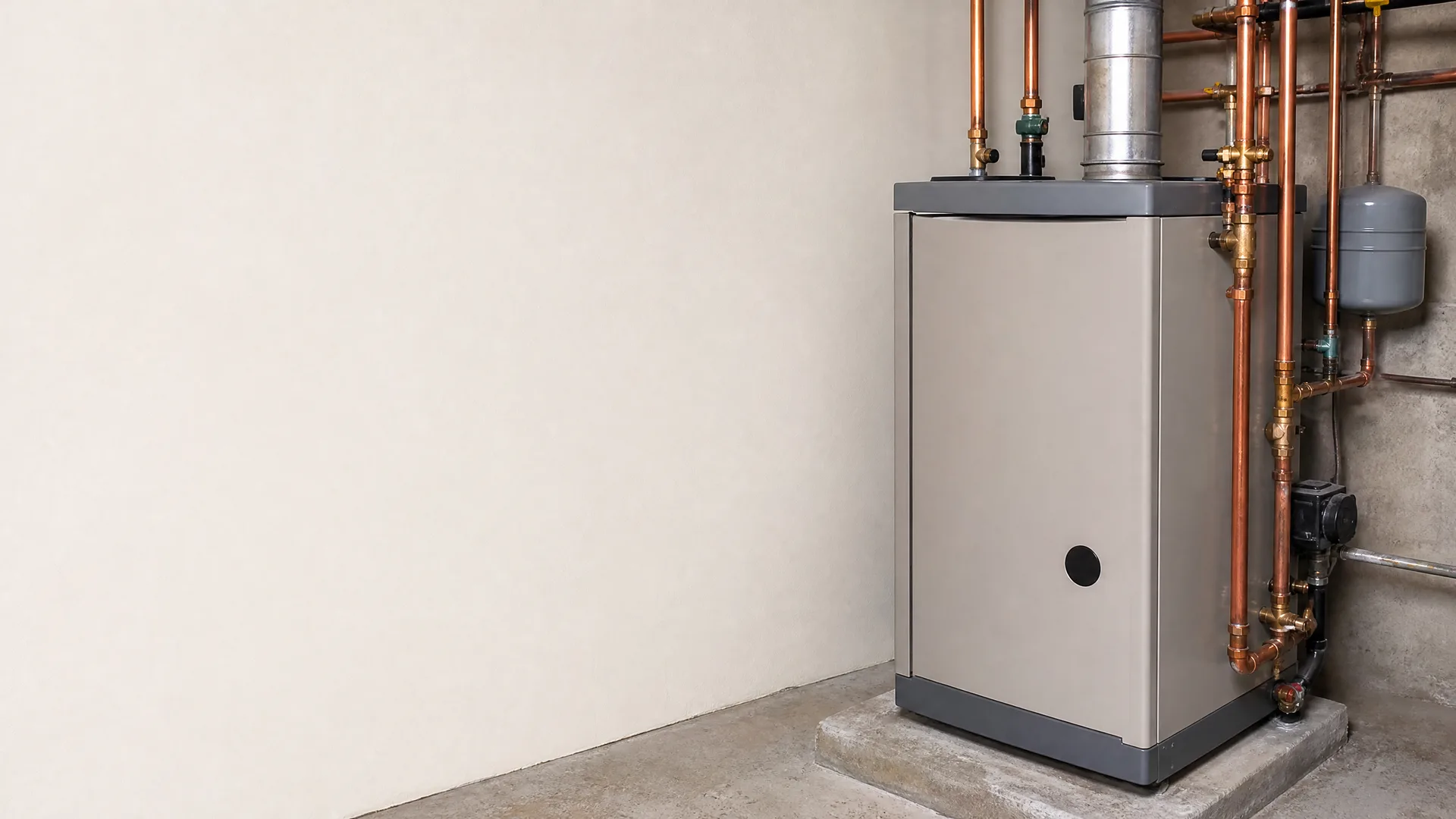
A tall grey floor-standing boiler on a concrete plinth in a corner of a room, with copper pipework, a flue, a circulator pump and an expansion vessel to its right, beside a plain cream wall.

Mismatched to your house

A boiler that doesn't fit the house shows it fast. Undersized, it runs nonstop on the coldest nights and still can't hold the far rooms at temperature. Oversized, it blasts heat into the loop, shuts off, then kicks back on a few minutes later, wearing down the ignition system and circulator pump long before their time. Either way, the gas bill reflects the strain, and the house never quite feels settled.

Winter nights average 16°F statewide

16°F is the kind of night your boiler has to hold the house against, not once in a while but most nights all winter. A heat loss calculation sizes it for that number, so when it drops, the system keeps working the way it's supposed to instead of struggling to catch up.

NOAA nClimDiv 1991-2020 county normals weighted by homes

The Right Size, Settled

  • The right size comes from a heat loss calculation, not the old boiler's rating or your square footage.
  • A contractor figures what your house loses on a 16°F night, then sizes the unit to match.
  • An oversized boiler short cycles and wears out its ignition system and circulator pump early.
  • An undersized boiler runs flat out on the coldest nights and still leaves rooms uneven.
  • A correctly sized boiler cycles on a normal schedule and heats every room at an even pace.
  • Getting this right once means the system works as it should for as long as it's in your home.

A boiler sized for your house comes down to one calculation, not a guess based on the unit you're replacing. A contractor measures what your walls, windows and insulation lose on a night near 16°F, the kind Colorado sees most of the winter, and sizes the new boiler to answer for that. Skip that step and you end up on one side or the other. Go too big and the boiler heats the loop fast, shuts off, then fires again a few minutes later. Each of those extra starts puts wear on the ignition system and the circulator pump, and that wear adds up over years, not weeks. Go too small and the unit runs flat out on the coldest nights and still can't catch up. One room, usually the farthest from the boiler or the one with the most glass, stays colder than the rest no matter how long the system runs. A boiler sized correctly from a heat loss calculation does neither. It cycles on and off at a normal pace, the water in the loop comes up to temperature at a rate the radiators or baseboards can use, and rooms across the house end up close to even. None of this is about finding a bigger unit or a cheaper one. It's about matching the equipment to the house it's heating, so the mechanical room does its job quietly for as long as you own the place.

A woman and a sleeping child wrapped together in a cream knitted blanket on a couch, with a potted plant, framed photo and lit lamp in the background.
A gray-haired woman in a cream knit sweater stands in a dimly lit kitchen at night, looking to her right, with a round loaf of bread in the foreground and a dark window and potted plant behind her.

Boiler Installation

Let someone else find the pro

One installer gets your project, so there's no bidding war over it.

A black-framed smartphone standing upright against a plain white background, its screen filled with solid green.
Step 1 of 3: Equipment