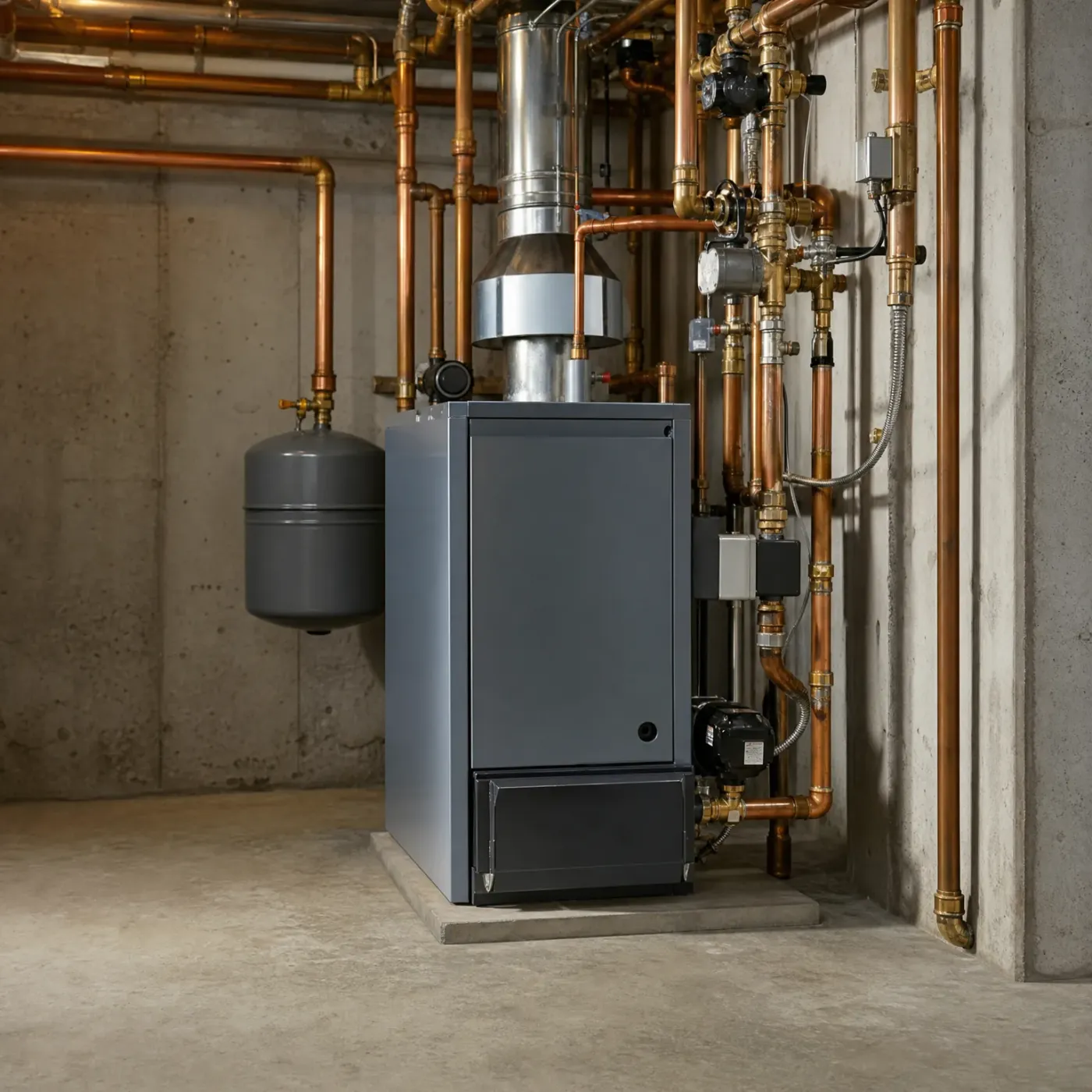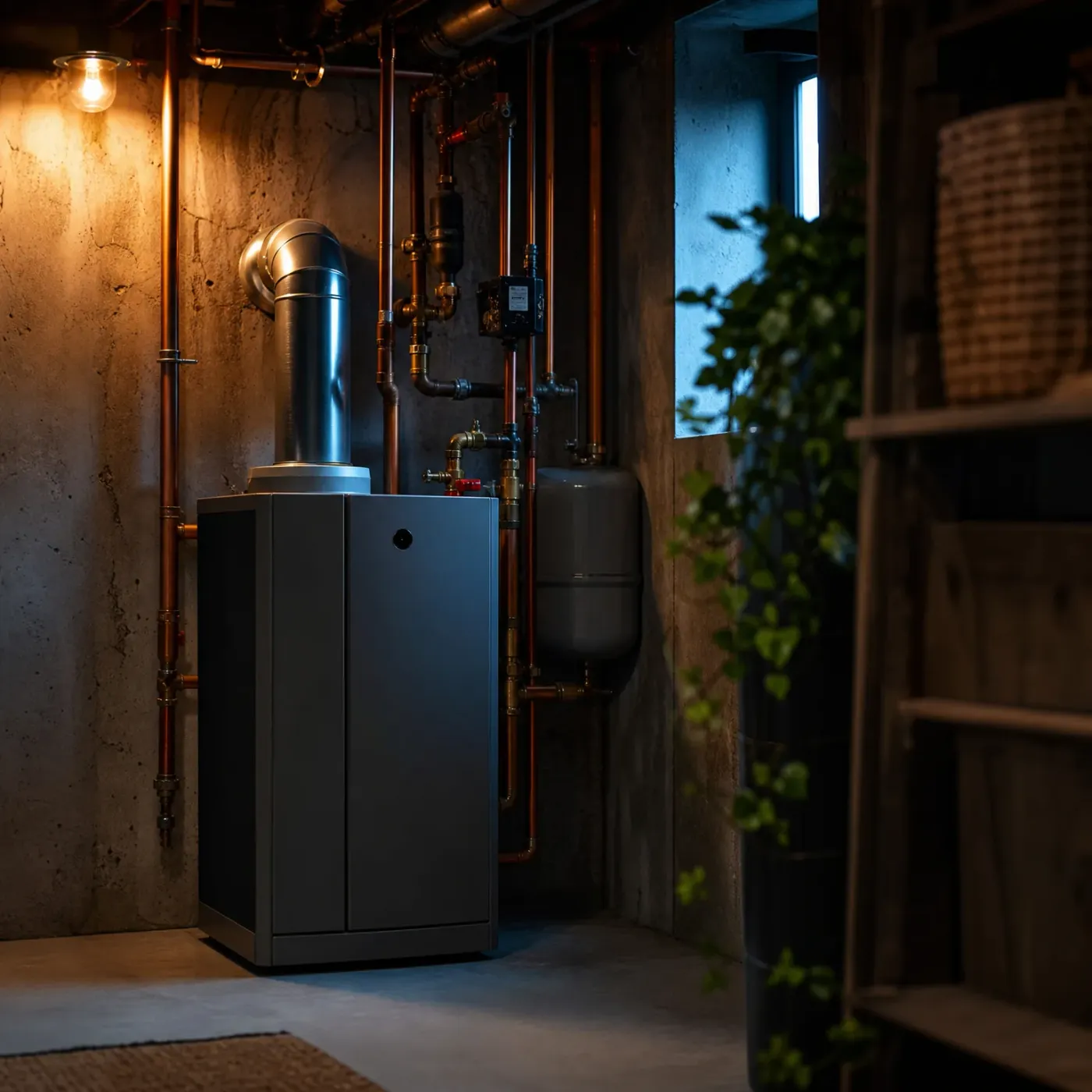




A dark grey floor-standing boiler with a metal flue stands against a concrete basement wall, surrounded by copper pipework, valves and a wall-mounted expansion tank, with ivy and a shelving unit at right.

A pro who works on boilers

How long a boiler lasts in Colorado

Most boilers run 15 to 20 years before they need to be replaced rather than repaired again. Dry Colorado summers are easy on a boiler, but altitude and hard water can wear on one over the years. This page gets into what shortens or stretches that lifespan, and the signs that yours is nearing the end. When you're ready, you can get matched with a contractor who installs boilers in your area and hear from them directly, instead of calling around to find one yourself.

Match me with a pro

A boiler in Colorado typically lasts 15 to 20 years. What wears it out is mineral buildup inside the heat exchanger from hard water, which many parts of the state have, along with the extra strain altitude puts on combustion efficiency. Thinner air at elevation means a boiler has to work harder to burn fuel cleanly, and that shows up as scale and soot building up faster than it would at sea level. The dry summers here are not a factor. Summer is when a boiler sits idle, so the heat exchanger, the circulator pump and the controls get a break from the one thing that actually stresses them: months of steady firing through a Colorado winter. Keeping an eye on water quality and having the system checked before each heating season matters more here than in a lot of places. Once a boiler starts losing efficiency year over year, or needs a repair every winter, replacement is usually the more reliable path forward.

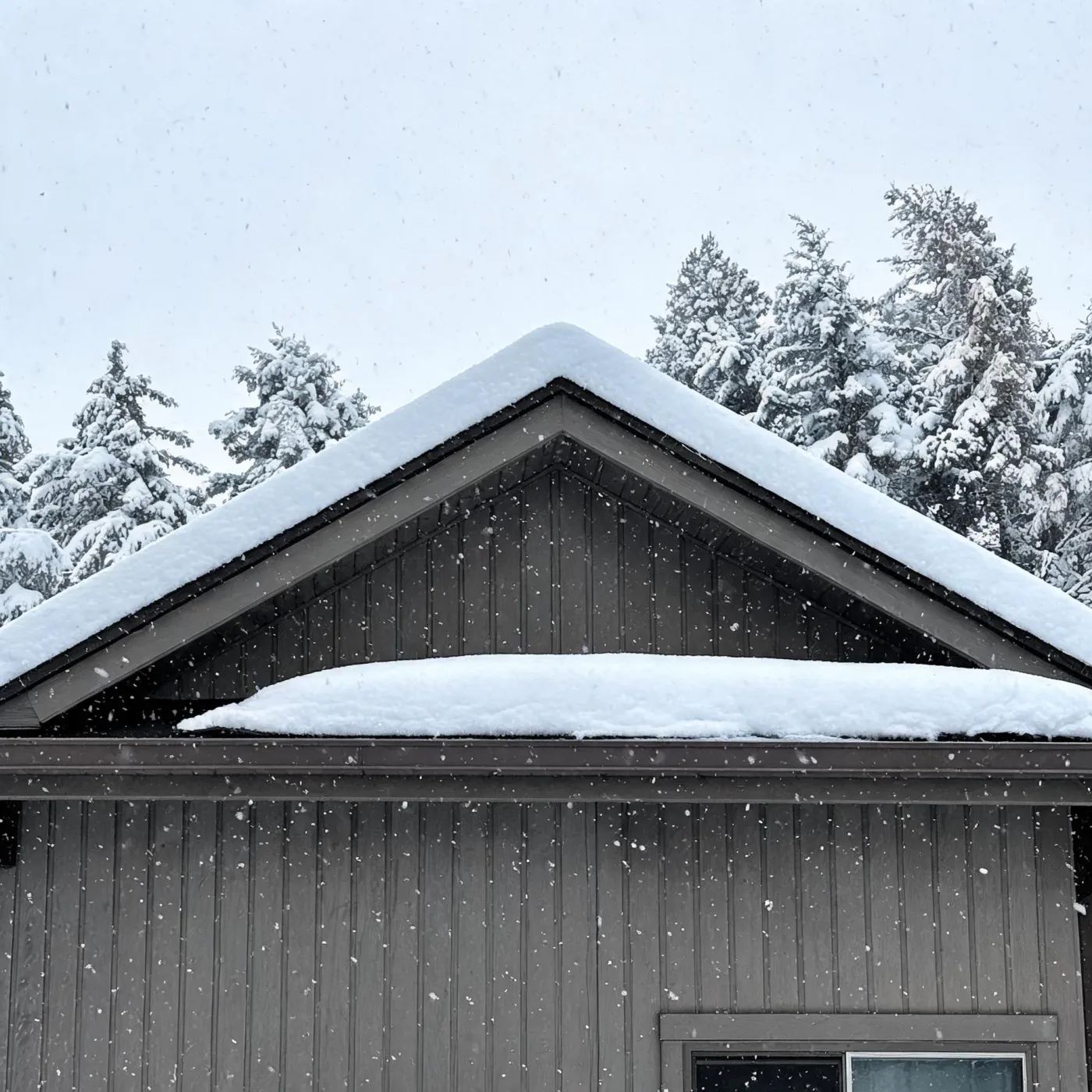
Snow-covered gable roof of a dark brown vertical board-and-batten house during falling snow, with snow-laden conifers behind it under a pale gray sky.

Winter nights statewide average 16°F, according to NOAA. That's a long, cold stretch for a boiler to answer night after night, and the colder the night, the longer it runs to hold your house at temperature. A boiler working harder on those nights cycles more often, which puts more hours on the circulator pump and more heat through the exchanger. You'd notice it as a furnace room that never seems to fully quiet down once it gets cold out, and as a boiler that's logged more run time by spring than the calendar alone would suggest.

NOAA nClimDiv 1991-2020 county normals weighted by homes

Is your boiler telling you it's near the end?

An older boiler usually gives you warning before it quits. Listen for banging or kettling sounds from the tank, that's mineral buildup rattling against the heat exchanger. Check for water pooled at the base, a sign the tank itself is starting to go. Watch your gas bill climb for no reason other than the same cold nights you've always had, that's the burner working harder to do what it used to do easily. Uneven heat from room to room, a pilot light that won't stay lit, or a thermostat that cycles more than it used to all point the same direction. Left alone, a boiler in this shape can fail on the coldest night of the year, the night you need it most.

A gray-haired bearded man in a dark coat and scarf dusted with snow stands smiling in a dimly lit entryway with a white front door, a side table with a lit lamp, an oval mirror, and a patterned rug.
An older bearded man in a dark snow-dusted coat and gray scarf stands just inside a dimly lit home entry, with a framed picture, lit table lamp, and an adjoining room with a fireplace behind him, and snow visible through the open door.
A gray-haired, bearded man in a dark snow-dusted coat stands smiling in a dimly lit entry hall with a staircase, a lit table lamp, a framed picture, and a living room visible through a doorway.
An older man with gray hair and a beard, wearing a dark jacket dusted with snow, stands smiling in a dimly lit hallway with lamps and a living room visible behind him.
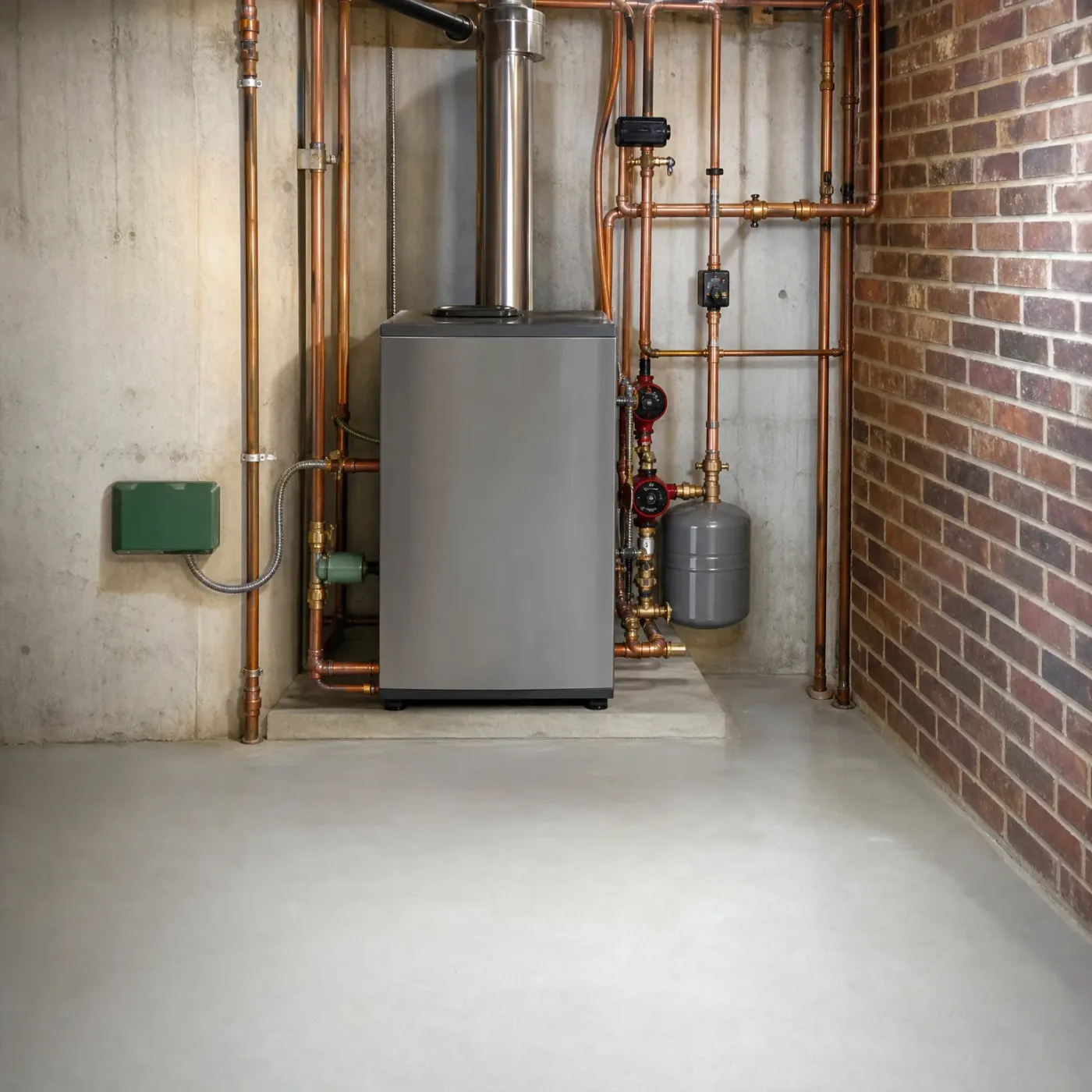
A gray boiler on a concrete pad in a basement, connected to copper piping, valves, pumps and a gray expansion tank, with a concrete wall on the left and a brick wall on the right.
A boiler with clean, mineral-free water and steady pressure can run its full stretch without major repairs.
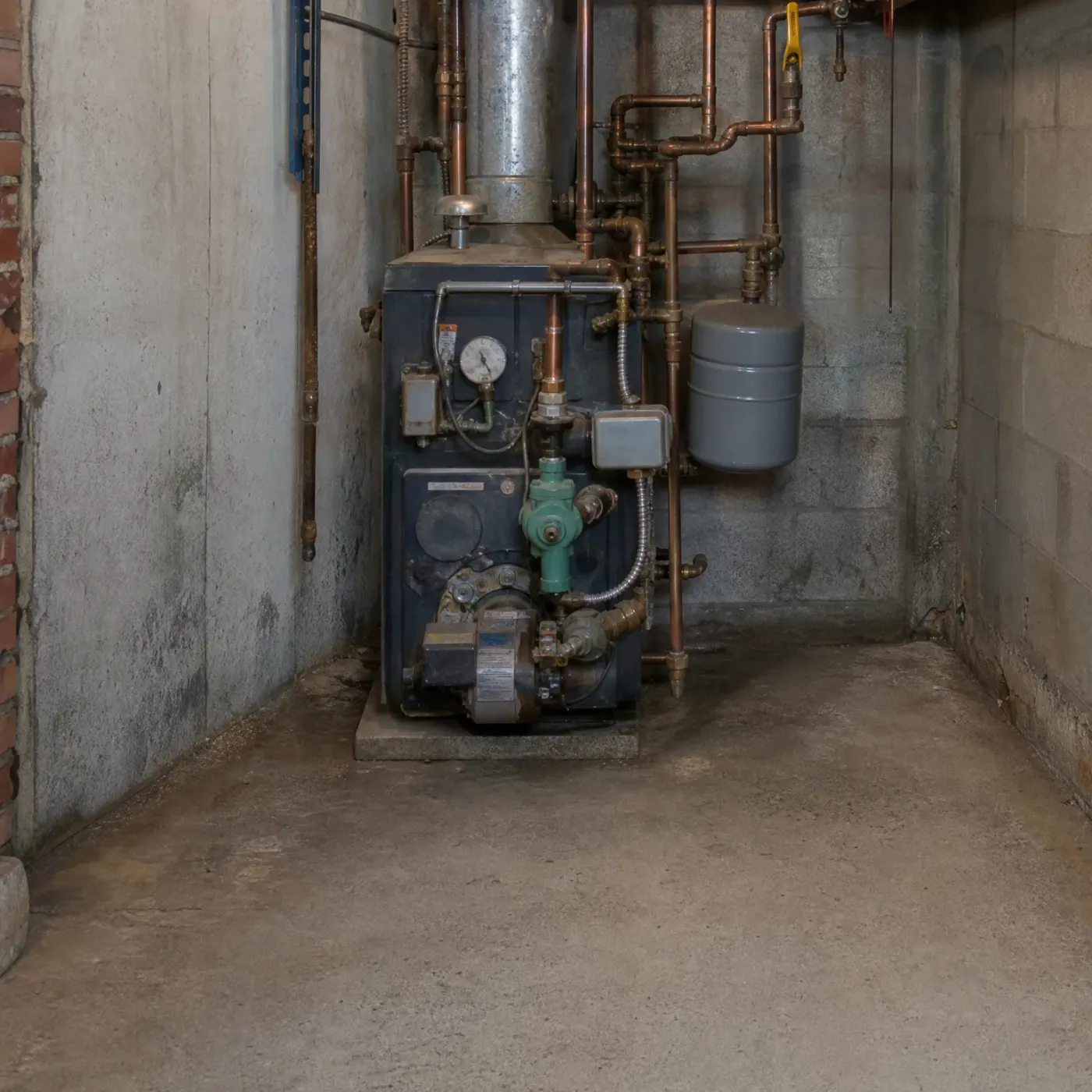
A dark cast-iron boiler with copper piping, pressure gauge, and a gray expansion tank sits on a concrete pad in a basement corner with concrete block and brick walls.
Rust at the fittings, a sagging expansion tank, or a pressure gauge that won't hold often means a boiler's last years are running out.
  1. Cold water enters the boiler and the burner fires to heat it

  2. A circulator pump pushes hot water out through the supply lines

  3. Heat radiates into the house through radiators or baseboard units

  4. Cooled water returns through the piping back to the boiler

Repair the Boiler or Replace It

Keep Repairing

  • A cracked circulator pump or a bad zone valve can be swapped out on its own without touching the rest of the system.
  • If the heat exchanger itself is still sound, most other parts around it are worth fixing as they fail.
  • Repairs let you spread the cost out over years instead of paying for a full replacement at once.
  • A boiler that's been flushed regularly and kept at steady pressure often has real years left even after a repair or two.
  • Staying with the boiler you have means no changes to your venting, gas line, or the piping already run through your house.

Replace Now

  • A new boiler comes with current efficiency ratings, which can matter if yours was installed decades ago.
  • Replacing ahead of a full failure means you're not choosing a new system in the middle of a cold snap with no heat.
  • If kettling, leaks at the base, and a pressure gauge that won't hold are all showing up together, you're likely replacing parts faster than they're worth fixing.
  • A new installation resets the clock, so you're not guessing each winter whether this is the year it quits.
  • Once a boiler is near the end, repair costs on an old unit start competing with what a new one would run.
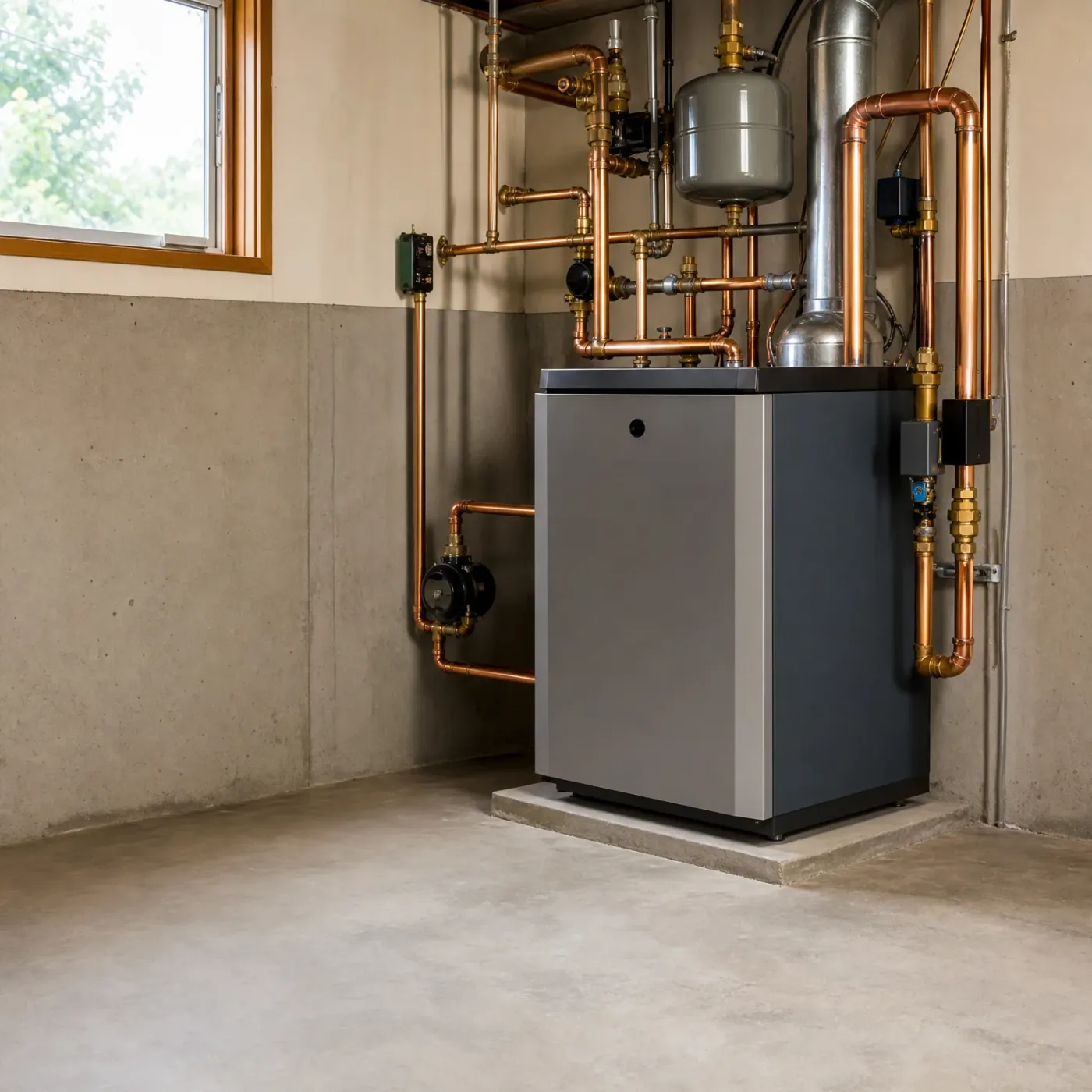
A gray floor-standing boiler on a concrete pad in a basement corner, connected to copper piping, brass valves, a circulator pump, an expansion tank, and a metal flue, with a window at upper left.

Running clean

A boiler like this is doing its job quietly. The pump circulates, the expansion tank holds steady pressure, and the flue vents combustion gas out the way it should. Pipe joints stay dry. Nothing rattles when the burner fires. This is what years 1 through 15 or so look like for most.
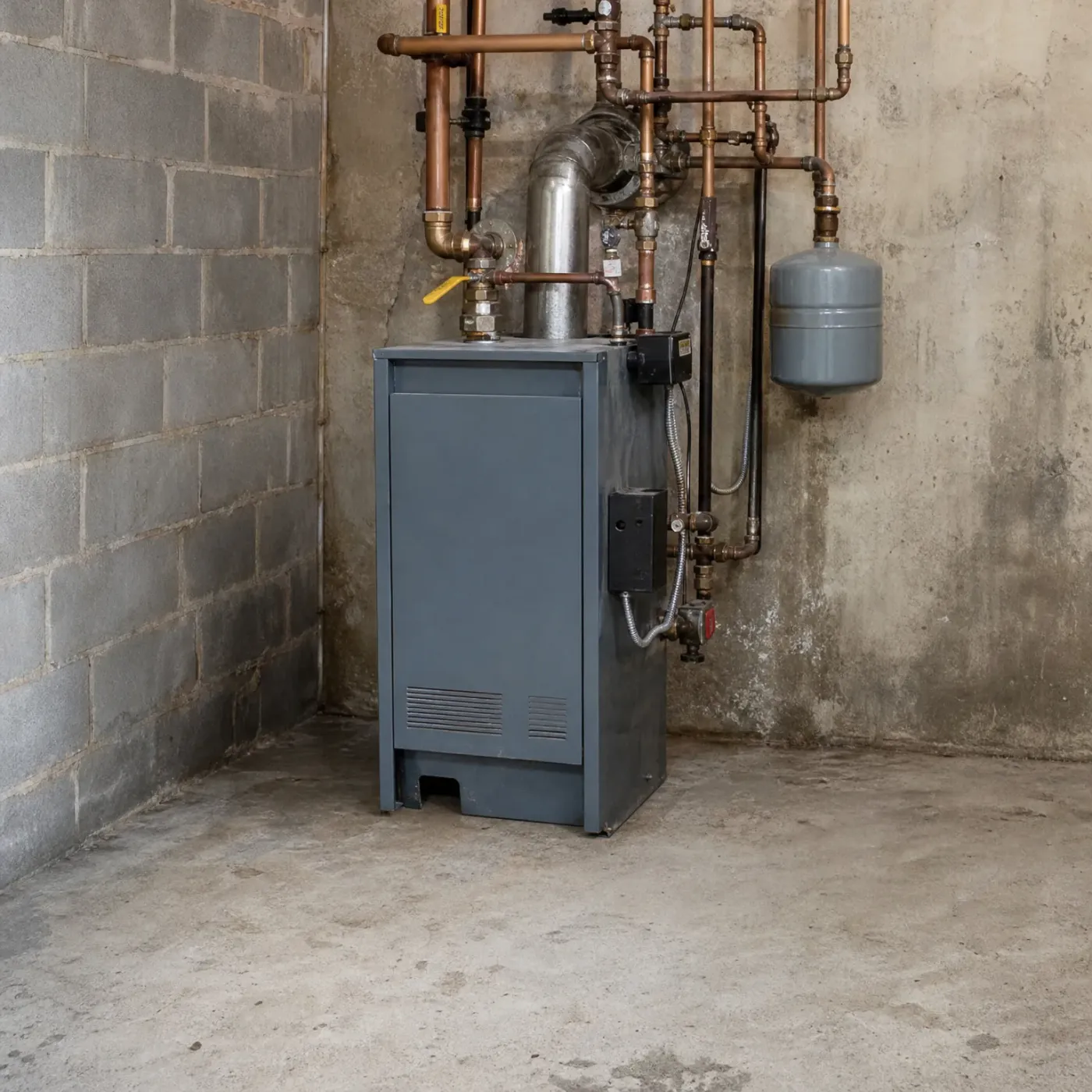
A gray floor-standing boiler in a basement corner with copper and black piping above it, a flue vent, and a gray expansion tank mounted on the concrete wall beside a concrete block wall.

Showing its age

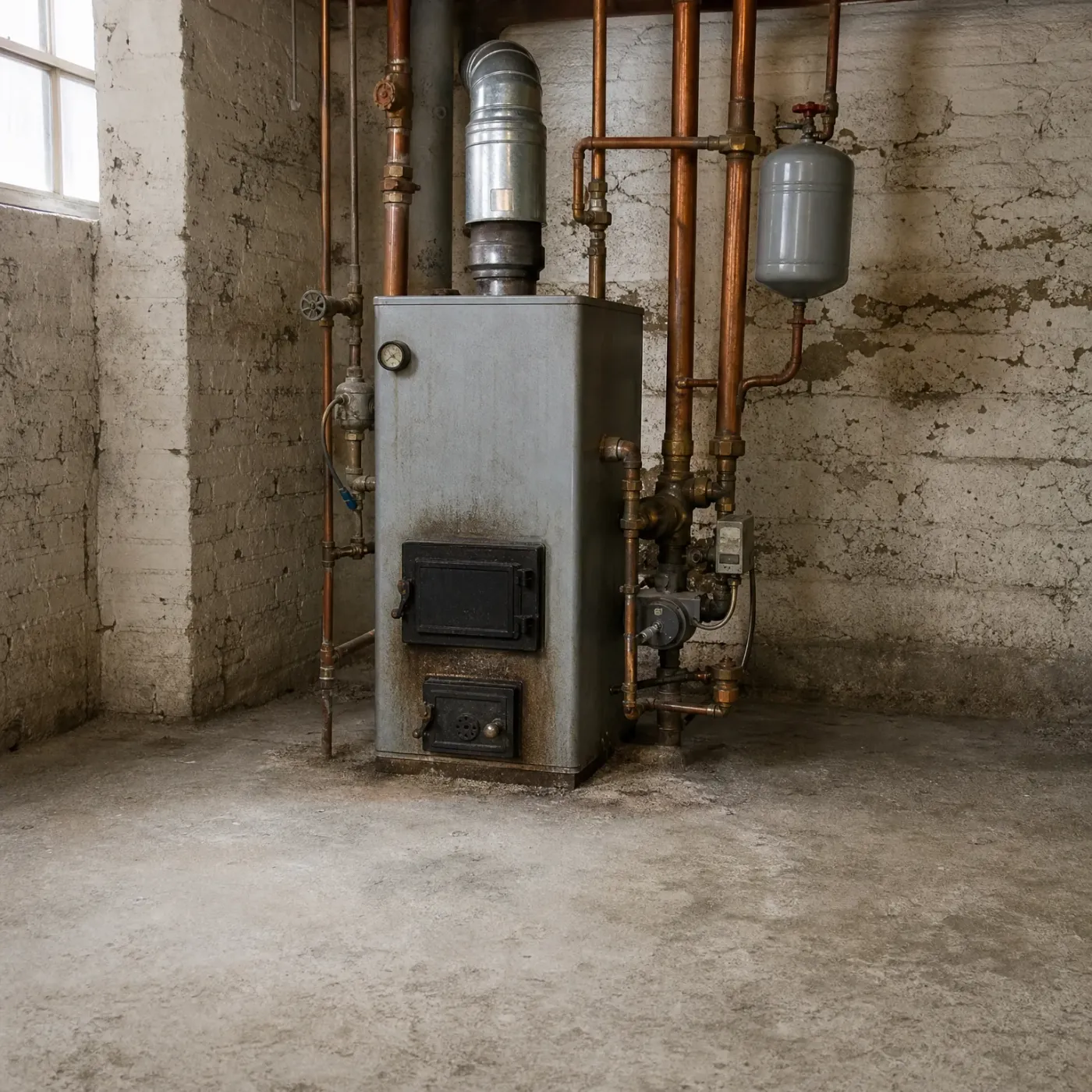
Look at the wall-mounted expansion tank and the piping around it for rust streaks or a damp spot at a fitting. A gray-painted boiler like this one, with scale built up inside from Colorado's hard water, often has a harder time holding pressure. That's when repairs start costing more than they're worth.

An old gray boiler with copper piping, a flue duct, pressure gauge and an expansion tank stands in the corner of a basement with painted masonry walls and a bare concrete floor.
Before you get your boiler installation
A gray boiler on a concrete pad in a basement, connected to copper piping, valves, circulator pumps, a metal flue, and a wall-mounted expansion tank.
After you get your boiler installation

Get your boiler to the right pro

By the time a boiler shows rust at the fittings or won't hold pressure, you're usually not looking at a repair that buys another good decade. At 15 to 20 years, with hard water and altitude already working against the heat exchanger, a new unit sized and vented correctly for your house tends to be the better money. Getting there usually means calling around to find someone licensed for boiler work, explaining the make and age of your system more than once, and sitting on quotes trying to tell a fair price from a padded one. None of that changes whether the unit you end up with runs well for the next 15 years. What matters is getting matched with a contractor who installs boilers in Colorado homes like yours and having them reach out to you directly, so the only thing left to figure out is the install itself.

Why altitude shortens the math

Thinner air at elevation means a burner has to work harder to get a clean, complete burn. Combustion efficiency drops, so the boiler cycles more to deliver the same heat, and parts like the heat exchanger and burner assembly take more wear per winter than the same unit would see at sea level. A boiler installed and vented correctly for your elevation closes some of that gap, which is why sizing and venting matter as much as the unit itself. Install it wrong for the altitude and the extra strain shows up years earlier than it should, cutting into the 15 to 20 years a properly set up system can give you.

What hard water adds to that

Hard water leaves mineral scale behind as it heats, and that scale builds up inside the heat exchanger over time. Scale acts as an insulator, so the burner has to run longer to push heat through it to the water, which means more fuel burned and more hours of runtime logged on the same parts each winter. Where the water running through your boiler is harder, that buildup happens faster, and it's part of why two boilers of the same age and brand can be in very different shape. Altitude and hard water don't cause the same kind of wear on their own, but together they compound.

A woman wrapped in a thick beige fleece blanket sits on a sofa with an open book on her lap, beside a lit table lamp, with a frost-covered window behind her.
An older woman with gray hair in a bun and glasses, wearing a beige knit sweater, smiles while looking to the side in a warmly lit kitchen, with a loaf of bread on the counter in the foreground and a snowy scene outside the window.

Keep repairing

A boiler that's still holding pressure and heating evenly can usually take another fixed part. Replacing it early trades a working system for one you still have to break in.

Answer a few questions

Replace now

Once the heat exchanger itself is compromised, every other fix just delays the same decision. A new boiler sized for your house ends the repeat repair calls.

Answer a few questions

Winter nights average 16°F statewide

At 16°F, your boiler is firing often most winter nights just to hold your house at temperature. That's a lot of burner cycles over a season, and every one of them puts more hours on the parts that eventually fail.

NOAA nClimDiv 1991-2020 county normals weighted by homes

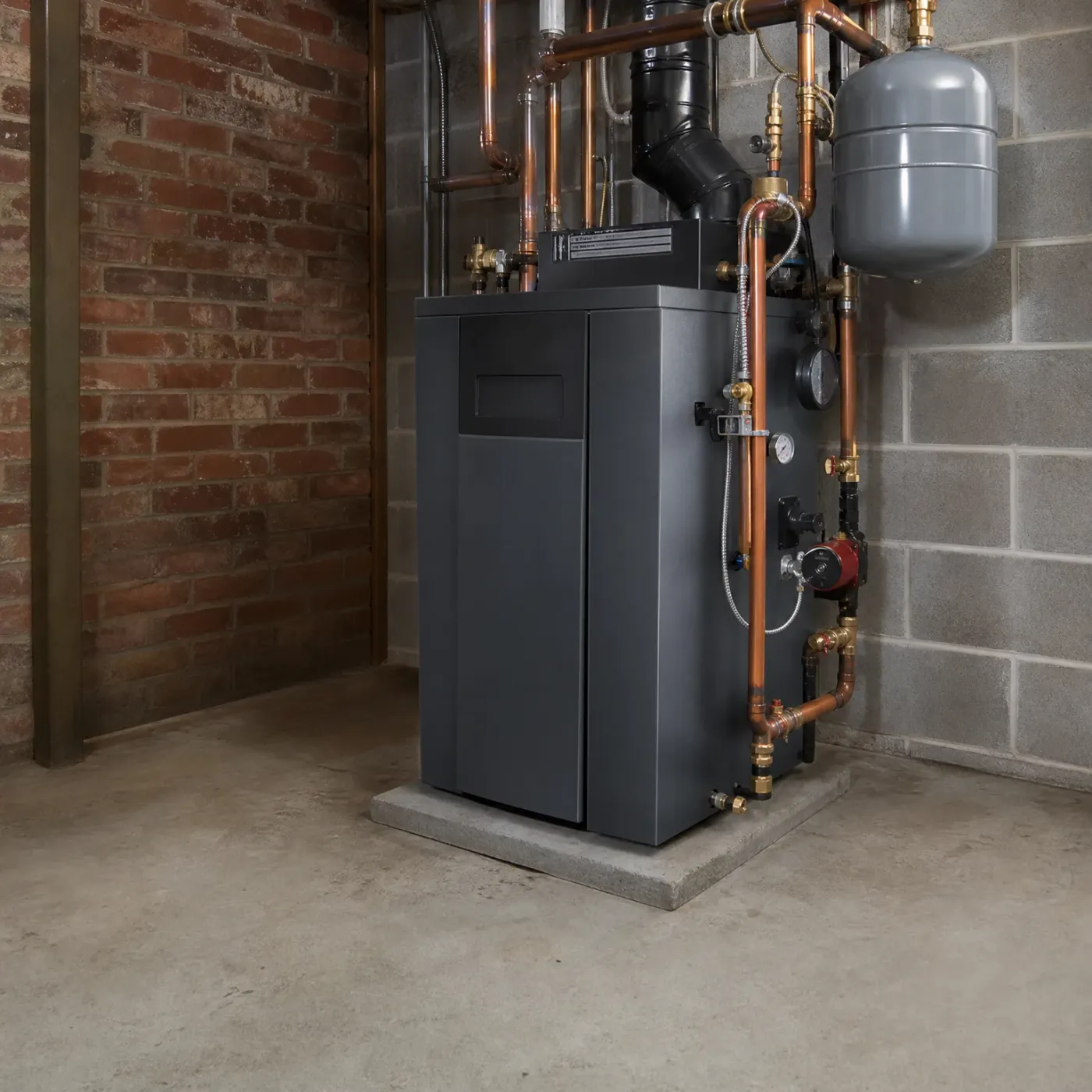
A dark gray floor-standing boiler on a concrete pad in a basement, connected to copper piping, valves, a circulator pump, a gauge, a black flue pipe, and a gray expansion tank, with a brick wall on the left and concrete block wall behind.

Running clean

Pipes, valves, and gauges stay dry at every joint, and the expansion tank holds its pressure. A boiler set up like this on a solid pad, with a clear path to its fittings, is one a contractor can service without surprises.

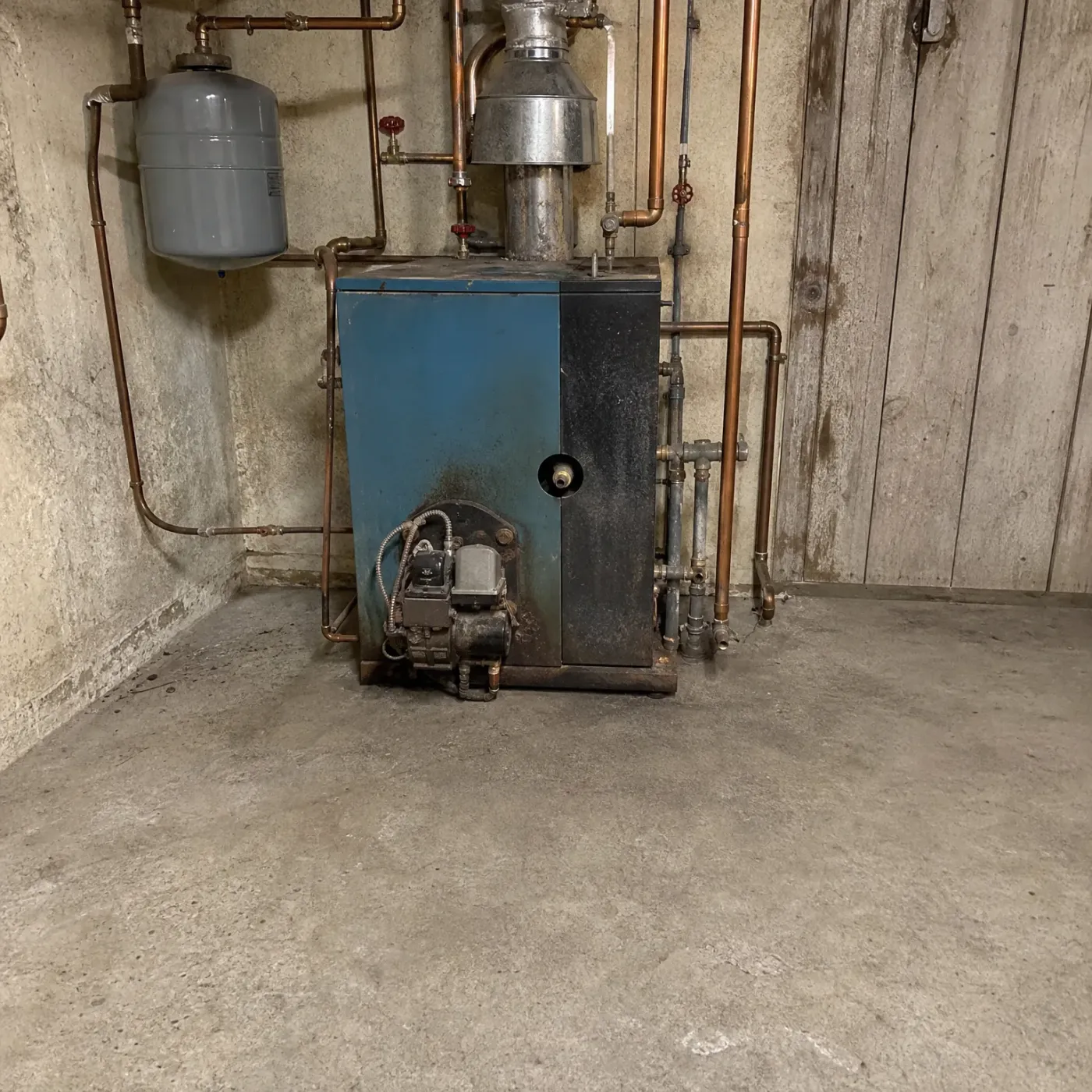
A blue and black boiler with a burner unit, flue, expansion tank and copper and steel piping stands on a concrete basement floor against a concrete wall and wooden plank partition.

Running out of time

This one sits crowded in the corner, old and oil-fired, with the same tangle of copper around it. A boiler installed this way, wedged in with no room to work, costs more in labor whenever something needs attention.

A woman in a cream cardigan and jeans stands with one hand raised facing an open front door of a gray horizontal-siding house, with a black lantern wall light, a potted shrub with yellow flowers, and a stone-faced porch column.

What this comes down to

A boiler in Colorado lasts 15 to 20 years. Hard water and altitude are what push a given unit toward the shorter end of that, and the warning signs along the way, kettling, rust at the fittings, a pressure gauge that won't hold, tell you which end you're on before the boiler forces the question.

Once you know where your boiler stands, the harder part is usually finding someone to size and install the replacement right, not figuring out that you need one. That's the piece you can hand off. Answer a few questions about your system and you'll be matched with a contractor who installs boilers in homes like yours, and they'll reach out to you directly, so you're not the one calling around and repeating the same details to every name in the search results.

A living room corner with a light beige sofa holding a textured taupe cushion, a large ceramic vase of olive branches by a window, a framed neutral artwork on the wall, and a dark bowl with stacked books in the foreground.
At dusk, a dark board-and-batten house with a standing-seam metal roof and lit entry walkway of stone pavers, with two large outdoor heat pump units on a stone-walled pad at right and trees and hills in the background.

Boiler Installation

Matched to your boiler job

Step 1 of 3: Equipment
  • A corner of a room with an upholstered wood-framed armchair holding a floral pillow, a round side table with a ceramic lamp, books and a vase of greenery, a framed landscape painting on the wall, a patterned rug, and a sunlit multi-pane window.
    • Say what's going on with your boiler, and a pro who works on them reaches out.
    • A local pro who knows boilers gets your details and gets in touch.
  • Interior corner with a wood-framed window showing green foliage outside, a framed landscape print on a beige wall, and a rounded stone vase of leafy branches on a wooden cabinet.
    • One request and the search for a pro is handled.
    • Send it once and finding someone is no longer on you.
  • A pale ceramic vase holding olive branches sits on a dark wooden countertop beside a carved wooden dough bowl, next to a wood-framed window and a light painted plank wall.
    • Skip searching for a boiler pro and answer a few questions instead.
    • One form replaces the calls you'd make to find a boiler pro.
  • A dark wood round side table holding a brass lamp with a cream shade, a blue-and-white patterned bowl, and a white textured pot of greenery, beside an upholstered chair with a gray patterned cushion and a white-framed window showing green trees and flowering shrubs.
    • Your request stays with one local pro.
    • Your request goes to one pro, not a list of companies.